
Livraison le jour même ou le lendemain

Qualité garantie

Débloquez vos offres de bienvenue: Livraison GRATUITE | Jusqu'à -80 % | 30 jours d'essai gratuits à JoyPlus
Téléchargez l'application
A multi-purpose strong glue lets you quickly fix a handle, a figurine, a shoe sole or a decorative object. But picking a product just because it says "super glue" or "instant drying" can lead to a weak repair, unsightly marks, or a tube that's unusable after a few weeks.
Before you head to the checkout, make sure you check the material compatibility, the glue's texture, and the stresses the repair will face. Here are the criteria to consider for a practical choice, suited to everyday household use.
An instant glue, also known as cyanoacrylate glue, can join two parts in seconds. That doesn't mean the bond can immediately handle weight, impact or twisting. For a repair that moves, like a sole or a strap, a rubber-enriched gel formula is often a better bet than a very runny liquid.
Many adhesives are suitable for wood, metal, rubber, ceramic or leather. However, some plastics remain particularly tricky to glue. Polyethylene (PE), polypropylene (PP) and polytetrafluoroethylene (PTFE) are notably excluded from several cyanoacrylate products. So always check the list of compatible materials before you buy.
For a glue for plastic, a system with a dedicated activator may be more appropriate. Loctite Super Glue-3 All Plastics, for example, pairs an activator pen with a cyanoacrylate adhesive. Still, follow the instructions and check that the plastic of your item matches the intended use.
A large tube may seem more economical, but it risks drying out before your next repair if you only use glue occasionally. Single-use sachets reduce this waste. On the other hand, a 3 g bottle with a flow-control system will suit those who carry out several repairs over time.
Start by identifying the surfaces you need to join:
A liquid formula seeps easily into fine gaps, but it can run on a vertical surface. Gel stays in place better and is ideal for targeted repairs. A fine nozzle, a pen or a push-button applicator also helps you apply just the right amount and minimise mess.
For a visible repair, choose a clear glue that dries without leaving a white film. Still, test it on an inconspicuous area, especially on porous or coloured materials.
If the item is destined for the kitchen, bathroom or sheltered outdoor use, look for an explicit mention of water resistance. Products advertised as water-resistant or dishwasher-safe should not be used on items that come into direct contact with food, unless the manufacturer clearly states otherwise.
For wood, European classifications provide a useful guide: D2 indicates resistance to normal indoor humidity, while D3 is for more humid conditions, depending on the intended application. UHU Wood Glue Waterproof carries a D3 classification and can be used in damp environments, whereas the UHU Original Wood Glue is rated D2.
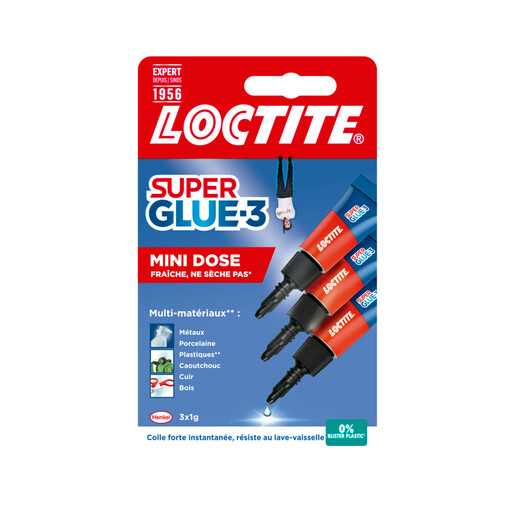
Why this choice suits this profile: The three single-use sachets are ideal for occasional repairs and stop you from leaving an opened tube lying around for months.
The small format reduces the risk of waste if the glue dries out after opening.
Three 1 g sachets, a clear liquid formula and compatibility with several materials. PE, PP and PTFE excluded.
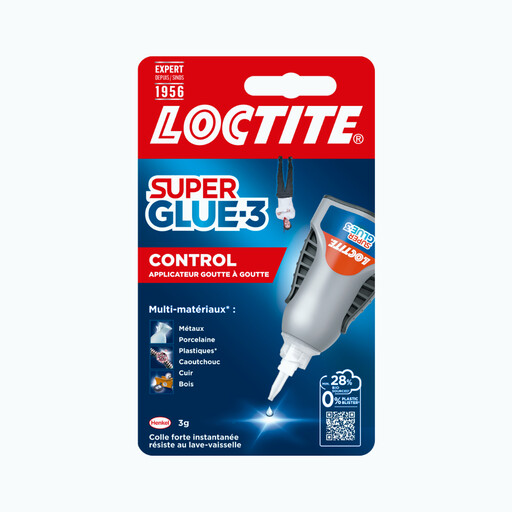
Why this choice suits this profile: Its shock-resistant bottle and dosing button give you the precision needed for repeated repairs.
The flow control prevents excess glue and marks on small parts.
Controlled application, clear drying and stated resistance to water and the dishwasher. PE, PP and PTFE excluded.
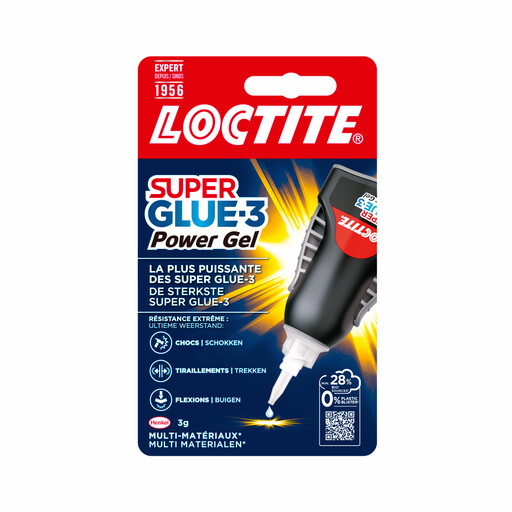
Why this choice suits this profile: Its gel texture and fine nozzle are particularly well suited to soles, pipes, flexible items and vertical surfaces.
The gel reduces drips, while the rubber-enriched formula is designed for bonds that are subject to movement.
Stated resistance to water, impact, twisting and temperature changes. PE, PP and PTFE excluded.
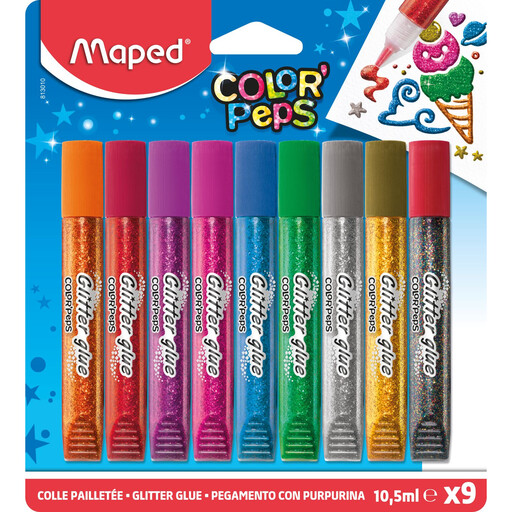
Why this choice suits this profile: The nine colours and fine nozzles are ideal for paper, cardboard, colouring and decorating activities.
This glitter glue is designed for arts and crafts, not for structural repairs.
Water-based formula, nine shades, fine nozzle and a slightly raised effect after drying. Not suitable for children under 3 years.
Cyanoacrylate glues can bond skin and eyes in seconds. Be especially careful with children, work in a well-ventilated area and keep the product out of their reach. Do not pull stuck fingers apart sharply: use warm, soapy water and seek medical advice if glue gets in the eyes.
We've put together a comprehensive list, updated in real time, of products that meet these strict selection criteria and European safety regulations.
A liquid cyanoacrylate glue works well for small, rigid parts that fit together perfectly. For a vertical surface or a flexible item, go for a gel glue with a precision nozzle.
Some products claim water or dishwasher resistance, but this depends on both the product and the material. Check the technical data sheet and let the repair reach its full strength before exposing it to moisture.
Wipe the nozzle, close the cap carefully and store the tube away from heat and moisture. For occasional use, single-use sachets are a practical way to minimise waste.