
Livraison le jour même ou le lendemain

Qualité garantie

Débloquez vos offres de bienvenue: Livraison GRATUITE | Jusqu'à -80 % | 30 jours d'essai gratuits à JoyPlus
Téléchargez l'application
A DIY repair often seems straightforward… until the glue refuses to set, overflows or comes away after just a few uses. To avoid disappointment, choosing a strong repair glue means taking into account the material, the shape of the break and the stresses the item will be exposed to.
An instant glue, or cyanoacrylate glue, can join two pieces together in just a few seconds. That does not mean the bond can immediately withstand weight, twisting or prolonged contact with water. Maximum strength is only reached after the curing time specified by the manufacturer.
Claims such as ‘multi-material’ or ‘for all surfaces’ should always be checked against the list of compatible surfaces. In particular, the glues featured here are not suitable for polyethylene (PE), polypropylene (PP) or PTFE or Teflon. These plastics generally require a specialised bonding solution.
A large bottle may be useful if you have several projects planned, but it could dry out between uses. Conversely, a small tube or single-use dose helps reduce waste. For a fine crack, a precision glue or gel formula with a well-controlled nozzle reduces overflow and makes application much easier.
A transparent liquid glue easily penetrates narrow joints. It is suitable for fine cracks and small horizontal surfaces, but may run down a vertical surface.
Gel glue stays in place more effectively. It is particularly practical for vertical applications, slightly flexible materials and craft projects. A thicker, two-part epoxy paste can be shaped to fill missing material.
For a repair exposed to moisture, look for the words water resistance in the product information. If the item needs to withstand temperature changes, impacts or mechanical loads, also check the temperature range and full curing time.
Before application, surfaces must be clean, dry, grease-free and dust-free. Even a powerful glue cannot work miracles if the preparation or alignment of the pieces is inadequate.
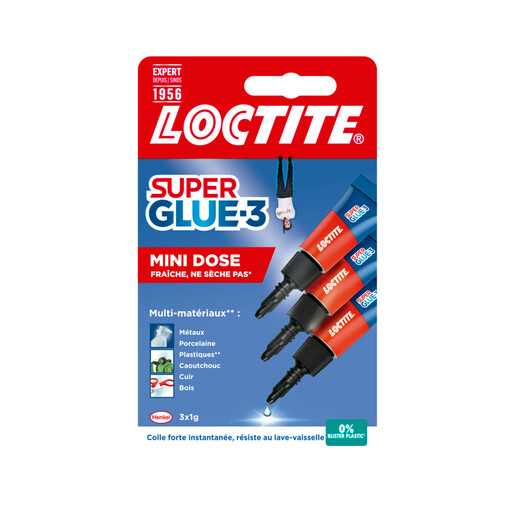
Why it suits this profile : The three individual doses are perfect for occasional repairs to porcelain, wood, rubber, leather and certain plastics, without leaving an opened bottle lying around for months.
The single-use format helps prevent the glue from drying out and avoids paying for a large quantity that would end up unused.
Three 1 g tubes, a transparent liquid formula and a quick set on several materials.
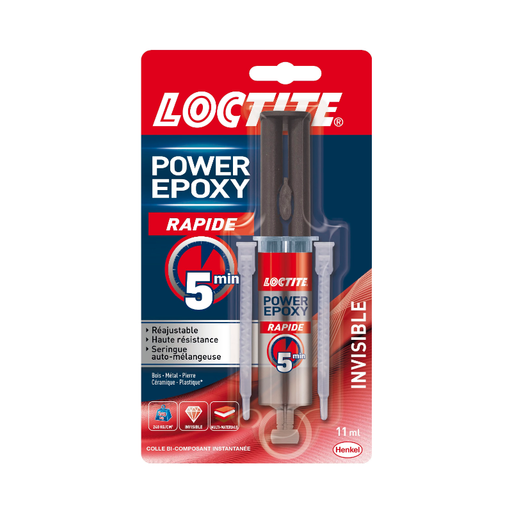
Why it suits this profile : Its self-mixing syringe makes measuring easy and is suitable for joins that need to fill small gaps in glass, wood, ceramic, stone or metal.
The epoxy resin does more than simply adhere to the surface: it fills gaps and, according to the product information, does not shrink while setting.
A stated setting time of 5 minutes, a transparent finish and resistance to water, oil and common solvents once fully cured.
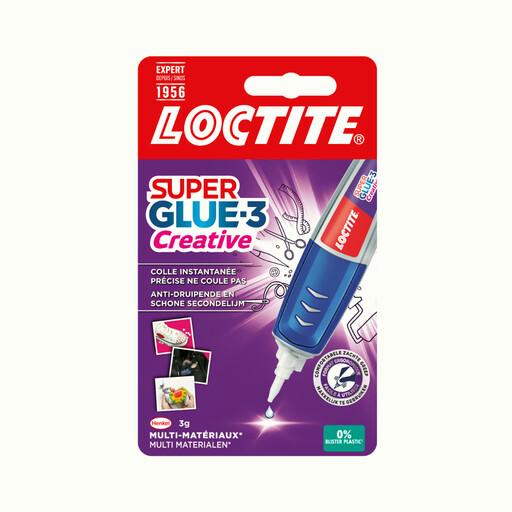
Why it suits this profile : Its pen format and gel texture are well suited to model-making, jewellery, small restoration projects and bonding on vertical surfaces.
The gel stays where it is applied, while the push button allows you to apply a small amount without drips.
Precise application, a transparent gel and stated compatibility with DIY and craft projects.
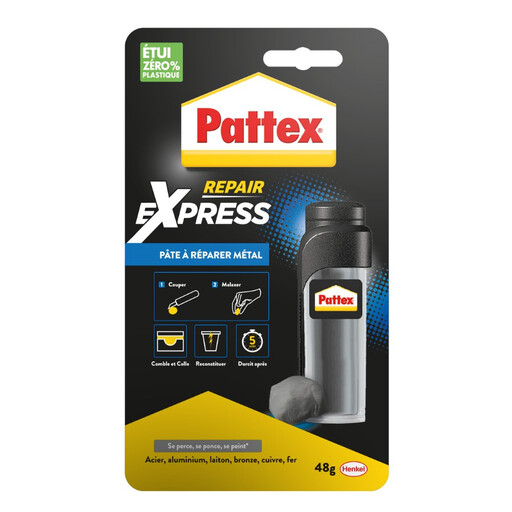
Why it suits this profile : This two-part paste is designed for steel, aluminium, copper, brass or iron parts when you need to fill a crack, hole or irregularity.
Its mouldable texture means you do not have to rely on a thin layer of glue to make up for missing material.
A two-part metal formula with stated resistance to immersion and temperatures from -30 °C to +120 °C; once cured, the surface can be sanded, painted or drilled.
We have brought together a complete, real-time updated selection of products that meet these demanding criteria, as well as European safety standards.
For a small, clean and well-aligned join, an instant glue advertised as water-resistant may be suitable once fully cured. If the joint is uneven, an epoxy glue or repair paste will generally provide better gap-filling power. However, check whether the stated resistance applies to occasional moisture or complete immersion.
Yes, but not for every type of plastic. PE, PP and PTFE are often excluded. Identify the material before buying and choose a formula explicitly designed for the surface. For flexible surfaces, a rubber-enriched gel glue will often be more suitable than a rigid liquid formula.
Close the nozzle carefully immediately after use, then store the product in a cool, dry place away from heat and direct sunlight. If you only do DIY projects occasionally, mini doses reduce the risk of having to throw away a dried-out tube.