
Livraison le jour même ou le lendemain

Qualité garantie

Débloquez vos offres de bienvenue: Livraison GRATUITE | Jusqu'à -80 % | 30 jours d'essai gratuits à JoyPlus
Téléchargez l'application
A broken object, a DIY project, a decoration to mount… The first instinct is often to reach for a strong glue. However, the adhesives aisle can quickly become a headache. Between promises of "universal bonding" and impractical formats, we too often end up with an ineffective product and a dried-up tube after a single use.
Our mission at Joybuy is to help you see things more clearly. Let's forget the marketing jargon and focus on what really matters. Here are the pitfalls to avoid and the keys to choosing the perfect glue for your needs.
The 3 classic pitfalls to avoid:
super glue) work wonders on ceramic, wood, or metal. The catch? They are often completely ineffective on certain plastics like polyethylene (PE) or polypropylene (PP), which are ubiquitous in our everyday objects. The result: a repair that just doesn't hold up.To make the right choice every time, keep these three points in mind. They, not the advertising slogans, will guarantee the success of your project.
This is THE number-one criterion: the nature of the surfaces to be bonded. There are two main families:
When it comes to plastic, you need to be extra vigilant. Always check if the glue is compatible with so-called "difficult" plastics (PE, PP, PTFE). If nothing is specified, you'll need to opt for a specific plastic glue, often sold with an adhesion promoter or primer.
Not all strong glues serve the same purpose:
super glue is ideal for its fast setting time and strength.Don't underestimate the container: it's as important as the contents.
Rather than an endless list, we've matched reliable solutions to specific needs.
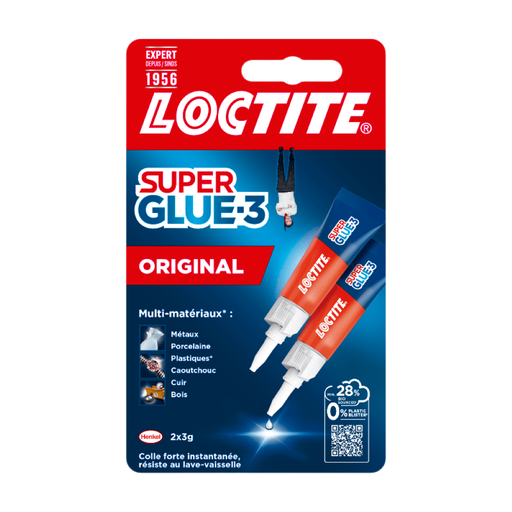
Why we chose it: For small, everyday repairs (dishes, toys, etc.), you need a simple and effective solution. This pack of two small tubes is the ideal way to always have a fresh dose of glue on hand, without worrying about the main tube drying out.
The 3g multi-tube format solves the problem of premature drying. You only open what you need, which guarantees a high-performance glue for every use and prevents waste.
Versatility on many common materials (porcelain, leather, wood, rubber) and water resistance, including being dishwasher-safe according to the manufacturer.
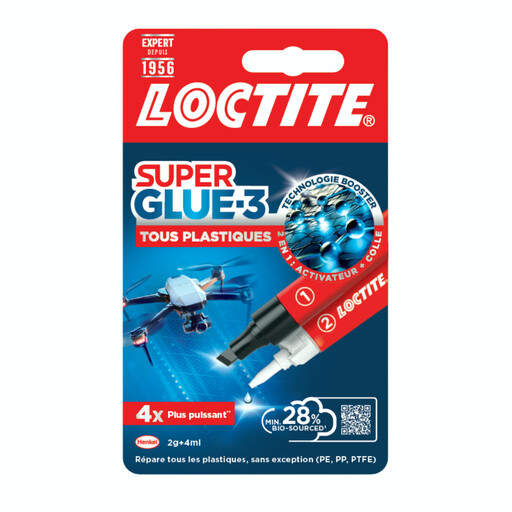
Why we chose it: For anyone who's been disappointed by "universal" glues on car accessories, toys, or electronic casings. This kit is the answer for tackling plastics that are notoriously difficult to bond.
It debunks the "all-purpose glue" myth by providing a two-step solution: an activator pen that primes the surface of difficult plastics (PE, PP), allowing the cyanoacrylate glue to then bond effectively.
The 2-in-1 system (activator + glue) offers a targeted and reliable solution for a wide range of plastics where standard glues fail.
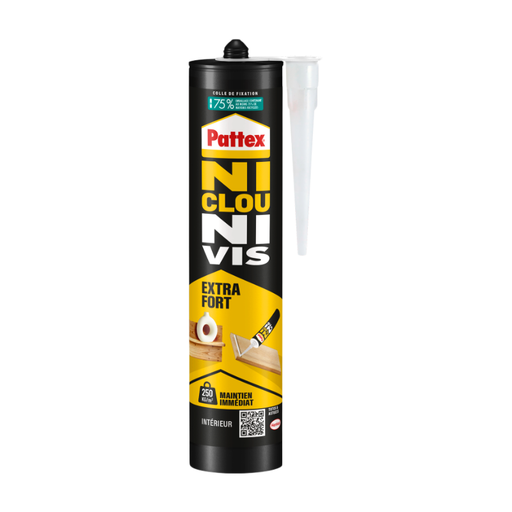
Why we chose it: Ideal for decorating and renovation projects that require a strong bond without having to pull out the drill. Perfect for mounting baseboards, wood battens, shelves, or heavy decorative elements.
This isn't just a simple glue, but a structural construction adhesive. It's designed to support significant weight and bond to porous surfaces (plaster, brick, wood), where a super glue would be unsuitable.
It allows for a drill-free mounting that is clean and durable for heavy indoor objects. Its solvent-free formula is a real plus for projects in living spaces.
We have compiled a complete list of products that meet our strict selection criteria.
1. How do I remove super glue from fingers or a surface? On skin, above all, do not force it! Soak the area in warm, soapy water and gently peel the bonded skin apart. A fatty substance (vegetable oil, butter) or an acetone-free nail polish remover can help. On surfaces, acetone is often effective (test on an inconspicuous area first), but for delicate materials, it's better to scrape very gently once the glue is completely dry.
2. Can glue really replace screws for a heavy object? Yes, but only construction adhesives (mastics) designed for this purpose. They are formulated to support significant weight (often indicated in kg/cm? on the packaging) and to bond to building materials. A classic super glue is completely unsuitable for this use. Always follow the manufacturer's instructions, especially regarding the maximum supported weight and the requirement for at least one surface to be porous.
3. What is the shelf life of an opened tube of strong glue? The shelf life depends on the type of glue and its storage conditions. For a cyanoacrylate glue, once opened, it can last from a few weeks to several months if the cap is tightly sealed and it's stored in a cool, dry place. Some recommend placing it in the refrigerator (well-packaged and out of the reach of children) to extend its life. To avoid this problem, single-use mini-tubes or bottles with anti-clog caps are excellent alternatives to eliminate the guesswork.