
Livraison le jour même ou le lendemain

Qualité garantie

Débloquez vos offres de bienvenue: Livraison GRATUITE | Jusqu'à -80 % | 30 jours d'essai gratuits à JoyPlus
Téléchargez l'application
A scouring sponge may seem straightforward, but each model is best suited to particular surfaces. An abrasive side can easily tackle burnt-on food, while an overly harsh sponge may leave marks on a non-stick frying pan, ceramic hob or glossy sink.
To avoid unpleasant surprises, it is worth taking a close look at the material, recommended uses and care instructions. Here are the criteria to consider before choosing a scrub sponge, double-sided sponge or cleaning brush.
A green or reinforced side is effective against grease and dried-on residue. However, it is not necessarily suitable for glass, non-stick coatings, painted surfaces or polished finishes. Some product descriptions clearly state that it may scratch delicate materials.
It is best to reserve scouring sponges for saucepans, racks and hard-wearing surfaces. For sensitive materials, choose an anti-scratch sponge or a non-abrasive model instead. If in doubt, always test it on an inconspicuous area.
An absorbent sponge efficiently holds water and washing-up liquid. However, it may take longer to dry. If it remains damp in an enclosed sink or container, it can retain food residue and develop unpleasant odours.
So check that it rinses easily, wrings out properly and dries quickly. Plant-based cellulose is valued for its ability to absorb liquids, while some synthetic foams are designed to rinse and dry quickly.
A sponge used every day for washing up is exposed to different demands than a brush intended for the bathroom floor. For a household, a multi-pack can be more practical than a single model — provided you replace the sponges as soon as they show signs of wear.
A sagging shape, a fraying scrubbing side, a persistent smell or reduced absorbency indicate that it is time to replace the accessory.
The composition already gives you a good idea of the intended use:
Even the “non-abrasive” label calls for a little caution. A sponge described as gentle may trap a grain of sand or hard residue that could mark a surface. Rinse it before use and test it on a small area.
A thick sponge provides a good grip for large surfaces, but it can sometimes lack precision in a narrow glass or in corners. A curved or specially shaped design can make it easier to clean edges and grooves.
For bottles, water bottles and carafes, a long-handled brush will generally be more suitable than a traditional sponge. For floors, grout and shower walls, an adjustable-handle brush reduces bending and helps you reach awkward areas.
After each use, rinse the accessory under running water, wring it out and leave it to dry in a well-ventilated area. Depending on the model, some can be machine-washed at up to 40 °C. Never use a sponge on a very hot surface, a heating element that is switched on or a hob that is still scorching hot.
Also avoid mixing chemicals. The product descriptions for several models specifically advise against concentrated bleach, corrosive solvents and highly abrasive cleaners. Always follow the label and the manufacturer’s recommendations.
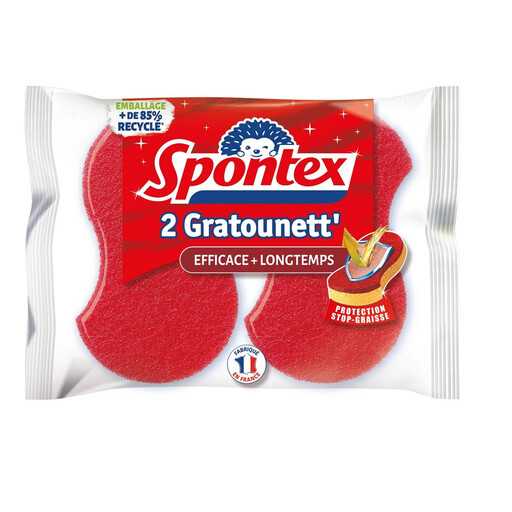
Why this choice suits this profile : This two-sponge pack is suitable for everyday washing up and households looking for a simple solution to get started. The product description states that it is made in France, offers good absorbency and features a design intended to make rinsing the fibres easier.
The Stop-Grease treatment is designed to make residue easier to remove when rinsing. This helps prevent the scrubbing side from remaining coated after washing up.
Pack of 2, absorbent material and designed for washing up as well as everyday household cleaning.
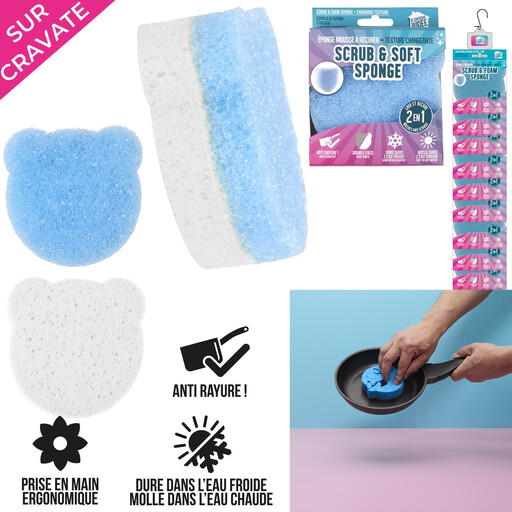
Why this choice suits this profile : This foam is designed to adjust its firmness to the temperature of the water. It is more effective on stubborn residue in cold water, then becomes gentler when the water is hot.
Its variable texture means you do not need to rely on a highly abrasive side all the time. However, testing it on an inconspicuous area is still recommended.
Cellular foam, ergonomic shape and a design described as non-scratch, suitable for a range of household tasks.
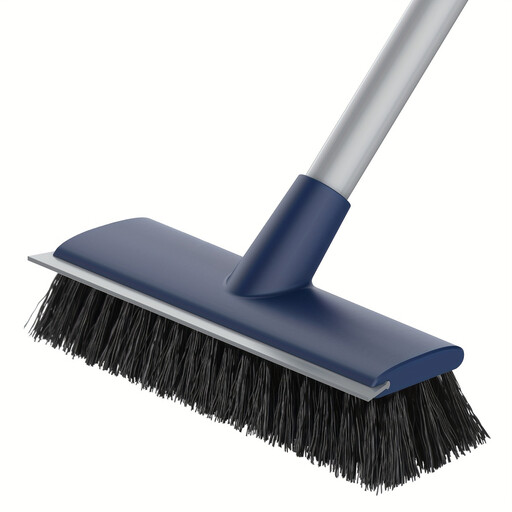
Why this choice suits this profile : This model is intended for people who regularly clean bathrooms, tiles, garages, patios or walls. According to the product description, its adjustable handle extends to 124 cm and its squeegee makes it easier to remove water.
This is not simply a multipurpose sponge being used outside its intended purpose: its stiff bristles and squeegee are designed for floors and hard surfaces.
Adjustable handle and a head angled at 45 degrees according to the description, combining a brush and squeegee in a single accessory.
We have put together a complete, real-time updated selection of products that meet these demanding criteria and European safety standards.
It depends on how often it is used, the products applied and how thoroughly it is rinsed. Replace it as soon as it becomes misshapen, starts to fray, absorbs less effectively or develops a persistent smell. Some product descriptions recommend replacing it regularly, but the condition of the sponge remains the best indicator.
Not necessarily. Several abrasive models state that they are unsuitable for non-stick coatings. Choose an anti-scratch sponge described as compatible, then test it on a small, inconspicuous area. Never use a sponge that traps grains or hard residue.
Rinse it thoroughly, wring it out without twisting it excessively, then place it in a ventilated holder. Avoid leaving it soaking in a puddle of water or in contact with food scraps. If permitted by the manufacturer, machine-washing at 40 °C can complement regular care, but it does not replace regular replacement.