
Livraison le jour même ou le lendemain

Qualité garantie

Débloquez vos offres de bienvenue: Livraison GRATUITE | Jusqu'à -80 % | 30 jours d'essai gratuits à JoyPlus
Téléchargez l'application
A sponge may seem like an insignificant purchase. However, the wrong choice can wear out quickly, retain odours or leave marks on a ceramic hob. Spontex cleaning sponges come in several formats, with different sides and materials suited to a range of uses: washing-up, kitchen cleaning, bathroom cleaning, delicate surfaces or intensive cleaning.
Before you add one to your basket, it is worth keeping three common pitfalls in mind.
A non-scratch sponge may be suitable for certain surfaces without being compatible with every type of finish. Trapped grease, sand or limescale particles in the fibres can still cause marks. Non-stick pans, glossy glass, painted surfaces and varnished materials should therefore be tested first on an inconspicuous area.
A pack of three or four sponges is not necessarily economical if each one quickly loses its shape or absorbency. Instead, check the stated lifespan, whether the sponges can be washed and the recommended replacement schedule. Some household sponges are machine washable, while others simply need to be rinsed and left to air dry.
A washing-up sponge covered in grease has no place on a washbasin or mirror. To avoid spreading dirt from one room to another, assign a colour or model to each area: kitchen, bathroom and glass surfaces. A double-sided sponge also makes it easy to distinguish between scrubbing and wiping.
The scrubbing side is designed to loosen stubborn residue, but its effectiveness and aggressiveness vary depending on the texture and fibres used.
Never scrub a hot surface and do not use a corrosive product unless it is specifically intended for use with this accessory.
An absorbent sponge made from plant-based cellulose effectively holds water and is highly practical for everyday use. Models with a foam core can dry quickly when properly wrung out. If you are looking for more durable sponges, compare recycled fibres, PEFC-certified cellulose and recyclable cardboard packaging.
A machine-washable sponge should be cleaned at the temperature specified by the manufacturer. Some Spontex Flex & Wash models can be washed at up to 40 °C, either in the washing machine or dishwasher, with a stated limit of 52 washes. Avoid fabric softener and tumble drying whenever the instructions prohibit them.
After each use, rinse the sponge thoroughly, wring it out without twisting it excessively, then leave it to dry in a well-ventilated place. When to replace it depends on its condition, odours and how often it is used. Several Spontex products recommend replacing them approximately every two months.
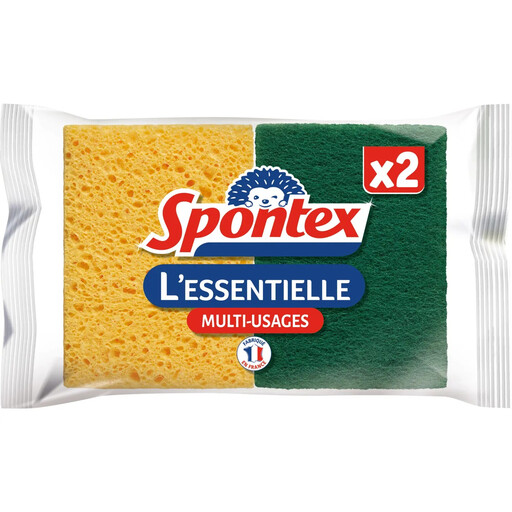
Why this choice suits this profile: Its compact format and two sides are all you need for everyday tasks in the kitchen and bathroom, without having to accumulate different cleaning accessories.
The soft side is for wiping, while the scrubbing side tackles persistent dirt: it covers the essentials without requiring you to buy two categories of sponge.
PEFC-certified plant-based cellulose, made in France, two sponges per pack and a practical shape for reaching corners.
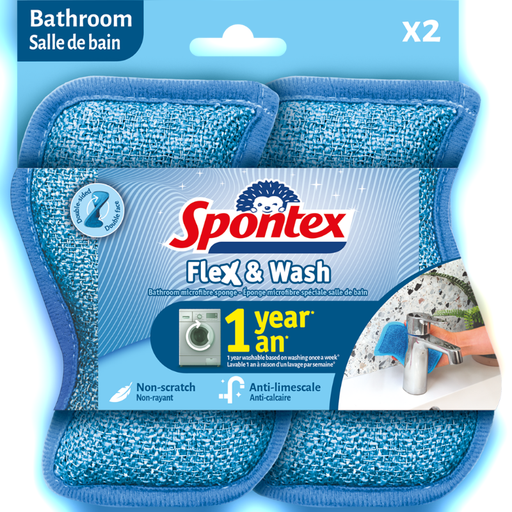
Why this choice suits this profile: This model combines a microfibre side for mirrors with a scrubbing side designed to remove limescale in the bathroom.
The instructions specify the washing temperature, advise against using fabric softener and recommend testing on a hidden area: the conditions of use are clearly set out.
Up to 52 washes, as stated, recycled fibres on both sides and an absorbent foam core. The brand also claims that, for certain surfaces, results have been measured by an independent laboratory.
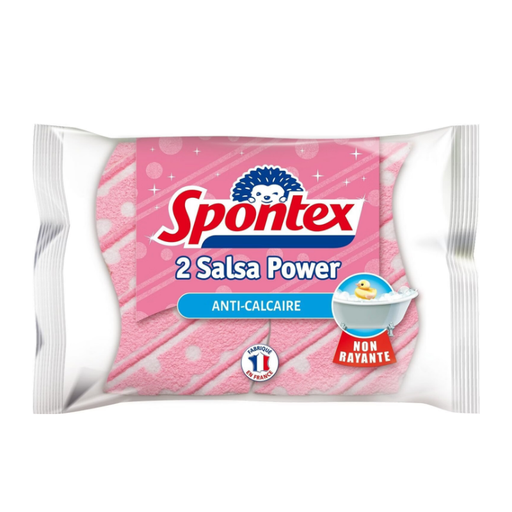
Why this choice suits this profile: Its shape is designed for taps, shower screens, baths, sinks and mirrors, particularly in homes with very hard water.
Its use is clearly focused on the bathroom: there is no need to pay for a universal claim if tackling limescale is your priority.
A side described as non-scratch, access to narrow areas, machine washing at 40 °C and a composition that includes a plant-based sponge.
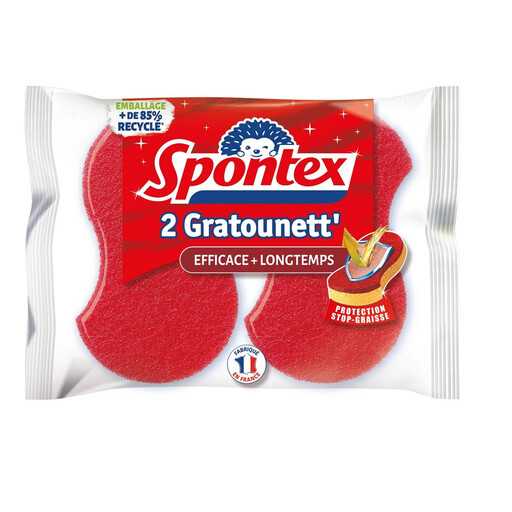
Why this choice suits this profile: This product is aimed at washing-up and everyday cleaning when greasy residue is part of the job.
The Stop-Grease treatment is presented as making the fibres easier to rinse: a practical answer to the problem of a sponge that remains sticky after washing-up.
Two sponges, an absorbent design, fibres developed for easy rinsing and made in France, as stated.
To protect your surfaces and make your sponges last longer:
A microfibre sponge is particularly suitable for windows and mirrors when you want a streak-free finish. For limescale, a sponge designed for bathroom cleaning is a more suitable choice than a general-purpose washing-up sponge.
We have brought together a complete selection, updated in real time, of products that meet these demanding selection criteria and European safety regulations.
For plates, glasses and everyday utensils, choose a double-sided sponge with an absorbent side and a scrubbing side suited to the level of dirt. When using a non-stick pan, always check the compatibility specified by the manufacturer and test the sponge on a small area.
It depends on how often it is used, the type of dirt and how well it is maintained. Several products recommend replacing the sponge after approximately two months, while reusable, machine-washable models state a specific number of cycles. Visible wear and unpleasant odours are also good signs that it is time to replace your sponge.
Some models allow this, but the temperature and programme must follow the instructions. Several Spontex products can be washed at 40 °C, while others can withstand a different temperature. Do not use fabric softener if the manufacturer advises against it, and always allow the sponge to dry completely after washing.