
Livraison le jour même ou le lendemain

Qualité garantie

Débloquez vos offres de bienvenue: Livraison GRATUITE | Jusqu'à -80 % | 30 jours d'essai gratuits à JoyPlus
Téléchargez l'application
A multi-purpose cleaning sponge might seem like a straightforward purchase. Yet the wrong choice can quickly lead to scratches on a pan, a sponge that holds onto odours, or one that loses its shape after just a few weeks. Washing up, the kitchen, the bathroom or everyday cleaning – each task has its own requirements.
A tough abrasive side that tackles burnt-on residue can be completely unsuitable for non-stick coatings, glass or painted surfaces. The phrase "non-scratch" should always be linked to a specific use, rather than taken as a guarantee that works on every material.
Before the first use, check the instructions and test the sponge on an inconspicuous area. Dust or grit trapped between the sponge and the surface can also leave marks.
A sponge marketed as reusable or long-lasting must specify the care conditions: machine washing, maximum temperature, number of cycles or replacement frequency. A machine-washable sponge is not necessarily compatible with the tumble dryer, bleach or the dishwasher.
Lifespan also depends on how you use it. A sponge used every day on very greasy dishes will not wear out at the same rate as one reserved for wiping down a sink.
Even an absorbent, durable sponge needs to be rinsed after each use, wrung out and left to air dry. Leaving it damp in the sink encourages bad smells and speeds up wear. Regular replacement is still essential for hygiene reasons, even with a washable model.
A double-sided sponge lets you switch easily from one task to another: the soft part is for wiping, absorbing water and finishing off the clean, while the scrubbing side tackles the toughest grime.
For everyday washing up, choose a scrubbing sponge with an abrasion level that suits your utensils. For glasses, hobs and delicate surfaces, a non-scratch sponge or a microfibre side reduces the risk, as long as you follow the manufacturer's recommendations.
Vegetable cellulose is valued for its absorbency and softness. Some models combine cellulose, foam, synthetic fibres or microfibre to handle both wiping and scrubbing. An absorbent sponge is particularly handy for spills, worktops and bathroom cleaning.
Also consider the sponge's shape. A small size or a flexible profile can more easily reach into corners, around handles, on taps and along narrow edges.
Compare the instructions carefully: washing at 40 °C or 70 °C, machine or dishwasher safe, no fabric softener, and the recommended usage period. Some Spontex Flex & Wash models, for example, are said to be washable for up to 52 cycles, while others suggest replacing them roughly every two months.
These guidelines don't mean you can stop checking the sponge's condition. As soon as the surface starts to fray, a smell lingers or its effectiveness drops, it's best to replace it.
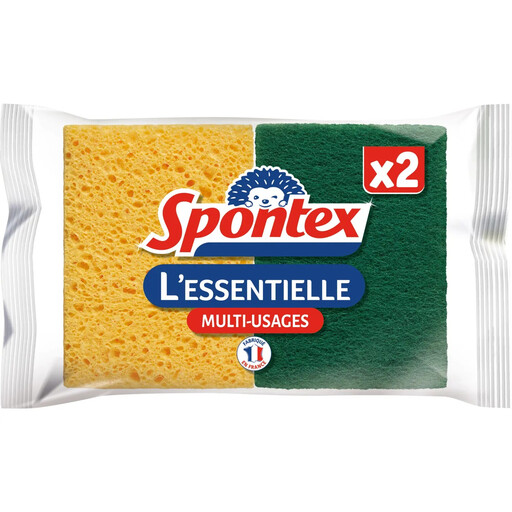
Why this choice suits this profile: This pack of two sponges covers everyday needs – washing up, wiping and general cleaning – without cluttering your cupboards with lots of different accessories.
The separation between the scrubbing side and the soft side stops you from using the same level of abrasion on every surface.
PEFC-certified vegetable cellulose, compact size, made in France and rinse recommended after each use.
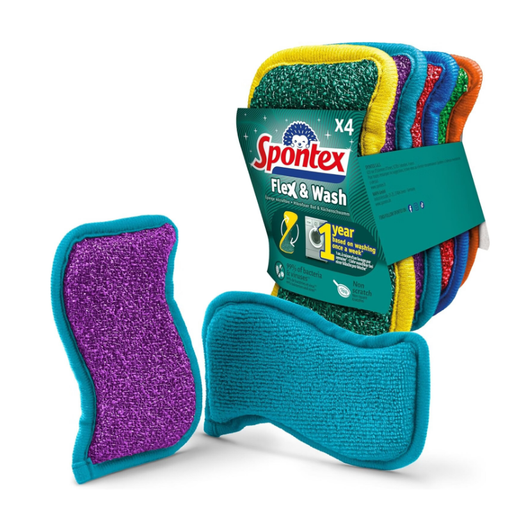
Why this choice suits this profile: Households that want to buy less often can turn to a reusable, machine-washable model.
The product page states up to 52 wash cycles – a concrete benchmark that's better than a vague promise of longevity.
Four sponges, a flexible S-shape, a microfibre side and a scrubbing side described as non-scratch.
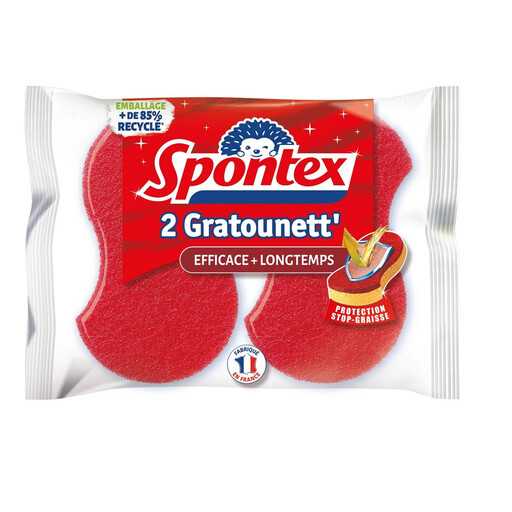
Why this choice suits this profile: This model is aimed at kitchens where greasy dishes and stubborn grime are part of daily life.
The Stop-Grease treatment is said to make rinsing the scrubbing fibres easier after cleaning.
Two absorbent sponges, made in France, easier rinsing and designed for washing up.
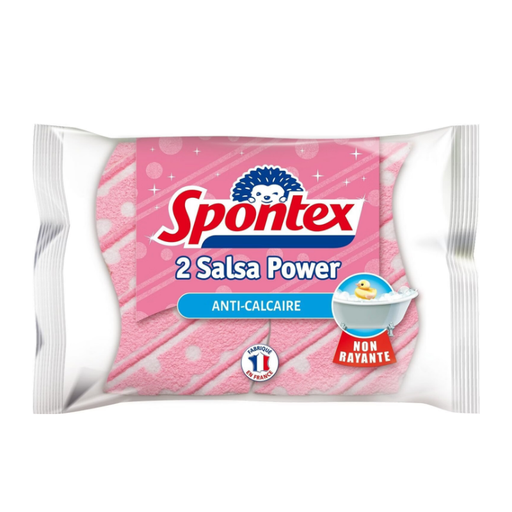
Why this choice suits this profile: Their design targets taps, shower screens, basins, baths and mirrors, with a treatment focused on limescale deposits.
The product page states it is intended for the bathroom and recommends testing it first on an inconspicuous area.
Vegetable side, enhanced action against limescale according to the product description, and machine washable at 40 °C.
We've put together a full selection, updated in real time, of products that meet these demanding criteria and European safety standards.
A grease-fighting sponge with a scrubbing side that's easy to rinse can work well for very greasy dishes and utensils. Use washing-up liquid as directed and avoid non-stick surfaces if the instructions advise against it.
It can reduce how often you need to buy new ones, but the real cost depends on the price, the number of washes it allows and how long it lasts. Before comparing, check the washing temperature, the stated number of cycles and the drying instructions.
Choose a bathroom sponge with a side suited to limescale and a soft side for finishing touches. On mirrors and shiny surfaces, a microfibre side can help reduce streaks. Always test the product on an inconspicuous area first.