
Livraison le jour même ou le lendemain

Qualité garantie

Débloquez vos offres de bienvenue: Livraison GRATUITE | Jusqu'à -80 % | 30 jours d'essai gratuits à JoyPlus
Téléchargez l'application
A sponge that holds on to grease, splits after a few washes or leaves marks on a frying pan can quickly turn into a wasted purchase. Yet the differences between scouring sponges are not simply down to their colour or the number of pieces in the pack.
Before choosing a scrubbing sponge, look closely at its abrasive side, absorbency and care requirements. Here are the key points to check when looking for a washing-up sponge suitable for the kitchen, bathroom or stubborn dirt.
A very rough surface may remove burnt-on residue more quickly. It can also mark a ceramic hob, non-stick frying pan or glossy surface. The claim ‘non-scratch’ should therefore always be accompanied by clear usage instructions.
Even a sponge described as non-scratch should be tested on an inconspicuous area first. Grains of sand or small particles trapped between the sponge and the surface can cause scratches.
A pack of four household sponges is not necessarily better value than a set of two durable models. If the material quickly loses its shape or remains soaked with grease, you will need to replace them more often.
Instead, compare the stated lifespan, the fibre’s durability and whether the sponge can be machine washed.
An absorbent sponge is ideal for wiping down a worktop, but it must also be easy to rinse and dry properly. A sponge left damp at the bottom of the sink can develop unpleasant odours and quickly lose its flexibility.
After each use, rinse it thoroughly, wring it out without twisting it excessively, then leave it to dry in a well-ventilated place.
The most versatile design generally combines:
This design lets you switch between tasks without changing accessories. For glasses, delicate surfaces or glossy finishes, use only the soft side or the microfibre side when recommended by the manufacturer.
Plant-based cellulose, often made from wood pulp and sometimes cotton or linen fibres, offers good absorbency. A microfibre sponge may be better suited to cleaning mirrors, glass and water marks, while a cellulose sponge is ideal for everyday washing-up.
Also check how securely the two sides are bonded together. If the abrasive layer gradually comes away, the sponge will not last as long and fragments may end up in the sink.
A machine-washable sponge should clearly state the recommended washing temperature. Some models can be washed at 40 °C, while others can withstand higher temperatures. Always follow the care label and avoid fabric softener, which can reduce the effectiveness of a microfibre side.
Statements such as ‘up to 52 washes’ or ‘twice as durable’ reflect the information provided for the product. Actual results may vary depending on how frequently and intensively the sponge is used. Replace the sponge when it starts to fray, loses its shape or retains an odour despite rinsing.
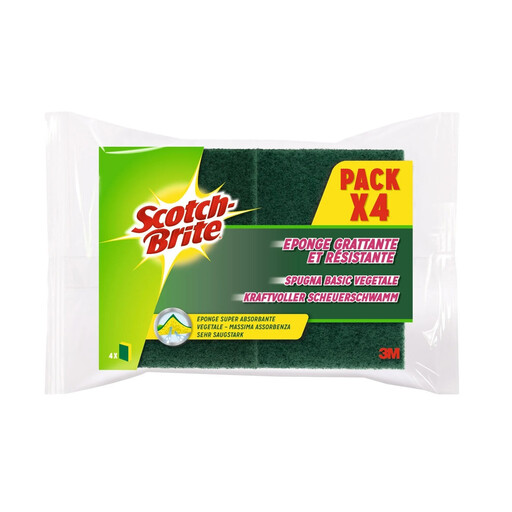
Why this choice suits this profile : This pack of four sponges is suitable for everyday washing-up and general household cleaning. It combines a green scrubbing side with a plant-fibre side for absorbing liquids.
The dual-sided design means you do not have to use the abrasive side for every task, helping to reduce the risk of damaging sensitive surfaces.
Pack of 4 sponges, with a scrubbing side and an absorbent side made from plant-based cellulose.
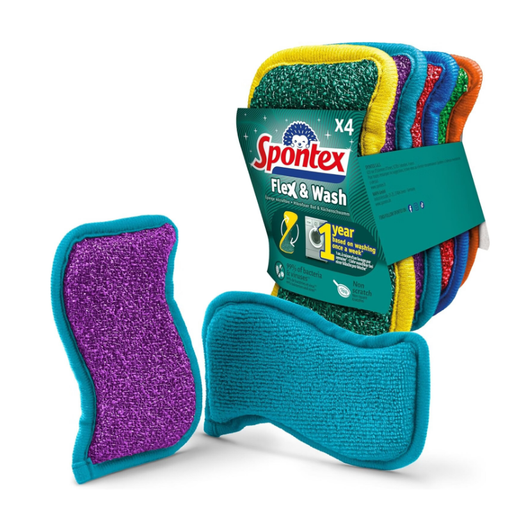
Why this choice suits this profile : If you prioritise reusable accessories, these sponges can be used in the kitchen, bathroom or on a range of household surfaces.
The stated ability to withstand up to 52 wash cycles helps reduce frequent replacements, provided you follow the care instructions.
Pack of 4 sponges, flexible design, microfibre side and scrubbing side containing recycled fibres.
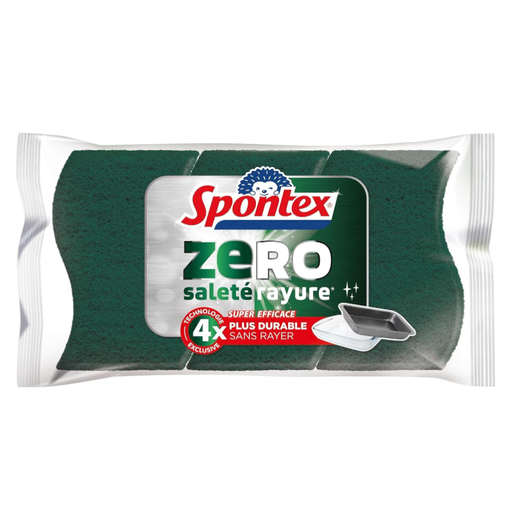
Why this choice suits this profile : This pack is aimed at households that regularly clean saucepans, hobs and heavily soiled surfaces.
The scrubbing particles are described as non-scratch, but testing the sponge first is still recommended, particularly on sensitive coatings.
Pack of 3 sponges designed for heavily soiled surfaces, machine washable at 40 °C according to the product information.
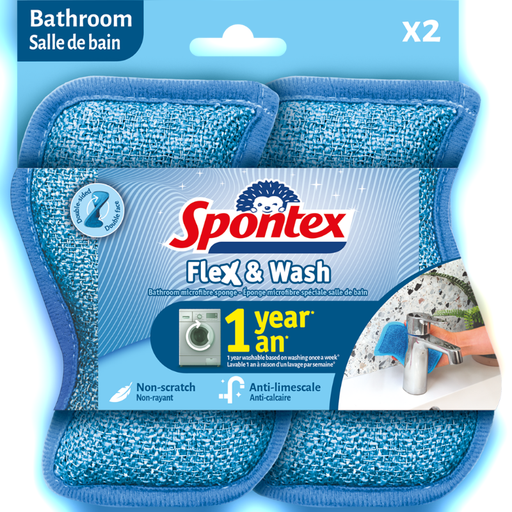
Why this choice suits this profile : Its microfibre side is suitable for glass and mirrors, while the scrubbing side tackles limescale and bathroom grime.
The two sides are intended for different tasks, helping you avoid scrubbing a glass panel with an abrasive texture.
Machine washable at up to 40 °C, with a microfibre side, an absorbent foam core and a design suited to bathroom cleaning.
We have put together a comprehensive, real-time updated selection of products that meet these strict criteria and European safety regulations.
Rinse the sponge before using it for the first time, then after every clean. Remove food residue, wring it out and leave it to air-dry. Do not use the same sponge for washing-up and bathroom cleaning.
The lifespan depends on the condition of the product. Several models recommend replacing the sponge every two months, while a machine-washable sponge can last longer if it remains clean, flexible and intact.
An antibacterial sponge may have a treatment applied to its scrubbing side. According to the manufacturer’s information, this is intended to limit the spread of bacteria. However, it does not replace rinsing, drying or regularly replacing the sponge.
For everyday use, ensuring good water drainage and following a suitable care routine remain the best habits.
Choose a sponge explicitly described as non-scratch and suitable for delicate coatings. Use the soft side where indicated. Avoid abrasive surfaces that are not designed for non-stick cookware, even if they seem effective on cooked-on residue. Always test the sponge on a small area before using it across the entire surface.