
Livraison le jour même ou le lendemain

Qualité garantie

Débloquez vos offres de bienvenue: Livraison GRATUITE | Jusqu'à -80 % | 30 jours d'essai gratuits à JoyPlus
Téléchargez l'application
An essential tool for kitchen cleaning, the right multipurpose scouring sponge is a must-have. Yet, finding the perfect one can feel like an uphill battle. Who hasn't cursed at a sponge that separates after just three washes, or whose scouring side left a permanent scratch on a brand-new pan? Fortunately, these disappointments aren't inevitable.
Store shelves are filled with tempting promises, but not all sponges are created equal. Before you fill your cart, here are the three pitfalls to know to avoid purchases you'll immediately regret:
Knowing how to spot these warning signs before you buy is the key to making a smarter, more cost-effective choice in the long run.
To stop buying blind, focus on a few objective technical criteria. These are the true guarantors of a sponge's quality and longevity.
The effectiveness of a dual-sided sponge lies in the complementary nature of its two sides.
A sponge's longevity is directly linked to the quality of its materials and manufacturing. A thermal bond (heat welding) between the two sides is far more reliable than simple gluing. Examine the join: if it looks clean and perfectly fused, that's a good sign. The foam's density is also a critical factor; dense foam will better resist compression and retain its absorbent properties for longer.
For intensive family use or the needs of a small business, buying in bulk is the most practical solution. A 10-pack of sponges, for example, ensures you have a comfortable stock and allows you to follow hygiene recommendations (change your sponge every 2-3 weeks) without running to the supermarket. It saves time and money, with the certainty of always having a clean and effective dish sponge on hand.
Because every cleaning task has its own demands, here are our recommendations for different needs, selected based on their quality and durability.
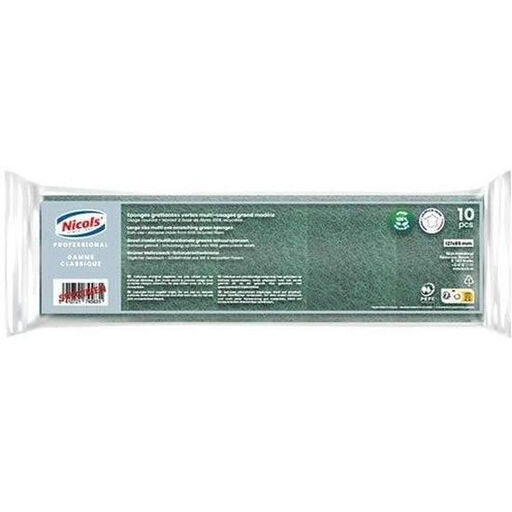
The Verdict: Perfect for families or small businesses looking for a reliable and economical stock for daily kitchen and household cleaning.
Its dual-layer design is built to withstand heavy use, preventing the premature separation of the scouring side—a common flaw in entry-level models.
The 10-pack offers excellent value, making it ideal for regular replacement. Its green abrasive side tackles tough residue on non-sensitive surfaces.
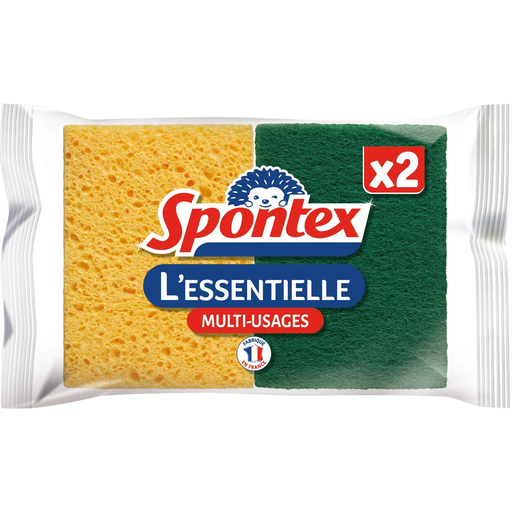
The Verdict: The trusted solution for daily dishwashing and countertop maintenance, with the added bonus of a plant-based cellulose sponge.
Its scouring side provides effective cleaning without being overly aggressive, reducing the risk of scratching surfaces when used with care.
Its plant-based cellulose sponge side ensures excellent absorbency. This is a product from a reputable brand, which is a guarantee of quality and consistency.
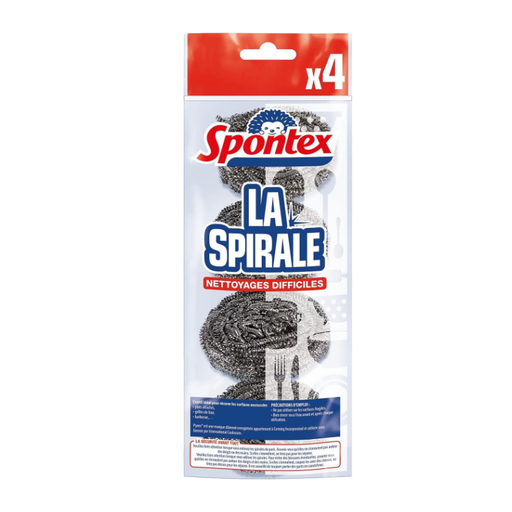
The Verdict: For those hopeless cases where a standard sponge just gives up. Perfect for barbecue grills, burnt-on food in casserole dishes, and truly caked-on grime.
This is a specialist's tool. It saves you the frustration (and waste) of ruining a multipurpose sponge on a task that's too tough for it.
Made from stainless steel, it won't rust and holds its shape. Its mesh structure provides formidable scouring power on surfaces that aren't prone to scratching.
Sometimes, a simple sponge isn't enough. For tackling blackened tile grout, for example, a dedicated tool makes all the difference. Discover our selection of products that meet strict criteria for performance and compliance.
For obvious hygiene reasons, it is recommended to replace your kitchen sponge every two to three weeks. As breeding grounds for bacteria, damp sponges require regular replacement to ensure a healthy kitchen.
To extend its life and limit bacterial growth between replacements, a few simple steps are all it takes:
Absolutely not. The abrasive side is a scouring pad reserved for tough jobs. Using it on delicate surfaces can cause irreversible scratches. Be sure to avoid it on:
When in doubt, the golden rule is to always test on a small, inconspicuous area before you begin.