
Livraison le jour même ou le lendemain

Qualité garantie

Débloquez vos offres de bienvenue: Livraison GRATUITE | Jusqu'à -80 % | 30 jours d'essai gratuits à JoyPlus
Téléchargez l'application
A sponge may seem like an insignificant purchase. Yet choosing the wrong one can leave you with fibres coming loose, a surface that holds on to grease or scratches on a non-stick pan. Whether you live alone or with a family, the right model mainly depends on the surfaces you need to clean, how often you use it and the level of dirt.
An abrasive surface designed to remove burnt-on residue may be perfectly suitable for a stainless-steel saucepan, but far too harsh for a non-stick pan, ceramic hob or glass surface. The term ‘non-scratch’ should always be considered alongside the compatible materials and the manufacturer’s instructions.
Even a non-scratch sponge should be tested first on an inconspicuous area when used on a shiny, painted or coated surface.
A sponge advertised as durable will not look after itself. Food residue and grease can become trapped in the scouring layer. So check whether the product is machine washable, whether it rinses clean easily or whether its texture helps prevent dirt from building up.
How often you need to replace it also depends on how it is used. A sponge used several times a day in a family home will not wear out at the same rate as one kept for a secondary sink.
A pack of household sponges can be cost-effective, but not every item is necessarily designed for the same tasks. An absorbent kitchen sponge is useful for wiping and rinsing, while a grease-cutting sponge or abrasive surface is better suited to stubborn residue. To avoid transferring dirt from one room to another, it is best to keep some sponges for washing up and others for the bathroom.
A dual-sided sponge makes it easy to switch from scrubbing to wiping without changing accessories. The scouring side lifts dry or greasy residue, while the soft side absorbs water and provides the finishing touches.
However, the level of abrasion is not always obvious at first glance. A traditional green scouring layer can be more aggressive than a soft or microfibre texture. For pans and delicate surfaces, choose a product that clearly states its usage limitations.
Plant-based cellulose is a common choice for an absorbent sponge. It holds water, rinses easily and is suitable for everyday cleaning of worktops, sinks and utensils. Polyurethane and certain synthetic foams offer a different grip and may dry more quickly.
A microfibre sponge is particularly useful for wiping marks and liquids, especially on smooth surfaces. However, it does not always replace a scouring surface when dirt is ingrained.
Check the practical details:
After each use, rinse the sponge thoroughly, wring it out without twisting it excessively, then leave it to dry in a well-ventilated place. Never use it on skin, a hot hob or a heating element.
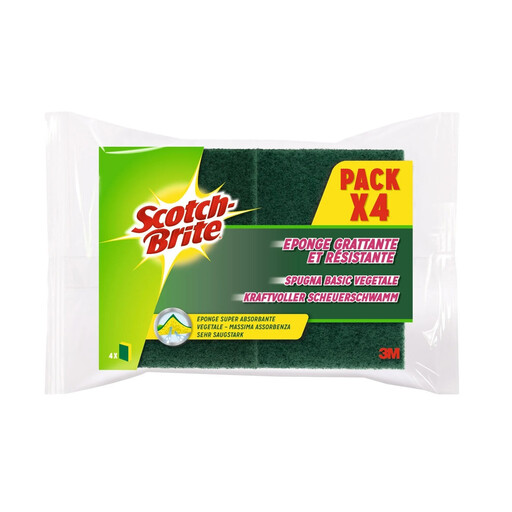
Why this choice suits this profile : This pack of four sponges is a great way to get started with a dual-sided kitchen model, suitable for everyday tasks and the typical needs of a household.
The distinction between the green scouring side and the absorbent plant-based sponge makes each use clear. However, the product information states that it should not be used on delicate or easily scratched surfaces.
Pack of 4 sponges, with an absorbent plant-based cellulose side and a scouring layer designed for everyday dirt.
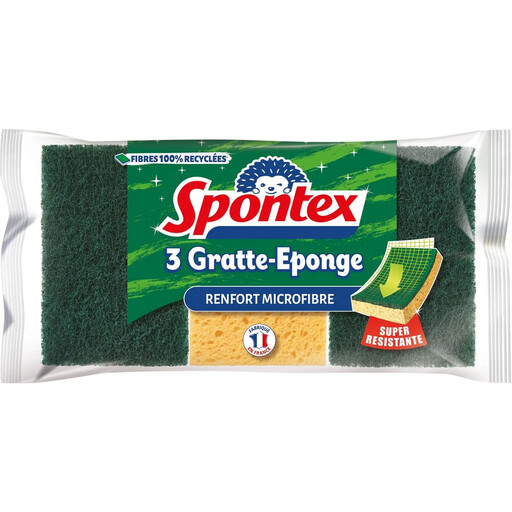
Why this choice suits this profile : Users who value quality finishes and versatility will appreciate the combination of a microfibre side and an absorbent plant-based sponge.
The microfibre side is intended for more sensitive surfaces, while the scouring texture is reserved for stubborn dirt. A preliminary test is recommended on delicate coatings.
Pack of 3 sponges, with an absorbent plant-based side, microfibre texture and machine washing indicated at 40 °C.
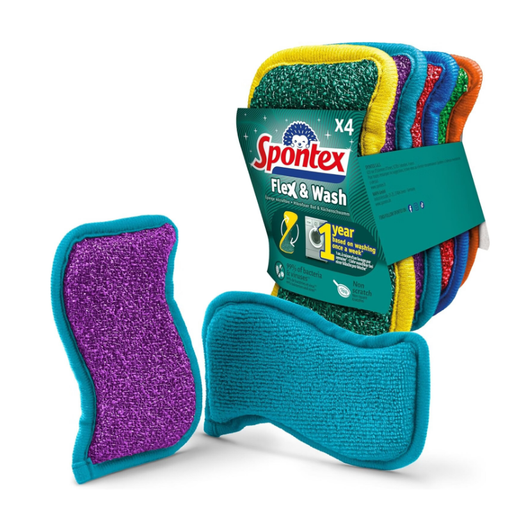
Why this choice suits this profile : This pack is aimed at households tackling washing up, kitchen cleaning, bathroom cleaning or car care, and looking for a washable sponge.
Machine washing means you do not have to throw the sponge away at the first sign of grime. The product information states that it can withstand up to 52 cycles and recommends replacing each sponge after around one year, or as soon as its effectiveness decreases.
Pack of 4 sponges, flexible shape, microfibre side, scouring side described as non-scratch and recycled fibres according to the product information.
We have put together a comprehensive, regularly updated selection of products that meet these demanding criteria and European safety standards.
To protect your washing-up and extend the sponge’s lifespan:
A washable sponge should also be cleaned at the temperature stated on its packaging. However, washing it does not guarantee permanent hygiene.
Choose a sponge for delicate surfaces whose compatibility with non-stick coatings is explicitly stated. Avoid traditional abrasives and always test the product on a small area if recommended in the instructions.
There is no universal lifespan. Follow the manufacturer’s guidance and monitor the condition of the sponge. A model that is used frequently may need replacing more often than one taken out of the cupboard only occasionally. Even washable sponges should be replaced as soon as their structure or absorbency begins to deteriorate.
It can be useful if you often clean oily dishes or very greasy surfaces. It mainly depends on how easily it rinses clean and how often you use it. Compare the number of pieces, washing options and compatible surfaces rather than relying solely on the marketing claim.