
Livraison le jour même ou le lendemain

Qualité garantie

Débloquez vos offres de bienvenue: Livraison GRATUITE | Jusqu'à -80 % | 30 jours d'essai gratuits à JoyPlus
Téléchargez l'application
A sponge that falls apart after just a few uses, a brush that is too harsh for grouting or a cleaning eraser used on an unsuitable surface can quickly turn a small chore into a wasted purchase. To choose the right cleaning sponges and brushes, it is best to consider the material, level of abrasion, care requirements and surface you need to clean.
An effective scrubbing sponge for cleaning a saucepan can leave scratches on a ceramic hob, a shiny sink or a painted surface. The term « non-scratch » should therefore be treated with caution: it all depends on the material being scrubbed, the pressure applied and any particles that may become trapped between the accessory and the surface.
Before using it for the first time, always test it on a discreet area. Non-stick cookware, delicate glass, varnished wood, lacquered surfaces and polished finishes should generally be cleaned with the soft side of a washable sponge or with a suitable cloth.
A sponge that remains constantly damp can retain food residue, soap and various types of dirt. Even when a model is described as durable, it should be rinsed, thoroughly wrung out and left to air-dry.
Its lifespan depends on how often it is used, the products applied and the condition of the fibres. A frayed, smelly or less absorbent sponge should be replaced, even if it has not yet reached its stated theoretical lifespan.
A bathroom cleaning brush, a washing-up brush and an accessory intended for the car are subject to different requirements. Stiff bristles may be ideal for grouting but unsuitable for a car body. Likewise, a cleaning eraser made from melamine foam works through micro-abrasion: it is not suitable for skin, shiny surfaces, wood or certain car components.
A sponge combining a scrubbing side with an absorbent side means you do not have to change tools halfway through the same task. On a delicate surface, however, always use the softest part.
An angled head is particularly useful for right-angled corners, window rails, around taps and grouting. A corner brush with a non-slip handle gives you better control when the area is wet.
For washing up, an ergonomic shape improves grip. For the car, a microfibre car wash mitt should remain sufficiently soft and be rinsed regularly to remove sand and particles that could scratch the paintwork.
Check whether the accessory can be washed in a washing machine or dishwasher, at what temperature and under which conditions. Some manufacturers advise against using fabric softener, a tumble dryer or highly corrosive products. These instructions are far more informative than a simple promise of long-lasting performance.
For accessories intended for the body, it is essential to keep uses separate: a kitchen sponge must never be used as an exfoliating sponge, and a household brush should not be used on the skin.
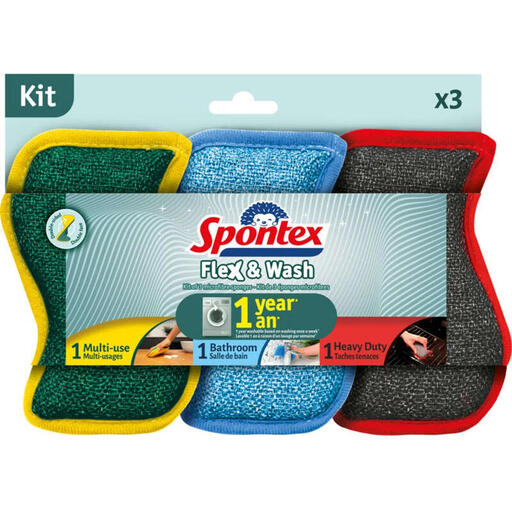
Why this choice suits this profile : This pack of three sponges covers everyday kitchen and bathroom tasks, without requiring you to buy multiple accessories from the outset. Their flexible design makes it easier to reach awkward corners and difficult surfaces.
The two sides mean you do not need to buy several tools, but the manufacturer recommends testing the sponge on delicate surfaces and replacing it approximately every two months.
A scrubbing side and a soft side, a plant-based cellulose sponge, easy rinsing after use and a pack of three.
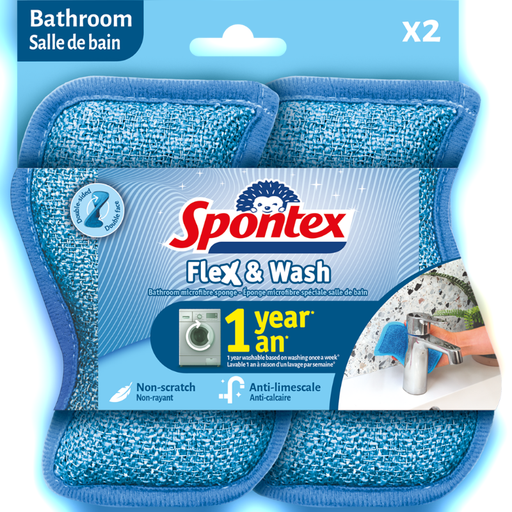
Why this choice suits this profile : Those looking to reduce waste will appreciate this machine- or dishwasher-washable sponge. It combines a microfibre side for glass with a scrubbing side for tackling limescale.
The option to wash it up to 52 times provides a clear benchmark, rather than vague claims about durability. However, you must respect the maximum temperature of 40 °C and avoid using fabric softener.
Recycled fibres stated by the manufacturer, machine-washable construction and a microfibre side designed for mirrors and windows.
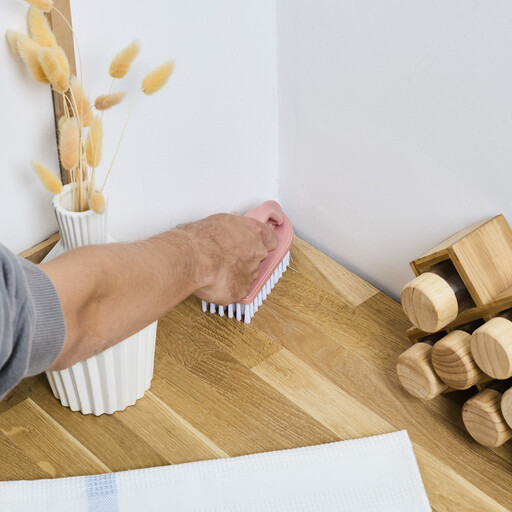
Why this choice suits this profile : Its angled head targets grouting, rails, around plugholes and narrow spaces. It is ideal for households that regularly clean their bathroom, kitchen or the smallest corners of a car interior.
The stiff bristles are suitable for hard-wearing areas, but testing on a discreet section is still essential for polished or delicate finishes, helping to minimise the risk of scratches.
A non-slip handle, an angled head, dense synthetic bristles and a hanging hole to make drying easier.
We have put together a complete, real-time updated list of products that fully meet these strict selection criteria and European safety regulations.
After each use, rinse the sponge or brush until the water runs clear. Wring it out without distorting the fibres, then leave it to dry in a well-ventilated place. Avoid mixing accessories used in the kitchen, bathroom, car and for body care.
When cleaning a car body, the car wash mitt should be used wet, with a suitable solution. Never scrub when dry and do not allow sand to build up in the fibres. For a facial cleansing brush, an exfoliating sponge or a body brush, limit use to the outer surface of the skin, using gentle movements and following the instructions. If irritation occurs, stop using it immediately.
It depends on the model and how well it is cared for. Some sponges are designed for around 52 washes, while others should be replaced approximately every two months, or as soon as their texture starts to deteriorate. Rinsing and drying after each use play a decisive role.
Choose a sponge specifically designed for delicate surfaces and test it first on a small area. Do not use the scrubbing side of a standard sponge without checking the manufacturer’s recommendations. Grit and residue trapped in the fibres can also leave marks.
No. A melamine foam eraser can wear down during cleaning and work through abrasion. It should not be used on skin, shiny or polished surfaces, wood, sensitive stainless steel, non-stick coatings or car surfaces where the instructions advise against it.