
Livraison le jour même ou le lendemain

Qualité garantie

Débloquez vos offres de bienvenue: Livraison GRATUITE | Jusqu'à -80 % | 30 jours d'essai gratuits à JoyPlus
Téléchargez l'application
Watching your child explore, climb, and gain confidence is one of a parent's greatest joys. The Pikler triangle has become a playroom staple for encouraging autonomy and independent movement. But be warned: with an overwhelming number of options on the market, it's easy to fall into common traps that turn a great investment into a bulky, or even dangerous, piece of furniture.
To help you avoid buyer's remorse, let's review the two most common mistakes before you choose the structure that will accompany your child for years to come.
To avoid these pitfalls, focus on a few technical specifications that make all the difference.
Safety is the non-negotiable criterion. A motor skills structure is meant to be climbed on, shaken, and put to the test. Ensure the product complies, at a minimum, with the European toy safety standard EN 71. In practice, this means:
The durability of a wooden toy for a 3-year-old directly depends on the type of wood used.
This choice depends on the space you have and the versatility you're looking for.
Because every family is unique, here is our selection of products that meet specific needs, all validated against our safety and durability criteria.
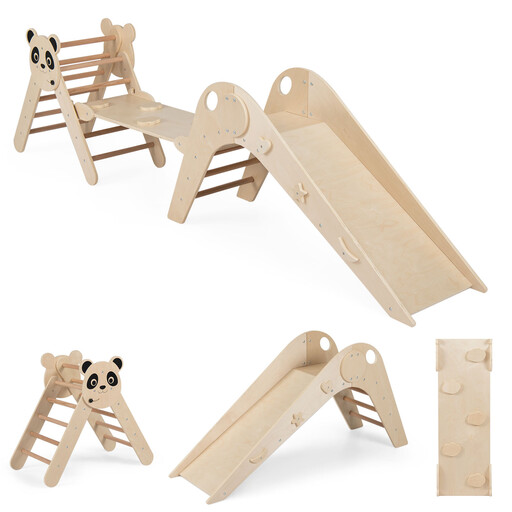
Why we chose it: Perfect for parents looking for an all-in-one solution. This set combines a triangle, a reversible ramp, and a balance bridge, allowing for endless courses for children aged 3 and up.
The main structure is foldable for easy storage, while its solid beech wood and plywood construction provides the necessary sturdiness, avoiding the softwood trap.
The complete set (triangle, slide, bridge) allows for versatile and evolving use, keeping the child engaged over the long term.
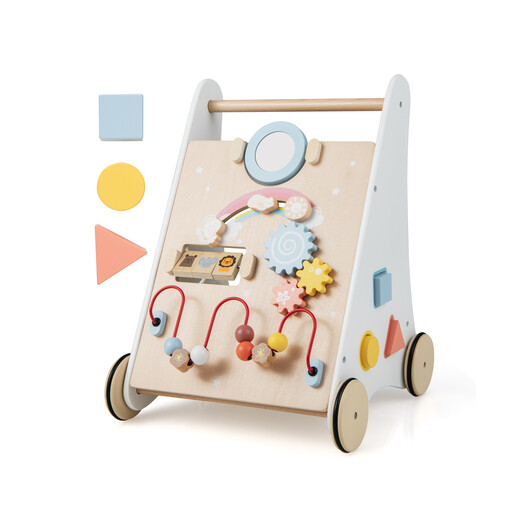
Why we chose it: Before they can climb, they must walk. For parents of children around one year old, this walker is an excellent first step to develop balance and coordination, paving the way for more complex structures.
Its quality wood construction with rounded edges and rubberized wheels ensures safe, quiet use, protecting both the child and your home's floors.
The integrated 7-in-1 activity center stimulates fine motor skills in addition to walking—a real bonus for early development that goes far beyond a simple walker.
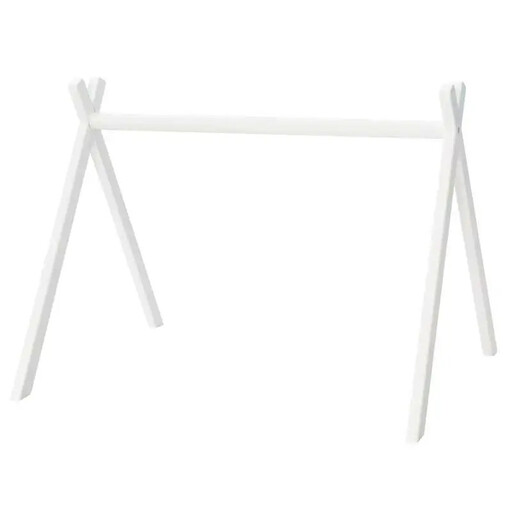
Why we chose it: For parents who want to introduce their newborn to independent movement, this play gym is the ideal starting point. It encourages the baby to grasp, touch, and develop hand-eye coordination long before they are ready to climb.
Its simple, white-lacquered wood structure is stable and easy to clean. Designed for use on the floor, it eliminates height-related risks for the youngest children.
A perfect first investment for sensory development, it fits into a holistic Montessori approach and prepares the ground for future stages of motor development.
Our editorial team has compiled a selection of products that meet our demanding selection criteria and current safety standards.
Most manufacturers recommend use as soon as a child can stand and begins to show an interest in climbing, often between 18 months and 2 years. However, every child develops at their own pace. The important thing is to let them explore the structure in their own way, without ever forcing them, and always under adult supervision.
Yes, provided you choose a high-quality model. A well-designed foldable motor skills structure has a secure locking system (often with robust pins or tightening knobs) that guarantees perfect stability once unfolded. Before buying, pay close attention to this mechanism.
This is where a foldable model truly shines. Once folded, it becomes flat and can be slid against a wall, behind a door, or under a bed. For non-foldable models, consider repurposing it as a decorative element: some parents hang string lights on it or use it as a fort by covering it with a simple sheet.