
Livraison le jour même ou le lendemain

Qualité garantie

Débloquez vos offres de bienvenue: Livraison GRATUITE | Jusqu'à -80 % | 30 jours d'essai gratuits à JoyPlus
Téléchargez l'application
Watching your child pull themselves up and attempt their first steps is an unforgettable moment. To support them in this great adventure, the baby walker (or push walker) stands out as an excellent choice. But be careful: faced with an overwhelming number of options, the pitfalls are numerous, and it's easy to make a bad purchase. As a product expert at Joybuy, my mission is to help you see things more clearly and to break down the criteria that truly make a difference.
Before you start shopping, it's best to know the common mistakes. A successful purchase begins with knowing how to see through false promises and design flaws that aren't immediately obvious.
To ensure this purchase is a real asset in your child's development, here are the key technical points to check.
A walker's primary function is to offer stable support. Its structural design is therefore non-negotiable.
A good baby walker is also a fantastic developmental toy for a 1-year-old. It should stimulate their curiosity and the development of their fine motor skills.
The choice of material influences the walker's aesthetics, weight, sturdiness, and maintenance.
To illustrate these criteria in practice, here is a selection of models that meet different needs and budgets.
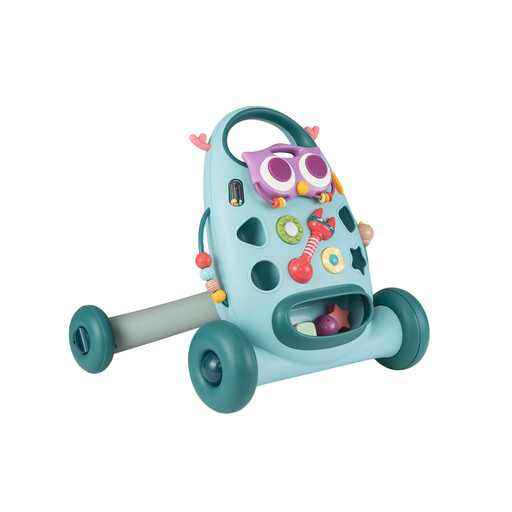
Why we chose it: This model combines a secure walking aid with a complete, detachable activity centre, making it ideal for growing with your child from floor play to first steps.
Its triangular structure provides excellent stability (pitfall #1), and its removable play panel offers fine motor skill activities (shape sorter, beads) that go beyond simple passive stimulation (pitfall #2).
The adjustable speed control on the rear wheels allows you to adapt the walker to your child's pace, ensuring a gradual and secure confidence boost.
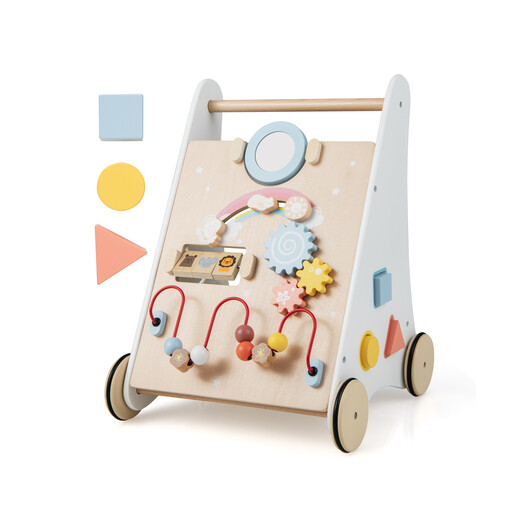
Why we chose it: For families who prefer sustainable materials and a clean, Montessori-inspired design. This wooden walker is both a developmental toy and a beautiful object.
Its quality wood construction gives it a weight and sturdiness that guarantee excellent stability (pitfall #1). The rubber-trimmed wheels protect floors and are quiet (pitfall #3).
The storage basket at the back is a practical and fun detail, encouraging the child to transport their favourite stuffed animals and toys, which adds a role-playing dimension.
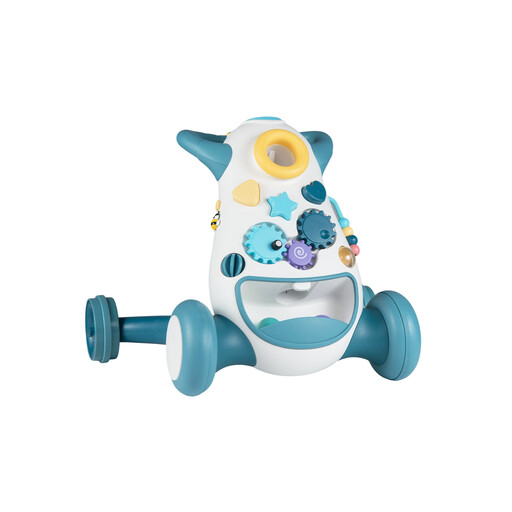
Why we chose it: A straightforward and effective option that focuses on the core functions: a reliable walking aid and an engaging activity panel for excellent value.
It integrates motor skill activities (shape sorter, gears) that add real developmental value, balancing sound and light stimulation (pitfall #2) with active learning.
The combination of a stable walking support and an integrated activity centre makes it a practical all-in-one solution for parents looking for the essentials without compromising on safety.
We have compiled a complete and updated list of products that meet these strict selection criteria and French safety standards.
There is no fixed age, as every child develops at their own pace. Generally, a push walker becomes relevant when your baby starts to pull themselves up on furniture, often between 9 and 12 months. They should be able to stand with some confidence before using a push toy.
The distinction is crucial. A "seated walker" is a frame with a fabric seat in which the child is suspended. Their use is strongly discouraged by pediatricians because they can harm proper walking development. A push walker, on the other hand, is a toy that the child pushes in front of them while standing. It promotes balance, coordination, and muscle strengthening in a much more natural way.
Simply check the composition of the wheels. Opt for models whose wheels have a rubber or silicone coating. This soft strip provides better grip, significantly reduces noise on hard floors, and, most importantly, prevents scratches on hardwood, tile, or linoleum.