
Livraison le jour même ou le lendemain

Qualité garantie

Débloquez vos offres de bienvenue: Livraison GRATUITE | Jusqu'à -80 % | 30 jours d'essai gratuits à JoyPlus
Téléchargez l'application
For any parent, ensuring an environment that is both stimulating and safe for their child is a constant quest. The Montessori climbing triangle has become a staple in playrooms, praised for its benefits in fostering autonomy and motor skills. But be warned: with an overwhelming number of options on the market, it's easy to fall into costly traps. This guide is designed to arm you with the right criteria, see through marketing ploys, and invest with confidence.
Before taking the plunge, watch out for these three classic mistakes that too often turn a good investment into a regret.
To ensure you make the right choice, focus on these three fundamental points.
The sturdiness and safety of a wooden activity gym depend primarily on the choice of material.
An indoor climbing toy for kids must be rock-solid.
A good climbing triangle is a long-term investment. The ability to add components transforms it from a simple toy into a complete activity course. The key accessory is the reversible ramp, which serves as a slide on one side and a climbing wall on the other. Make sure the climbing triangle with a slide you're considering offers an attachment system that is both simple and perfectly secure.
Rather than an endless catalogue, here is a selection of models that meet specific needs, all vetted against our quality and safety criteria.
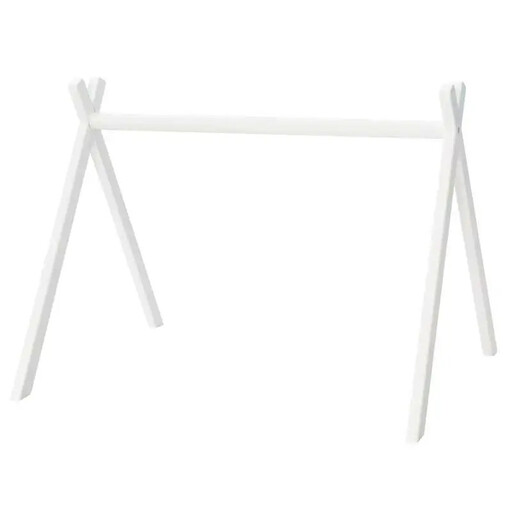
Why we chose it: Perfect for the little ones (from 3 months), this arch is an excellent introduction to the Montessori spirit. It focuses on a single mission: stimulating hand-eye coordination and encouraging the baby to grasp hanging toys, without overstimulating them.
This model avoids the "all-in-one" trap with a minimalist structure dedicated to a single developmental function. It's exactly what's needed to respect an infant's cognitive abilities.
Its lacquered wood design wipes clean easily. Compatible with many hanging toys, it allows you to easily refresh the child's interest.
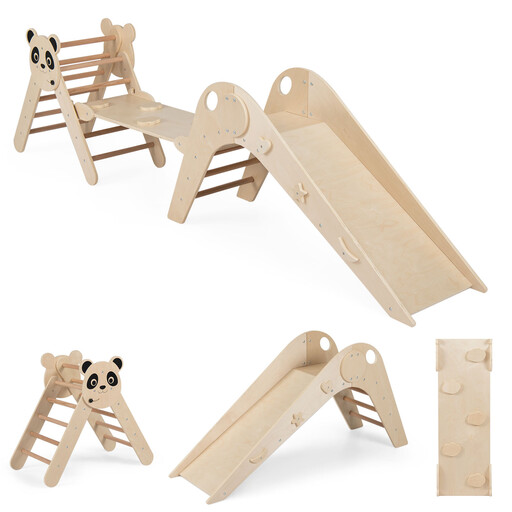
Why we chose it: This is the complete solution for children aged 3 and up. It combines a triangle, a ramp/slide, and a balance arch, all in a foldable format specially designed for apartments and space-conscious homes.
It sidesteps the "pseudo-foldable" trap with a design that allows for quick and easy storage against a wall. Its construction from solid beech wood immediately eliminates the risk of low-quality materials.
A highly versatile 3-in-1 set for developing balance and coordination. Its foldable function is a real bonus for optimising play space on a daily basis.
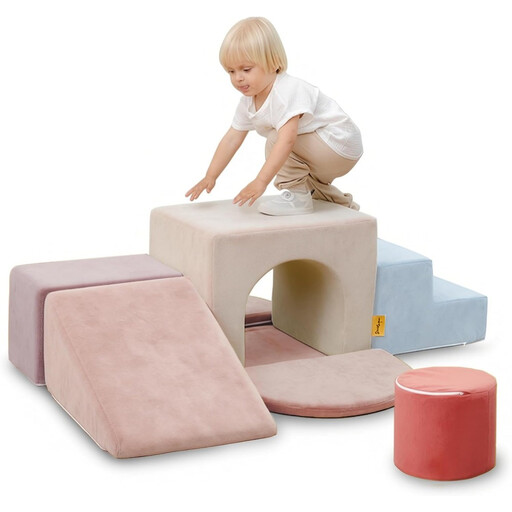
Why we chose it: For parents whose top priority is a 100% soft play surface, these foam blocks are the ideal alternative to wood. They allow for endless creation of courses, tunnels, and forts, stimulating creativity and motor skills with no risk of bumps or scrapes.
This concept by design eliminates the risks associated with wood (splinters, instability). The high-density foam and soft covers absorb all impacts and ensure maximum safety in case of a fall.
EN71 certified, featuring a non-slip base and removable, machine-washable covers for perfect hygiene.
Discover our complete selection of climbing structures, all rigorously checked for quality and compliance with safety standards.
It depends more on your child's developmental stage than their age. Generally, a baby can start exploring a triangle as soon as they can pull themselves up to a standing position and try to climb, often between 12 and 18 months. Constant supervision is, of course, essential at the beginning, as is choosing a structure appropriate for their size.
Yes, provided its locking system is high-quality. Reputable models use robust safety pins or tightening screws that ensure rigidity equivalent to that of a fixed model. Before buying, be sure to research the type of mechanism used to guarantee rock-solid stability.
Maintenance is very simple. A wipe with a damp cloth is enough to remove dust and small marks. Just avoid harsh detergents that could damage the varnish. Also, remember to check the tightness of the screws from time to time to ensure the structure remains perfectly stable.