
Livraison le jour même ou le lendemain

Qualité garantie

Débloquez vos offres de bienvenue: Livraison GRATUITE | Jusqu'à -80 % | 30 jours d'essai gratuits à JoyPlus
Téléchargez l'application
A set of foam motor skills blocks for children is all you need to transform a corner of your living room, a nursery or a reception classroom into an adaptable play area. The modules let children climb, crawl, build a mini obstacle course or practise their balance, without requiring a permanent installation.
However, an attractive photo does not guarantee a worthwhile purchase. Some products are difficult to clean, too lightweight to stay in place or unsuitable for the child’s age. Here are the key criteria to consider before placing your order, followed by a selection suited to a range of uses.
The term XXL foam building blocks often refers to the overall size, but says nothing about the number of pieces or the variety of shapes. A set made up of several elements in different sizes offers more possibilities: tunnels, steps, slopes, dividers or a motor skills course for babies.
Before ordering, check:
Soft foam does not necessarily mean a stable structure. For an indoor climbing toy for children, choose pieces with a non-slip base, as well as fasteners that allow the modules to be connected to one another.
Hook-and-loop strips help prevent movement during play. However, they do not replace adult supervision, particularly when a child is climbing or using a slope. The floor should be flat and clear, with the equipment placed a safe distance from furniture with hard edges.
The blocks are regularly exposed to dirty hands, shoe marks, spills and crumbs. A fixed cover makes cleaning considerably more difficult. For family use or childcare settings, choose washable foam blocks with removable, machine-washable covers, following the manufacturer’s instructions.
Also check whether balls are included when buying a foam ball pit. Some sets include the pit and the modules, but not the balls.
Product descriptions sometimes refer to high-density or high-resilience foam. These terms indicate the material’s ability to withstand movement and regain its shape. On their own, however, they do not provide a precise indication of how firm the blocks are.
For a motor skills play set intended for a toddler, look for the right balance between:
Concealed zips and fasteners positioned out of reach also reduce the risks associated with small parts and repeated handling.
The EN 71 standard covers several aspects of toy safety in Europe. EN 71-1 relates in particular to mechanical and physical properties, EN 71-2 to flammability, and EN 71-3 to the migration of certain elements.
Check for a statement of compliance on the product page, its packaging or its documentation. This does not remove the need to follow the recommended age, warnings and usage instructions. In a childcare setting, keep the traceability information and regularly check the condition of the seams, covers, fasteners and non-slip surfaces.
Vacuum-packed blocks may arrive heavily compressed. According to the product descriptions presented here, allow 24 to 48 hours for them to regain their volume and firmness. Avoid using them immediately after opening if their shape has not yet stabilised.
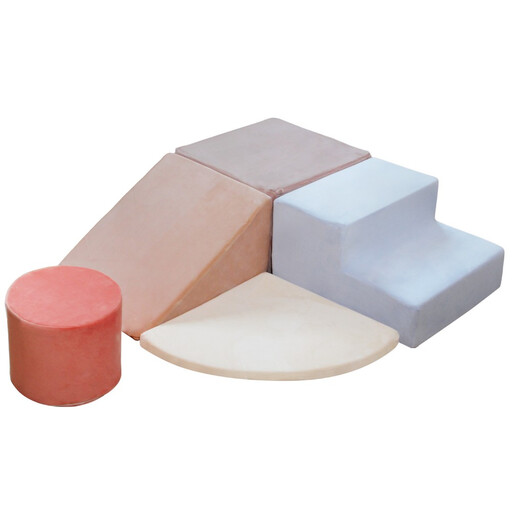
Why this is a good match for this profile : This compact set is ideal for a first installation in a flat or child’s bedroom, with several configurations for climbing, crawling and building.
The product description mentions a non-slip base, hook-and-loop fasteners and removable, machine-washable covers.
A 5-piece high-density foam set with washable covers and vacuum-packed delivery. The manufacturer states that it returns to its original shape within 24 to 48 hours.
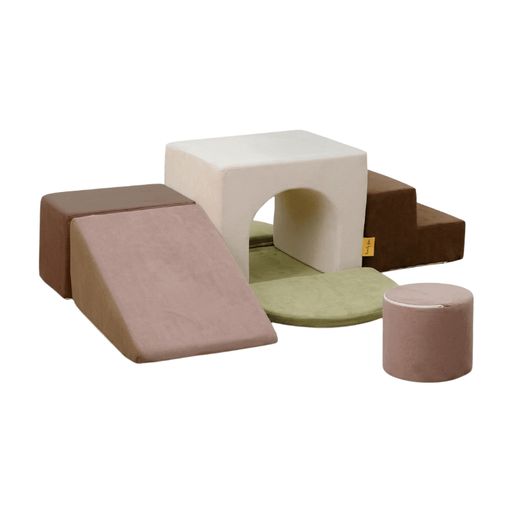
Why this is a good match for this profile : With 7 modules, this set offers greater freedom to create an adaptable Montessori play area, at home or in a dedicated space.
The non-slip base, hook-and-loop connections and concealed fastenings address the main precautions to consider.
7 elements, removable washable covers, high-density polyurethane foam and several configurations for climbing, tunnels or obstacle courses.
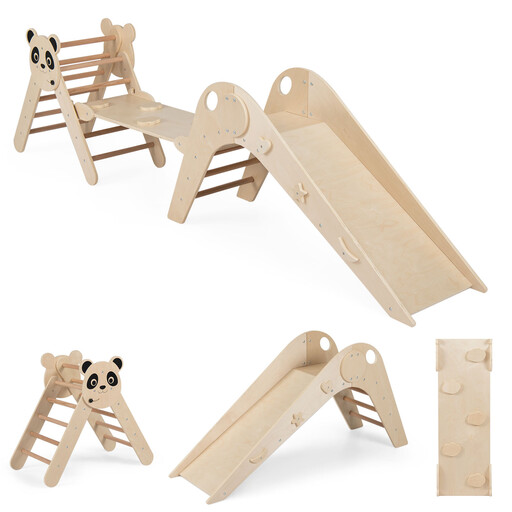
Why this is a good match for this profile : Designed for children aged 3 and over, this wooden climbing set includes a triangle, ramp, balance bridge and slide.
The stated minimum age is 3 years. The triangle folds away for easier storage, but assembly is required before first use.
Beech wood and plywood, handles designed not to wobble, smooth edges and a stated load capacity of up to 50 kg per component.
We have put together a complete, real-time updated list of products that meet these demanding selection criteria and European safety regulations.
To create a motor skills course for babies, start with a low, simple configuration. Place the elements on a sufficiently grippy mat, keep them away from tables and radiators, then observe how your child responds. You can then move the modules around to create a slope, a crawling passage or a small building area.
Before each use, inspect the seams, fastenings, hook-and-loop strips and non-slip underside. Wash the covers at the stated temperature and allow them to dry completely before putting them back in place. In a childcare setting, establish a cleaning routine suited to the frequency of use and the establishment’s internal regulations.
It depends entirely on the product’s design and the manufacturer’s warnings. Some soft modules may be suitable for children who are beginning to crawl, under supervision, while taller structures or wooden obstacle courses may be intended for children aged 3 and over. Always check the product description before buying.
Generally, allow 24 to 48 hours for the foam to regain its volume. Place the blocks in a room at a moderate temperature and do not use them until they have regained their original shape and firmness.
Not always. In the selection presented here, the model with a pit specifies that the balls are sold separately. Check the exact contents of the parcel to calculate the total cost and choose balls suitable for the child’s age.