
Livraison le jour même ou le lendemain

Qualité garantie

Débloquez vos offres de bienvenue: Livraison GRATUITE | Jusqu'à -80 % | 30 jours d'essai gratuits à JoyPlus
Téléchargez l'application
Watching your child stand up and take their first steps is an unforgettable moment. To support them during this crucial stage, a wooden baby walker is an excellent companion. But be warned: not all models are created equal. Some have hidden design flaws that can turn this developmental tool into a source of frustration, or even danger. Our guide is here to help you cut through the marketing hype and make an informed choice.
Before you buy, watch out for these 3 common pitfalls:
To avoid these pitfalls, focus on a few technical features that make all the difference. A good wooden baby push toy is more than just a toy; it's a true developmental partner.
Safety is the non-negotiable criterion. Always check these three points:
Choosing a wooden baby walker isn't just about aesthetics. Wood (such as linden, beech, or even high-quality MDF) offers far superior sturdiness and durability compared to plastic. It gives the toy the necessary weight for stability and stands up much better to bumps and the test of time. It's a long-lasting investment that can be passed down to siblings.
A good multi-activity push walker should stimulate the child without being overwhelming. Manual activities are excellent for developing fine motor skills, hand-eye coordination, and logic. Look for an integrated wooden activity centre that includes:
These sensory and mechanical games promote concentration and problem-solving—key skills for a push toy for ages 1 and up.
Instead of an endless list, we've identified products that meet specific needs. Our goal is to help you find the perfect match for you and your child.
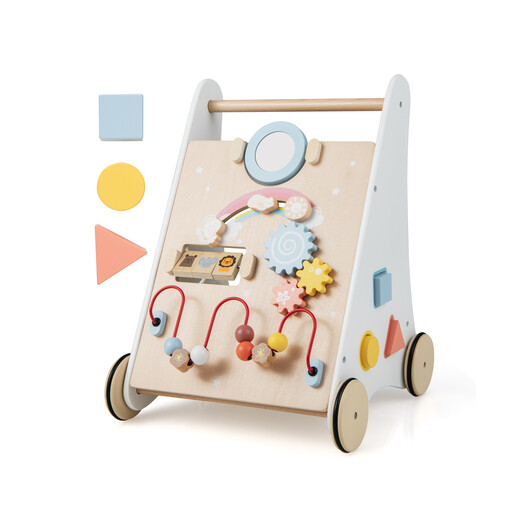
Why we love it: This model ticks all the boxes for parents looking for a 2-in-1 product: a reliable walking aid and a developmental play station. Its ergonomic design is engineered to promote good walking posture.
Its sturdy wooden structure and wide base prevent any risk of tipping. Its rubber-lined wheels ensure controlled, quiet movement, avoiding the dreaded "runaway" effect.
Its 7-in-1 activity centre offers rich and varied stimulation, with no electronics. The rear storage basket is a very practical bonus for carrying a favourite toy and other treasures.
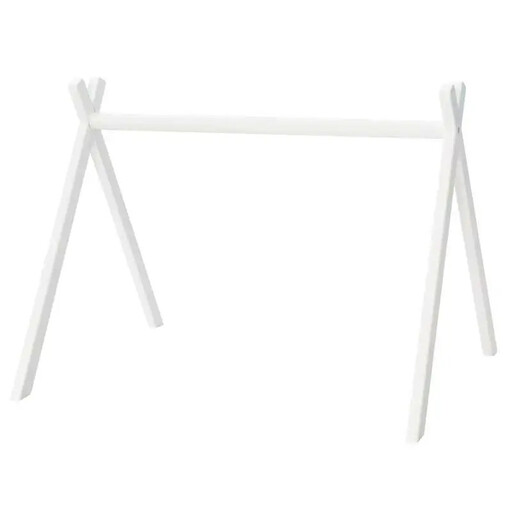
Why we love it: For babies who aren't quite ready to walk but are already developing their motor skills, this activity arch is an excellent first step. It encourages the child to grab, touch, and explore, strengthening the essential muscles needed to eventually stand up.
As this product is not a walking aid, it inherently avoids the risks associated with speed or instability. It focuses on sensory and motor development on the floor—a crucial phase that precedes learning to walk.
Inspired by Montessori principles, it promotes autonomy and hand-eye coordination from the earliest months. Its simple, clean wooden structure can be customised with various hanging toys.
Discover our full selection of products that meet our strict selection criteria and French safety standards.
Using a baby walking aid is recommended as soon as a child can stand up confidently on their own and begins to move around by pulling themselves up on furniture. This often happens between 10 and 14 months, but every child develops at their own pace.
Beyond compliance with the EN 71 standard, inspect the product upon arrival. Check for splinters, ensure all screws are tight, and make sure no parts seem fragile. Correct assembly, following the manufacturer's instructions, is also essential.
A resistance (or brake) system on the wheels is a major asset. It allows you to slow the walker's speed, giving the child time to coordinate their steps without being "carried away." Some models even let you adjust this resistance, which is ideal for adapting to the child's progress.