
Livraison le jour même ou le lendemain

Qualité garantie

Débloquez vos offres de bienvenue: Livraison GRATUITE | Jusqu'à -80 % | 30 jours d'essai gratuits à JoyPlus
Téléchargez l'application
A multi-purpose strong glue can rescue a broken handle, a decoration, a model or even a wall-mounted fixture. However, choosing a product simply because it promises “super glue”, “extra-strong adhesive” or “universal glue” can lead to a fragile repair, a frustrating application or an especially difficult removal.
Before placing your order, keep three pitfalls in mind:
The first question is not “which glue is the strongest?” but rather which materials do you need to join?
Always check the materials excluded on the packaging. Several instant adhesives marketed as multi-purpose are unsuitable for polyethylene (PE), polypropylene (PP) and PTFE.
A liquid formula flows easily into narrow joints. It is well suited to precise repairs, but may run on a vertical surface. A gel glue stays in place more effectively and helps minimise drips and overflow.
The applicator tip also matters:
Instant glue should generally be applied to surfaces that are clean, dry and free from grease. Apply a small amount, position the parts quickly, then hold them firmly together for a few seconds.
Temperature and humidity can affect the result. Some cyanoacrylates should not be used below +10°C, while adhesive sealants must be applied only within the temperature range specified by the manufacturer. For a repair exposed to water, allow it to cure fully before getting it wet, even if the label claims moisture resistance.
The products below are classified according to their format, compatible materials and intended use, rather than on the basis of a vague promise of superior performance.
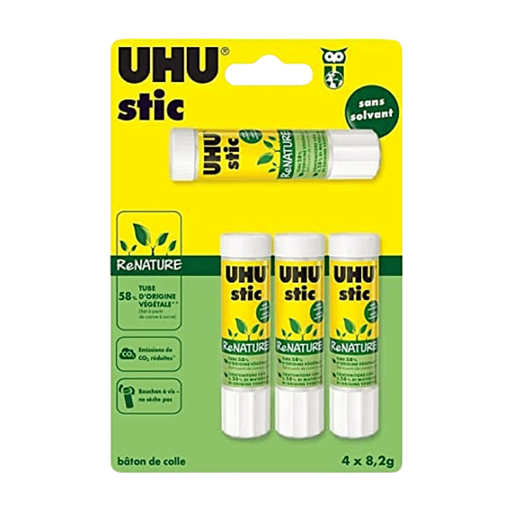
Why this format is a good match: for school, the office, arts and crafts, and paper or cardboard projects at home.
This is not a cyanoacrylate being used incorrectly on paper. Its solvent-free formula is advertised as washable in cold water.
Pack of four 8.2 g sticks, solvent-free formula, 98% ingredients of natural origin according to the product listing, and screw cap.
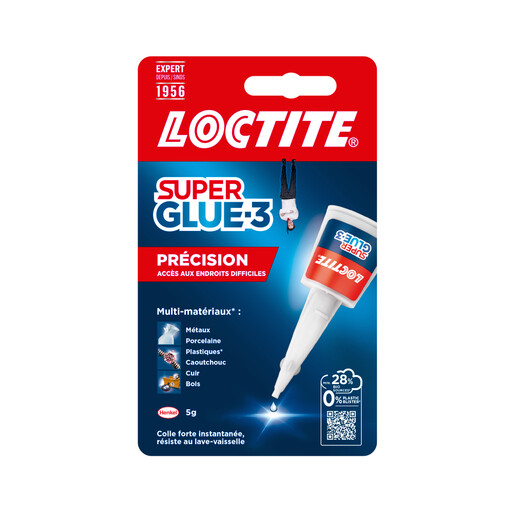
Why this format is a good match: for costume jewellery, decorative objects, ceramics, frames or small repairs requiring precise application.
Its long nozzle helps prevent excess glue and reaches tight corners where a conventional liquid tube can be difficult to control.
Precision nozzle, transparent formula, and advertised compatibility with wood, metal, ceramic, rubber and certain plastics.
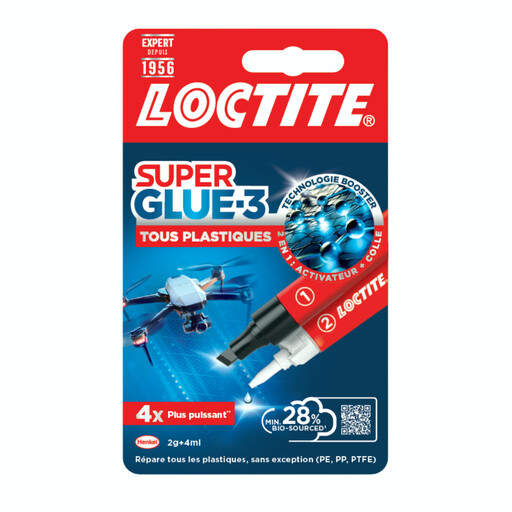
Why this format is a good match: for toys, automotive accessories, appliances and plastic objects whose composition is difficult to identify.
The kit combines an adhesive with an activator pen that prepares the surface before bonding. Testing it on an inconspicuous area is still strongly recommended.
2 g tube and 4 ml activator, advertised transparent finish, and a two-step application designed for technical plastics.
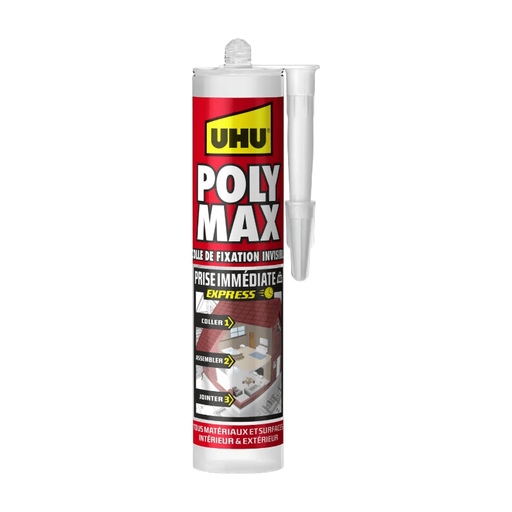
Why this format is a good match: for larger assemblies, bonding different materials, and indoor or outdoor projects requiring a cartridge gun.
Its format is clearly intended for assembly or sealing work. There is no need to repurpose a small instant adhesive to cover a large surface.
300 g cartridge, advertised solvent- and acid-free formula, and stated resistance to water, UV rays and temperatures from −40°C to +100°C.
We have brought together an up-to-date selection of products suited to different bonding and repair needs.
For a mounting adhesive intended for a shelf or skirting board, follow the maximum load, holding time and curing period specified on the packaging. When the load is substantial or subject to repeated movement, adhesive alone may not be a substitute for mechanical fastening.
Start by identifying the type of plastic. On PE, PP and PTFE, a standard cyanoacrylate may not bond properly. A system with an activator, specifically designed for plastic, may be more suitable. Even so, carry out a preliminary test and check the list of materials excluded by the manufacturer.
It depends on the format, how tightly the cap is closed, the temperature and the humidity level. Single-use mini doses help reduce waste for occasional repairs. With a standard tube, wipe the nozzle, close it carefully and follow the storage instructions. If the glue has thickened or the nozzle is blocked, application will be less consistent.
No. A solvent-free glue can be a good choice for paper, cardboard or certain mounting applications, but it does not perform like a cyanoacrylate or an adhesive sealant. The material, contact area, humidity and load all influence the right choice. Read the instructions before buying rather than relying solely on the “multi-purpose” label.