
Livraison le jour même ou le lendemain

Qualité garantie

Débloquez vos offres de bienvenue: Livraison GRATUITE | Jusqu'à -80 % | 30 jours d'essai gratuits à JoyPlus
Téléchargez l'application
A wobbly chair, a broken mug handle, a shoe sole coming loose... When faced with these everyday mishaps, the go-to solution is often a tube of heavy-duty glue. Yet, who hasn't cursed a repair that gives way after just a few days, leaving behind an ugly white residue and a sense of frustration? The truth is, choosing a glue isn't something you can improvise. To avoid disappointment, here are the most common pitfalls to watch out for:
For a bond that truly lasts, forget the marketing slogans and focus on the spec sheet. Here are the three key points to check before you buy.
The glue's chemistry is the secret to its performance.
super glue): This is the quintessential instant adhesive. It's ideal for small, everyday repairs on smooth, perfectly fitting surfaces. It cures in seconds upon contact with ambient moisture. Perfect for ceramics, rubber, or leather, it remains brittle, however, and cannot fill any gaps.This is the starting point for your decision. A wood glue will obviously not have the same effectiveness on glass.
The applicator and texture have a direct impact on the cleanliness and precision of your repair.
For every problem, there's a solution. Here are our recommended products, tailored for specific situations.
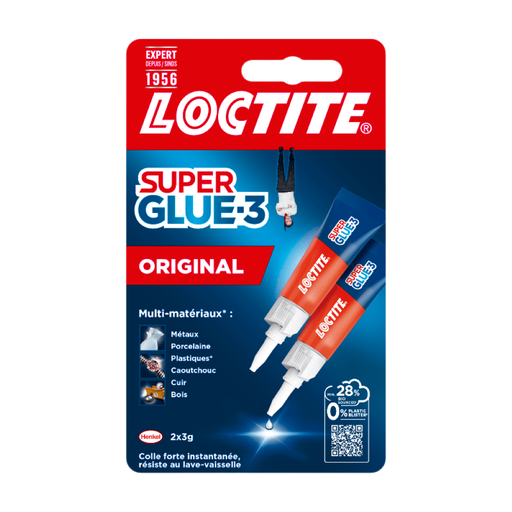
Perfect to keep in a drawer for life's little accidents: porcelain dishes, children's toys, a bag strap... The twin-tube format is as smart as it is economical.
The packaging in small 3g tubes limits waste if the glue dries out after opening. Its spec sheet, which is very clear about non-compatible materials (PE, PP), avoids the disappointments of a "miracle" all-in-one product.
Near-instant bond for express repairs. Dries transparent for an invisible finish. Water and heat-resistant formula (dishwasher-safe according to the manufacturer).
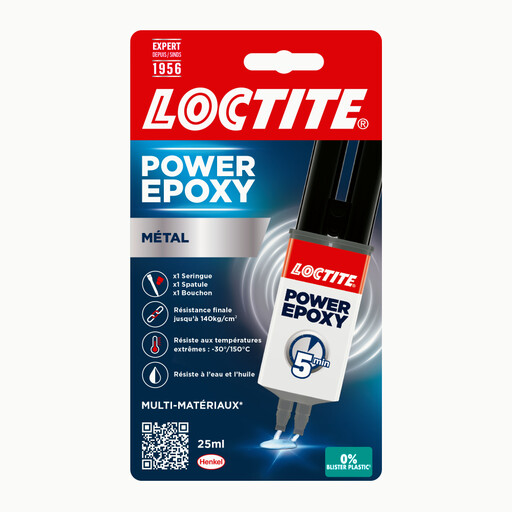
Aimed at demanding DIYers and tradespeople, it provides a structural bond on metal parts (iron, steel, aluminium...). Ideal for repairing a tool, sealing a mechanical part, or filling a gap.
No general-purpose formula here. This is a specialised two-part epoxy, designed to withstand heavy loads where a standard super glue would fail. The syringe ensures a perfect mix of the two components.
Extreme resistance to heavy loads. Can be drilled, sanded, and painted after curing for a flawless finish. Fast 5-minute set time makes clamping easier.
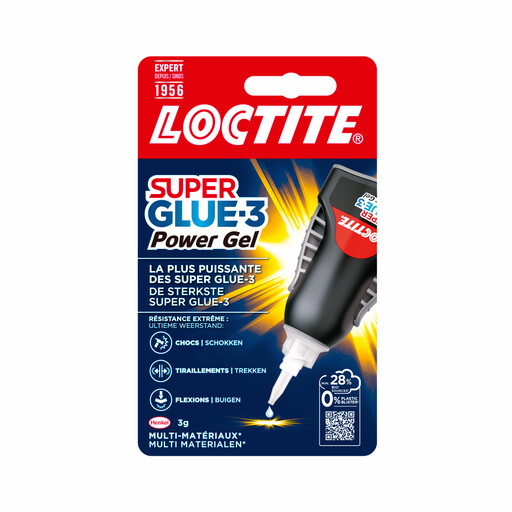
The solution for delicate repairs, creative hobbies, or any bonding on a vertical surface. Perfect for re-attaching a shoe sole or fixing a small decorative item to the wall, without a single drip.
Its rubber-infused gel formula doesn't run, ending the nightmare of drips on inclined planes. The bottle's push-button system offers total flow control for clean work without waste.
No-drip gel texture. Flexible, rubber-infused formula to resist impacts and torsion. Ultra-precise application thanks to the ergonomic bottle.
If you need a solution for a vertical application or to fill gaps, our selection of gel glues might interest you.
Be careful not to confuse setting time with final curing time. An instant adhesive (cyanoacrylate) can "set" in a few seconds, allowing you to release pressure. However, its maximum strength is only reached after 12 to 24 hours. For an epoxy glue, the setting time varies from 5 minutes to several hours, and a full cure can take 24 hours or more. The golden rule: always read the instructions and never stress the bond before it's completely cured.
The sworn enemy of cyanoacrylate glue is air humidity, as this is what causes it to cure. To extend the life of your tube, adopt these few habits:
The answer is no, as a precautionary measure. The vast majority of heavy-duty glues (super glues, epoxies...) are not certified for food contact and can release chemical components. To repair a mug, for example, the bond should be limited to the exterior parts that will never come into contact with your lips or the beverage. For any bond in direct contact with food, it is imperative to find a product that explicitly states it is "food-safe" or has an official certification.