
Livraison le jour même ou le lendemain

Qualité garantie

Débloquez vos offres de bienvenue: Livraison GRATUITE | Jusqu'à -80 % | 30 jours d'essai gratuits à JoyPlus
Téléchargez l'application
A broken object, a repair that gives way after two days... Who hasn't been frustrated by a failed bond?? The adhesives aisle is a jungle of promises: "?extra strong," "?instant," "?all materials." However, behind this marketing jargon lie pitfalls that can turn your purchase into a total waste. Before you check out, remember one thing: the perfect strong adhesive doesn't exist. There is only the perfect adhesive for your specific need.
As a product expert at Joybuy, my mission is to help you see things more clearly. Let's break down the most common mistakes together so your next repair will finally be a success.
Adhesive marketing can be confusing. Here are three things to watch out for to avoid throwing your money away?:
To make the right choice, you need to look beyond the packaging and focus on the technical details. Here are the three fundamental criteria to check.
Each family of adhesives has a specific chemistry and purpose.
Be careful not to confuse these two key concepts?:
The viscosity (in simple terms, the texture) of the adhesive plays a major role in the ease of application.
Rather than an endless list, we've matched user profiles with targeted solutions that meet the criteria we've just discussed.
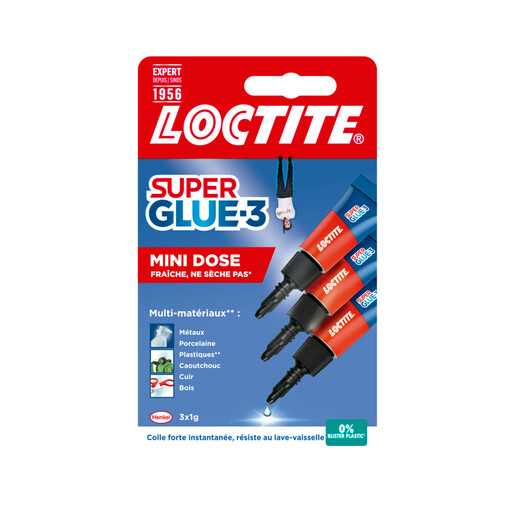
Why we recommend it : For a chipped mug or a shoe sole that's coming off, this format is unbeatable. Each mini-tube contains just the right amount for one repair, with no waste and no risk of the rest drying out. It's effective on a host of materials (porcelain, leather, wood...).
No more tubes drying out after a single use. Each dose guarantees fresh, high-performance adhesive, preventing waste and frustration.
Its ultra-practical single-use format and its resistance to water and temperature changes, ensuring long-lasting repairs.
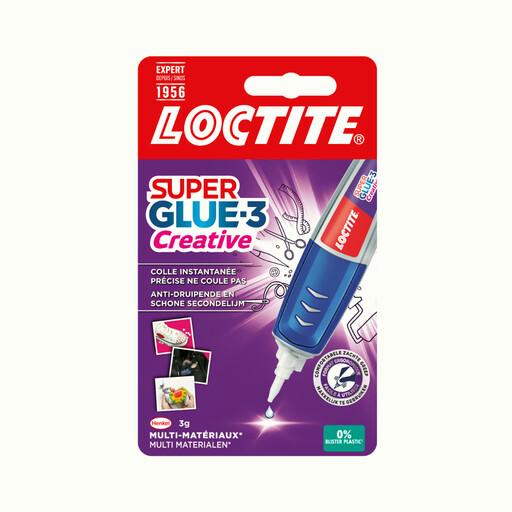
Why we recommend it : Its pen format offers an excellent grip and impressive precision. Perfect for model making, jewellery creation, or any delicate repair. Its gel formula ensures clean, drip-free work.
It puts an end to messy applications and glued fingers. The pressure-sensitive system allows for drop-by-drop control, and the gel formula won't run, even on vertical surfaces.
An application as simple and precise as using a pen. Its no-drip gel formula is perfect for porous and vertical surfaces.
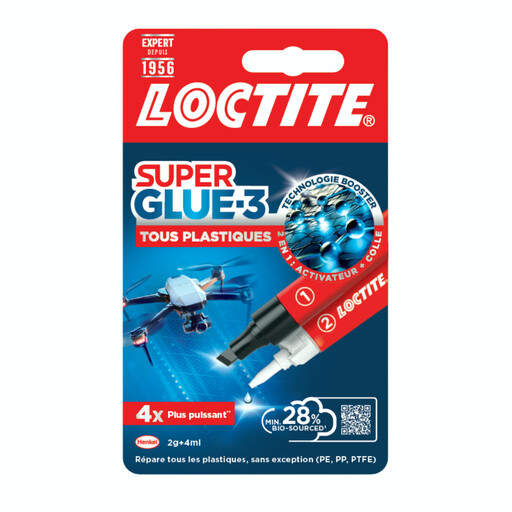
Why we recommend it : This is the secret weapon against so-called "difficult" or "low-energy" plastics like polyethylene (PE) and polypropylene (PP). Its two-step system is incredibly effective: a primer pen prepares the surface, and then the adhesive ensures maximum bonding.
It shatters the "universal" glue myth. Where others fail miserably, its adhesion promoter (the primer) alters the plastic's surface energy, making it bondable.
Its impressive effectiveness on all types of plastics, even the most stubborn ones. Ideal for saving a toy, a car accessory, or an appliance part.
Explore our full selection of high-performance adhesives, all chosen according to our strict selection criteria and regulatory compliance.
The classic dilemma! Above all, don't force it or pull at the skin. The gentlest method: soak the area in warm, soapy water for a few minutes. The glue will soften. You can then gently peel the skin apart, using a blunt object (like the handle of a small spoon). Acetone (found in some nail polish removers) is also effective but should be used with caution on the skin.
Even if the bond seems instant, maximum strength is only achieved after the adhesive has fully cured. For a cyanoacrylate adhesive, wait at least an hour before any handling. For an epoxy or wood glue, patience is key: strictly follow the indicated full cure time (often 24 hours) before subjecting the object to any stress (weight, torsion, moisture).
No, and that's the number one pitfall. No adhesive is truly universal. Some plastics like polyethylene (PE), polypropylene (PP), or Teflon (PTFE) are known to be nearly impossible to bond without a surface treatment. They require specific adhesives that come with an adhesion promoter (or primer). The rule of thumb: always read the packaging to check the list of compatible materials and, more importantly, the list of excluded materials.