
Livraison le jour même ou le lendemain

Qualité garantie

Débloquez vos offres de bienvenue: Livraison GRATUITE | Jusqu'à -80 % | 30 jours d'essai gratuits à JoyPlus
Téléchargez l'application
A multi-purpose adhesive can bond, fix or repair, but not every formula is suited to the same materials. A fixing adhesive intended for a porous wall won't replace an instant glue for a small repair. Similarly, a wood glue won't work on metal or glass.
Before placing an order, three common pitfalls keep cropping up:
Here are the criteria to consider when selecting an adhesive suited to your projects, both indoors and outdoors.
Start by identifying precisely the two substrates you need to join. Wood, plaster, brick and stone are generally porous. Glass, metal, tiles, aluminium and certain plastics are non-porous.
A no-nails, no-screws adhesive for walls may require at least one of the surfaces to be porous. This is particularly the case with Pattex Extra Fort fixing adhesives, designed for wood, brick, stone or plaster. Conversely, an adhesive intended for non-porous surfaces will be better suited to glass, tiles, aluminium or stainless steel.
Also check the exclusions mentioned on the packaging. The adhesives featured in this selection are not all compatible with polyethylene (PE), polypropylene (PP) or PTFE.
For fixing a lightweight decoration, a repositionable adhesive or a repair putty may suffice. For a shelf, a skirting board or a panel, it's better to choose a fixing adhesive whose capacity and curing time are clearly stated.
Here are the main criteria to compare:
A water-resistant formula isn't necessarily designed for permanent immersion. This distinction can sometimes be enough to prevent premature detachment.
The packaging directly affects the precision of your application and the amount of product used:
Always follow the setting time stated by the manufacturer. An adhesive that appears dry on the surface may not yet have reached its final strength.
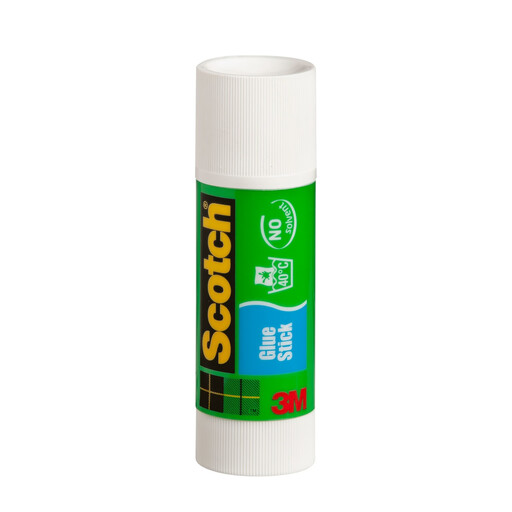
Why this choice suits this profile: Its clean application lends itself to school projects, arts and crafts, and small assemblies of paper or lightweight fabric.
The stick format minimises drips and prevents using an adhesive that's too strong for lightweight substrates.
Acid-free formula, washable with water, supplied in a 40 g stick.
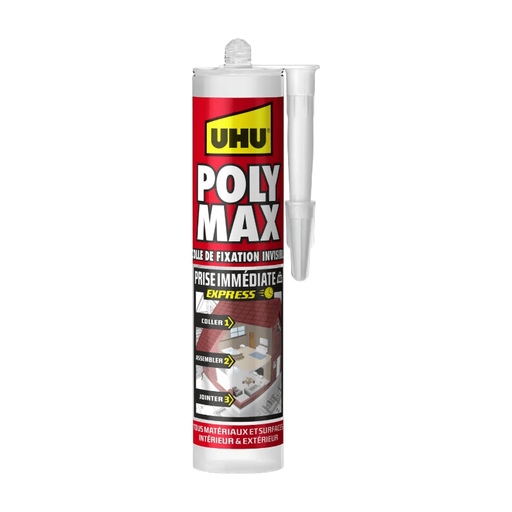
Why this choice suits this profile: This assembly and sealing adhesive is suitable for projects that demand a discreet finish, gun application and use both indoors and outdoors.
The product page details the compatibility limitations, particularly with PE, PP, PTFE and bitumen. That way you can check your choice before reaching for the gun.
Solvent-free hybrid polymer, transparent and elastic, stated to be resistant to water, UV and temperatures from -40 °C to +100 °C.
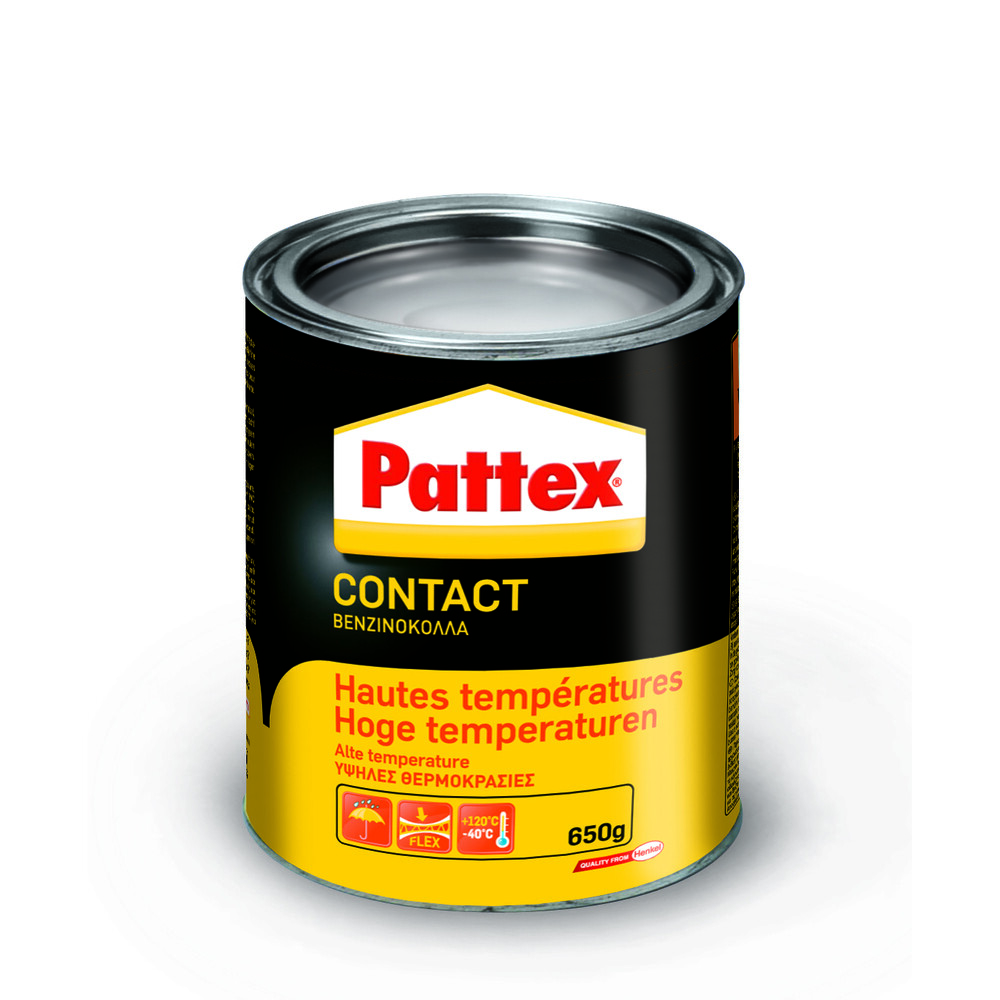
Why this choice suits this profile: Its large format is ideal for medium to large-scale projects, particularly near kitchen appliances and heat sources.
With a stated maximum temperature of 120 °C, you can compare its performance against the heat actually generated by your project, rather than relying on a mere marketing promise.
Stated high initial grab, brush or spatula application, and compatibility with wood, laminate, metal, glass and ceramic.
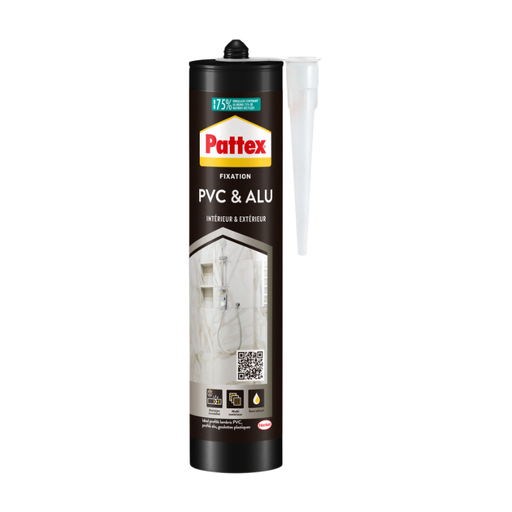
Why this choice suits this profile: It is suitable for renovation work on PVC panels, ducting, mouldings, tiles or metal elements.
The product page lists the compatible materials and notably excludes PE and PTFE. This minimises the risk of ending up with an unsuitable adhesive.
Flextec formula stated to be flexible, usable both indoors and outdoors, with a stated resistance from -30 °C to +90 °C.
The initial grab can occur in a few seconds or a few minutes, depending on the formula. The final strength often takes up to 24 hours. For a heavy object, support it according to the instructions and do not apply any load before the stated time.
Not necessarily. Check its resistance to moisture, UV and temperature fluctuations. A water-resistant adhesive may still be unsuitable for permanent immersion or a constantly wet surface.
Close the tube or cartridge carefully, clean the nozzle, then store the product in a cool, dry place out of reach of children. Consult the label and the safety data sheet for precautions specific to the formula.