
Livraison le jour même ou le lendemain

Qualité garantie

Débloquez vos offres de bienvenue: Livraison GRATUITE | Jusqu'à -80 % | 30 jours d'essai gratuits à JoyPlus
Téléchargez l'application
A multi-purpose adhesive glue may seem ideal for repairing, assembling or fixing things quickly. However, a formula suitable for paper will not necessarily work for wood, metal or a wall-mounted installation. The right choice mainly depends on the materials, humidity, load to be supported and the time available before the glue sets.
A strong glue will not necessarily adhere to polypropylene, Teflon, silicone or certain flexible plastics. Very smooth, greasy or dusty surfaces also limit adhesion. Always check the list of compatible surfaces and test the product on a discreet area.
A transparent glue may become discreet after drying, but that does not mean it is suitable for a fixing exposed to movement or moisture. Some transparent formulas resist water and changes in temperature, while others are intended solely for arts and crafts.
The term waterproof glue should be interpreted according to the intended use. Resistance to moisture does not necessarily guarantee suitability for permanent immersion. For wood, water-resistance classes provide a more precise indication, particularly EN 204 and its D2 or D3 levels.
Start by identifying the two surfaces: softwood or exotic wood, glass, metal, tiles, cardboard, fabric, plastic or painted wall. Wood glue is formulated to penetrate the fibres and is suitable for joining properly fitted pieces. By contrast, a wall-mounting adhesive may require at least one of the surfaces to be porous.
Pay close attention to exclusions. PE, PP, PTFE, bitumen, copper and certain PVCs may be incompatible with mounting adhesives or hybrid sealants.
For a piece of furniture installed in a dry room, D2 glue may be sufficient in most cases. In a kitchen, bathroom or covered garden shed, a D3 formula offers better moisture resistance, subject to the product data sheet and the stated classification.
The temperature range also deserves your attention. Some products claim resistance from -20 °C to +60 °C, while certain polymer sealants can withstand a wider range. These values do not replace the application instructions: the surfaces and adhesive will generally need to be used at the minimum temperature specified by the manufacturer.
A tube is sufficient for small repairs. A 290 or 300 g cartridge generally requires an applicator gun, but it allows you to apply an even bead for wall mounting or creating a seal. If precision is important, choose a fine nozzle, dosing tip or a formula that is visible during application and becomes transparent after drying.
Do not confuse initial set with final strength. Glue may hold the pieces in place after a few minutes, while maximum strength may not be reached for several hours or even 24 hours. Hold the components in place according to the instructions.
The expression “solvent-based solvent-free glue” can be confusing. A solvent-free formula is not solvent-based glue: check the labelling, ventilation precautions and instructions concerning the removal of residue.
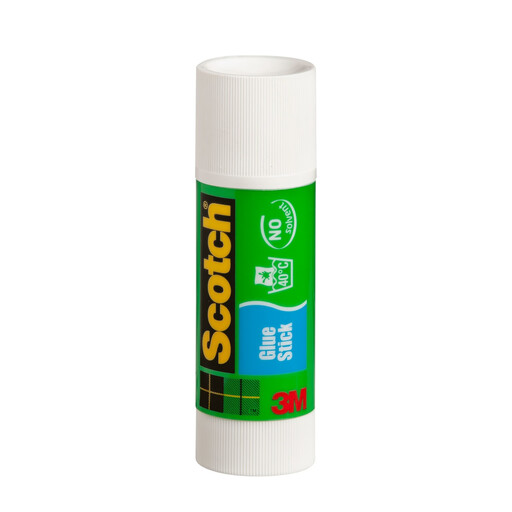
Why this choice suits this profile : Its 40 g format is ready to use, with no gun or special preparation required, for paper, cardboard, photos and lightweight fabrics.
It does not claim to replace a mounting adhesive designed for heavy loads. Its intended use is clearly lightweight surfaces and creative projects.
Clean application, water-washable formula and multipack presentation options for the home, school or office.
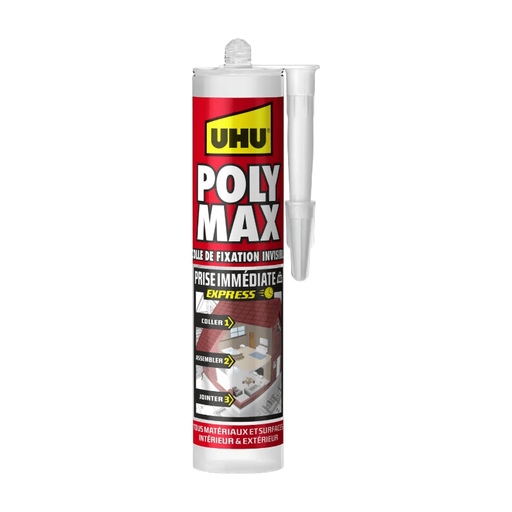
Why this choice suits this profile : Its cartridge is designed for assembly, bonding and sealing projects that require an even application across several materials, indoors and outdoors.
The product information specifies the excluded surfaces, including PE, PP, PTFE and bitumen. This information helps you avoid making an unsuitable purchase.
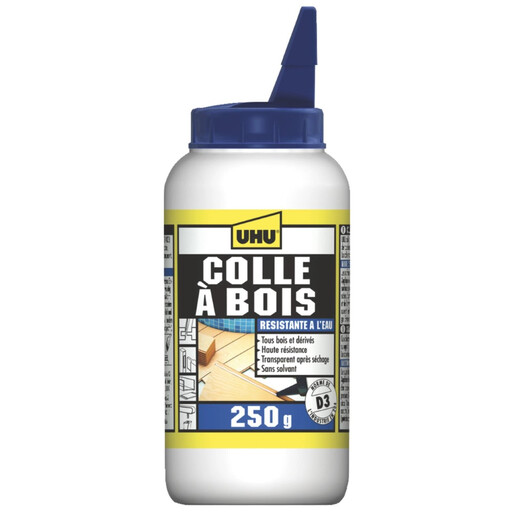
Why this choice suits this profile : This wood glue is intended for assembling, veneering and laminating softwood, hardwood or exotic wood, particularly in environments exposed to moisture.
The D3 classification indicates how the product is intended to perform in moist conditions. However, it should not be interpreted as authorisation for continuous immersion.
Initial set claimed in 10 minutes, precision nozzle, solvent-free formula and a transparent finish after drying.
We have put together a complete, real-time updated list of products that fully meet these strict selection criteria and European safety regulations.
Wear gloves if recommended in the instructions and ventilate the room. Glues and sealants must be kept out of reach of children. For arts-and-crafts products intended for children, observe the stated age recommendation and ensure adult supervision.
For a small repair involving different surfaces, a flexible polymer glue can be a practical choice. For paper, cardboard or photos, choose a glue stick. For wood, choose D2 or D3 wood glue, depending on the level of moisture to which the joint will be exposed.
It may be suitable for certain objects, skirting boards or decorative elements, but the load, porosity and condition of the surface must be compatible. Follow the drying time and limits specified by the manufacturer. For a heavy item or one exposed to significant forces, a mechanical fixing may still be essential.
Clean the nozzle after each use, remove excess air where possible and close the container immediately. Store the product in a dry place at a moderate temperature, away from heat sources. Glue that has thickened or separated, or whose smell and texture have changed, should not be used without consulting the manufacturer’s instructions.