
Livraison le jour même ou le lendemain

Qualité garantie

Débloquez vos offres de bienvenue: Livraison GRATUITE | Jusqu'à -80 % | 30 jours d'essai gratuits à JoyPlus
Téléchargez l'application
An adhesive glue can be used to repair, assemble, fix or decorate. But not all formulas are suited to the same demands. A strong glue designed for wood won't necessarily work on plastic, while a handy glue stick for paper will never replace a construction adhesive.
Before you buy, three common pitfalls keep cropping up:
Start by identifying the surfaces you need to join: paper, cardboard, wood, metal, glass, tiles, PVC or concrete. Porous substrates, such as wood, brick and plaster, absorb some of the glue. Conversely, smooth surfaces need a formula capable of creating a strong grip.
A wood glue is designed to penetrate the fibres and form an even bond. For wall fixing, a construction adhesive can work if at least one of the two surfaces is porous, according to the manufacturer's instructions. Materials like PE, PP and PTFE should be tested first and may require a specialist solution.
For indoor use in a dry environment, a standard glue may be sufficient. In a kitchen, bathroom or covered garden shed, choose a water-resistant glue and check its classification.
These classifications mainly apply to vinyl-based wood glues. For outdoor fixing, also check the stated resistance to UV, weather and temperature fluctuations.
The format should match the amount of glue you need and the level of precision required:
The colour after drying is also worth considering. A clear glue will be preferable for glass, mirrors or decorative items, while a coloured formula during application helps you control the amount you apply.
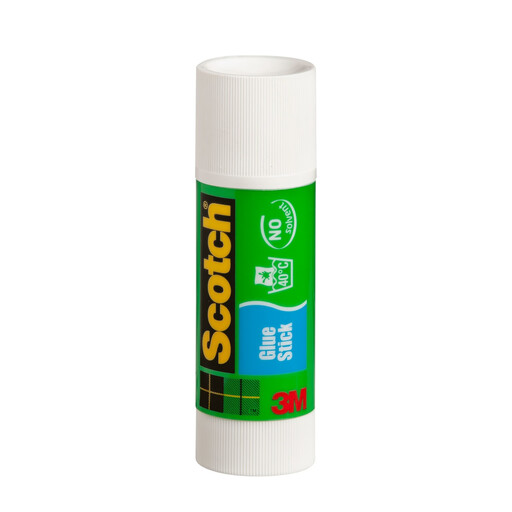
Why this choice suits this profile: Its clean application is ideal for school supplies, light office tasks and simple household sticking jobs.
The solid format limits drips and over-application, unlike a liquid glue used on a lightweight surface.
Washable formula with water and acid-free, no-drip application, suitable for paper, cardboard, photos and light fabrics.
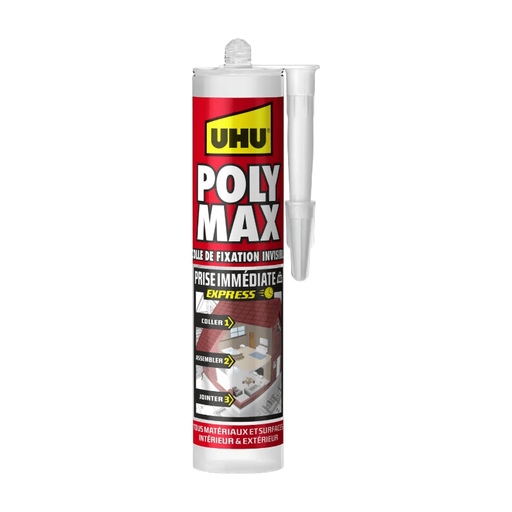
Why this choice suits this profile: This cartridge is aimed at assembly, fixing and sealing projects that demand a discreet finish, both indoors and outdoors.
The instructions clearly state compatible surfaces and exclude PE, PP, PTFE and bitumen – an essential check before you start.
Solvent-free, acid-free and stated to be odourless formula, resistant to water and UV, and suitable for a temperature range of -40°C to +100°C.
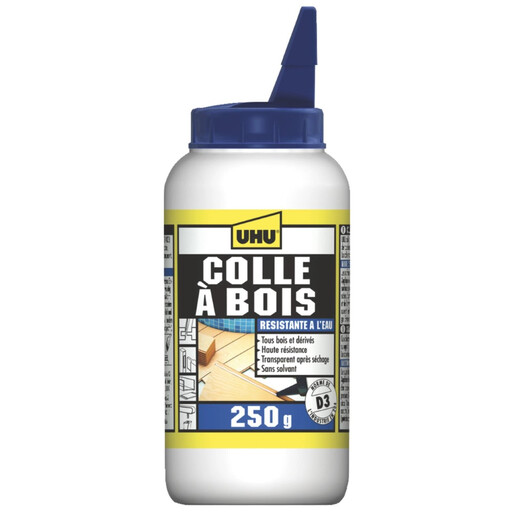
Why this choice suits this profile: This wood glue is intended for assemblies exposed to higher moisture levels, such as certain kitchen furniture or sheltered structures.
The D3 classification makes it easy to distinguish genuine moisture resistance from a simple multi-purpose glue, without claiming it is suitable for immersion.
D3 resistance according to EN 204, initial drying stated at 10 minutes and a clear finish after drying.
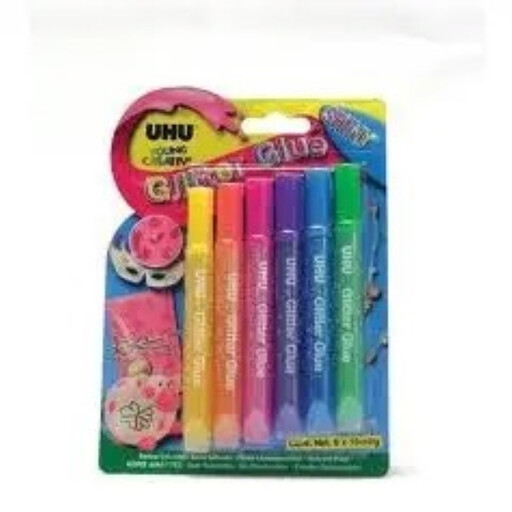
Why this choice suits this profile: The tubes with precision nozzles are ideal for cards, decorations, school activities and craft projects with supervised children.
Its use for paper and cardboard is clearly defined – you can't mistake it for a glue intended for structural assembly.
Six colours, water-soluble formula and a drying time stated at approximately 60 minutes to the touch.
We've selected a full range, updated in real time, of products that meet these demanding criteria as well as European safety regulations.
For standard indoor assembly, a D2 wood glue can work. In a damp environment, go for a D3-rated product according to EN 204. The surfaces must be clean, well-fitted and sufficiently dry. Maximum strength may take several hours.
It all depends on the formula, temperature, thickness of the application and the porosity of the materials. Some glues claim to grab in a few minutes, but their final strength is often only reached after 24 hours. Always check the product instructions.
No. Transparency mainly refers to the appearance of the bond after drying, not compatibility with the material. Check which surfaces are compatible and which to avoid, then test before any visible or load-bearing bonding.