
Livraison le jour même ou le lendemain

Qualité garantie

Débloquez vos offres de bienvenue: Livraison GRATUITE | Jusqu'à -80 % | 30 jours d'essai gratuits à JoyPlus
Téléchargez l'application
An extra-strong adhesive glue can make putting up a shelf, repairing an object or assembling wooden parts much easier. But you need to choose the right product: a poorly suited option may peel off, leave marks or lose its grip quickly.
So before you place an order, it is worth looking beyond the marketing claims and checking three essential points: the material, the environment it will be used in, and the method of application. Here are the criteria to consider when finding a solution for your home, office, workshop or building site.
Some glues seem to hold straight away, yet they only reach their maximum strength after several hours. A construction adhesive or fixing glue may need prolonged pressure, or even up to 24 hours of drying time, before it can bear a heavy load.
Always check the setting time, the repositioning time and how long you need to wait before putting the fixing under full strain. A glue that bonds quickly is not necessarily suitable for a heavy object or one exposed to vibrations.
The term "multi-material" does not mean the glue works on every surface. PE, PP, PTFE, bitumen, silicone and certain plastics can prevent a good bond. A dusty, greasy or damp surface will also reduce its hold.
For a strong DIY glue, check the list of compatible materials and test it on an inconspicuous area, especially when working with plastic.
A glue intended for both indoor and outdoor use must withstand the conditions it will actually face: condensation in a bathroom, UV rays, frost, heat or material expansion. A formula that is too rigid can crack when the two surfaces do not move in the same way.
For a repair exposed to the elements, look for a water-resistant glue, lasting elasticity or a repair tape with a reinforced backing. Bear in mind, though, that water resistance does not necessarily mean the product can be permanently submerged.
Start by identifying the materials you need to join: wood, tiles, PVC, metal, glass, concrete, paper or fabric. A wood glue does not meet the same demands as a thread-locking resin or a drill-free adhesive for a wall.
Product descriptions sometimes also list incompatible surfaces. This information is just as important as the list of accepted materials.
For wood assemblies, the D2 and D3 classes of the EN 204 standard provide a useful guide to moisture resistance. A D2 glue is suitable for indoor use with occasional exposure to moisture. A D3 glue is better suited to damp environments or protected outdoor applications, within the limits set by the manufacturer.
For other glues, check the temperature range, UV resistance and whether it can be used both indoors and outdoors. Always compare these details with the application limits stated on the packaging.
A 290 to 300 g cartridge is typically used with a glue gun, but it allows you to apply a consistent bead over a long length. A 90 g or 260 g tube is more practical for small jobs. Glue sticks and adhesive pellets are best reserved for lightweight items.
Whatever format you choose, prepare the surfaces properly: they must be clean, dry and degreased. Also follow the minimum application temperature. A glue applied to a cold, damp or crumbly surface will not perform as well.
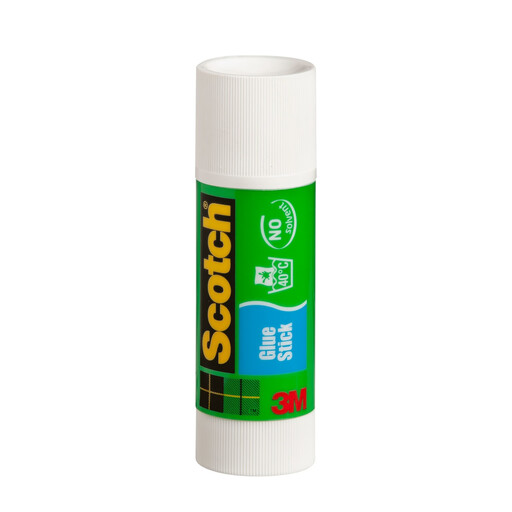
Why this choice suits this profile: At 40 g, this stick requires no glue gun or special preparation for paper, cardboard, photos, fabrics and lightweight items.
It stops you reaching for an oversized construction glue when all you need is a craft activity or a small repair.
Clean application, solvent-free formula and can be washed off hands and some surfaces with soapy water.
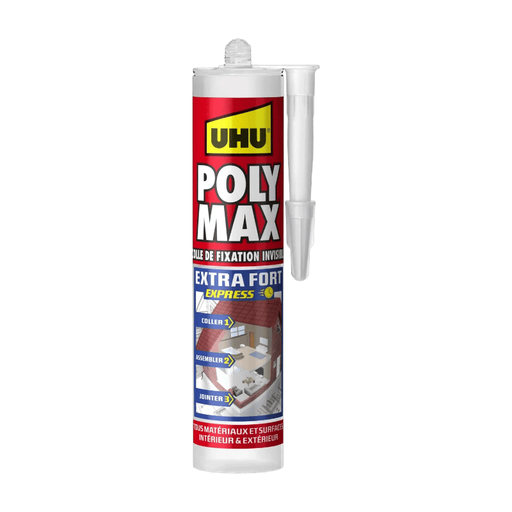
Why this choice suits this profile: This cartridge, used with a glue gun, is suitable for assemblies, bonding and joints on wood, tiles, PVC, aluminium, glass, metal and concrete, both indoors and outdoors.
The product description states water resistance, UV resistance and a temperature range from -40 °C to +100 °C. Incompatible surfaces are clearly listed.
Its solvent-free, acid-free and odourless formula is claimed to be permanently elastic, with a nearly invisible finish.
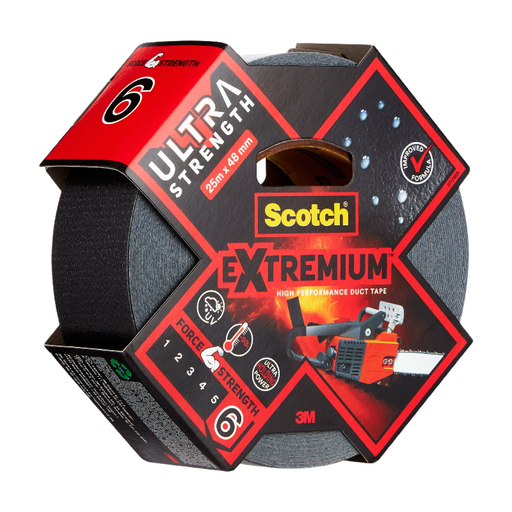
Why this choice suits this profile: This repair tape is designed for quick fixes on metal, plastic or waterproof concrete, particularly for reinforcing, repairing or holding an item in place.
Its thick, waterproof backing is built for demanding repairs, unlike thin tapes that are only for light-duty use.
Natural rubber adhesive, waterproof backing and can be torn by hand so you do not need a cutting tool.
We have put together a full selection, updated in real time, of products that meet these demanding criteria as well as European safety standards.
For a drill-free fixing, choose a construction glue that is compatible with both the wall and the object you want to attach. Porous surfaces such as wood, brick, stone or plaster may work with certain products. Check the maximum load stated and let the glue reach its full strength before putting the fixing under strain.
It depends on its formulation and classification. A D3 wood glue offers better moisture resistance than a D2 glue. A multi-material glue may claim water or weather resistance, but always within certain limits. Read the usage conditions carefully, especially if the bond might be submerged.
The method depends on the formulation used. Fresh residue can sometimes be removed with the product recommended by the manufacturer, while hardened marks often need mechanical removal. First test on a small, inconspicuous area and do not use a solvent that is not intended for the material.