
Same-day & Next-day Delivery

Quality Guaranteed

Unlock Your Welcome Offers: FREE Delivery | Up to 80% OFF | Free 30-day JoyPlus trial
Download the APP
The right glue can simplify an assembly, repair a small part, or neatly conceal the gap between two surfaces. On the other hand, a poor choice can lead to peeling, leave visible marks, or quickly ruin your finish. To choose the right wood glue and DIY adhesives, it's best to look beyond claims like "strong" or "fast-drying".
An express wood glue may let you reposition or hold parts together quickly, but it won't have reached its maximum strength yet. According to product data sheets, some Pattex references claim an initial set in a few minutes, yet require around 24 hours to achieve their final strength.
So, avoid putting immediate stress on a piece of furniture, shelf, or assembly under load. The clamping time, pressure applied, and room temperature all directly influence the result.
The D2 and D3 classifications do not correspond to the same level of moisture resistance. A D2 wood glue is generally suitable for indoor use with occasional exposure to moisture. A waterproof D3 wood glue, according to the classification on its data sheet, is designed for more humid conditions, such as certain kitchen, bathroom, or sheltered outdoor projects.
This does not mean a D3 glue can withstand permanent immersion. Always check the nature of the surface, its actual exposure, and the manufacturer's recommendations.
A cyanoacrylate glue or an ultra-strong liquid glue is handy for small repairs, corners, and precise assemblies. However, it is not suitable for bonding large wooden surfaces or for full veneering.
For joinery work, panel assembly, or laminating, a PVA wood glue will generally be more appropriate. For a floor finish, a self-adhesive strip can also avoid the need for liquid adhesive.
Start by identifying the materials: solid wood, plywood, chipboard, PVC, metal, glass, or fabric. A glue designed for wood is not automatically compatible with PVC or ABS. Similarly, some precision glues are not suitable for polyethylene, polypropylene, silicone, PTFE, or expanded polystyrene.
Surfaces must be clean, dry, dust-free, and degreased. Oily woods require additional preparation. For several wood glues featured here, the data sheet recommends a wood moisture content between 8 and 12% maximum.
The EN 204 standard allows you to compare PVA glues intended for wood:
This classification does not replace the instruction manual. For a fully exposed deck, a load-bearing structure, or use subject to strong temperature and humidity variations, check the application conditions and the exact compatibility of the product.
A 250g bottle is generally sufficient for repairs and small jobs. A 750g bottle will be more practical for assembling furniture, veneering, or regular projects. A fine nozzle helps prevent drips, while a 1mm notched trowel makes for even distribution over a larger area.
For a floor joint, first measure the width of the gap to be covered. A self-adhesive PVC floor transition strip can be cut with scissors, provided the surface is perfectly clean and dry.
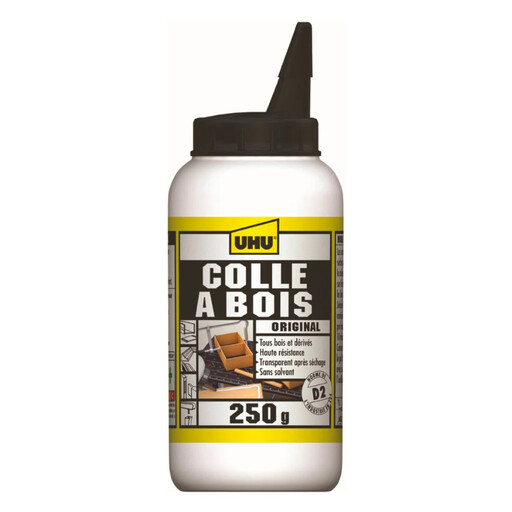
Why this choice suits this profile: its 250g format and precision nozzle are ideal for small joinery jobs, repairs, and DIY projects around the house.
The D2 classification specifies the intended use and helps avoid confusing a glue for occasional moisture with a solution designed for prolonged exposure.
Solvent-free formula, white on application then transparent when dry, suitable for softwoods, hardwoods, and exotic woods.
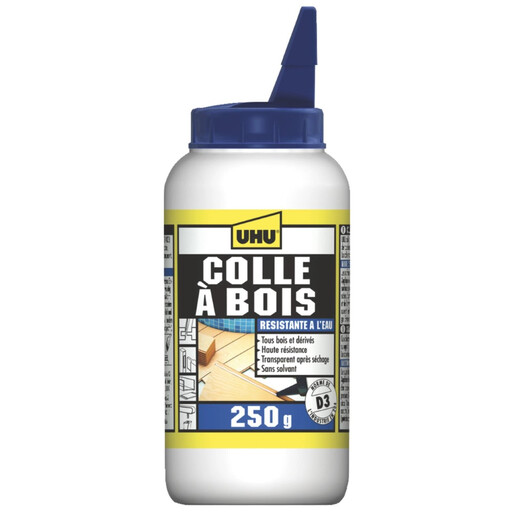
Why this choice suits this profile: this reference is aimed at wooden assemblies that need better moisture resistance, particularly in a kitchen, bathroom, or covered shelter.
The D3 rating lets you verify the intended moisture level before purchase, rather than relying solely on a commercial promise of a resistant glue.
Initial set claimed in 10 minutes, solvent-free formula, and can be applied with a precision nozzle or a 1mm notched trowel.
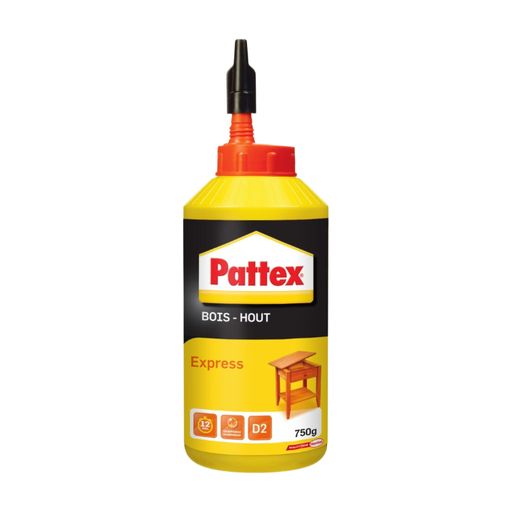
Why this choice suits this profile: its 750g bottle is designed for repeated assemblies, furniture, veneering, and renovation projects that require a large quantity of glue.
The stated drying time of around 5 minutes is clearly distinguished from the final strength, which is reached after 24 hours according to the data sheet.
750g format, suitable for assembly, mounting, veneering, and laminating, with an adhesive strength claimed up to 40 kg/cm² according to the data sheet.
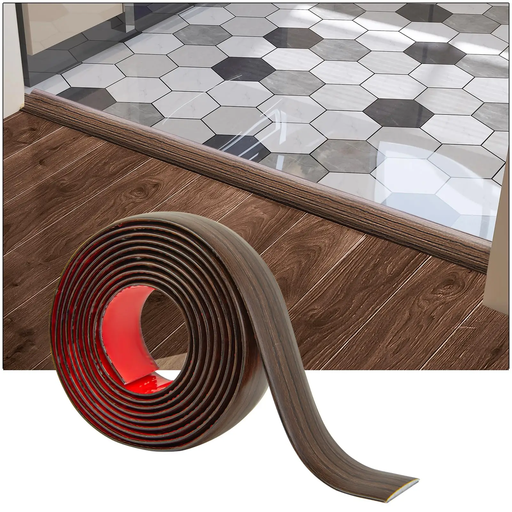
Why this choice suits this profile: this wood-effect finishing strip quickly conceals the gap between laminate flooring, tiles, or carpet, without nails or liquid glue.
Its width of 4cm and length of 122cm are clearly stated, allowing you to check its compatibility with the gap to be covered before installation.
Flexible PVC, self-adhesive backing, cut with scissors, and a surface claimed to be resistant to scratches, stains, and abrasion.
For a localised repair, the precision glue UHU Power Glue Liquid Control in 5g, or its two-tube 3g format, can be suitable for small surfaces. This liquid cyanoacrylate glue is applied in a thin layer and requires you to hold the parts together immediately. It is not suitable for large surfaces or materials excluded by the data sheet.
We've put together a comprehensive, real-time updated selection of products that meet these strict selection criteria as well as European safety requirements.
D2 is designed for occasional indoor exposure to moisture. D3 offers a higher level of moisture resistance, in accordance with the EN 204 classification and within the limits set by the manufacturer. In both cases, this rating does not mean the glue can withstand permanent immersion.
The apparent drying time can be between 5 and 40 minutes, depending on the formula and conditions of use. The final strength can take up to 24 hours for the references featured here. Follow the instructions, the minimum application temperature, and the recommended clamping time.
No, these two solutions serve different needs. A liquid glue is used to bond materials together. A self-adhesive floor transition strip or cover strip conceals a gap and provides a neat finish between two floor coverings. Measure the gap and check the available height before making your choice.