
Livraison le jour même ou le lendemain

Qualité garantie

Débloquez vos offres de bienvenue: Livraison GRATUITE | Jusqu'à -80 % | 30 jours d'essai gratuits à JoyPlus
Téléchargez l'application
Whether you want to reseal a shower, hang a frame without drilling, or repair a broken object, the adhesives and sealants aisle can quickly feel like a maze. Between marketing promises and technical jargon, it's easy to make a mistake. The result: a seal that turns black, a shelf that collapses, or a damaged wall when you try to remove an item.
Before diving in headfirst, let's review the common pitfalls that cost every DIYer time and money:
By mastering a few key criteria, you'll navigate the aisles with confidence and be sure to choose the ideal product for your project.
To avoid disappointment, focus on three fundamental points: the product type, its environmental resistance, and its compatibility with your materials.
Although they often come in similar cartridges, their primary functions are radically different.
The application environment is a decisive factor.
A super-strong adhesive is useless if it doesn't stick to your surface. Always read the technical data sheet to check for compatibility. A key distinction must be made between porous surfaces (wood, plaster, concrete, brick) and non-porous or sealed surfaces (tile, glass, metal, PVC, mirror).
Some adhesives require at least one of the two surfaces to be porous. This allows the water they contain to evaporate, ensuring the adhesive cures (or "sets"). Others, like polymer adhesives, work perfectly on two non-porous surfaces. Also, be careful with plastics: standard adhesives generally do not bond to PE (polyethylene), PP (polypropylene), and PTFE (Teflon).
To help you sort through the options, here is our selection of products for every situation, based on the criteria we've just covered.
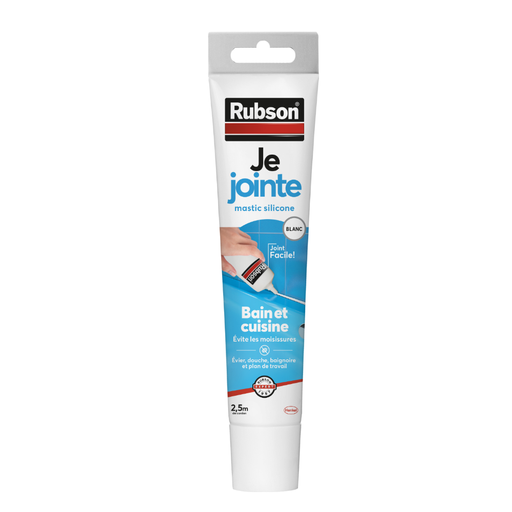
Why it's a good fit: Perfect for a quick, small repair, like resealing a sink. Its tube format is ideal for those who don't own a caulking gun and don't want to be left with a large cartridge after a single use.
This ready-to-use product requires no caulking gun. You buy it, you use it—no extra tools needed.
Direct application from the tube. Anti-mould formula suitable for sanitary joints. Adheres to most bathroom materials (enamel, porcelain, tile).
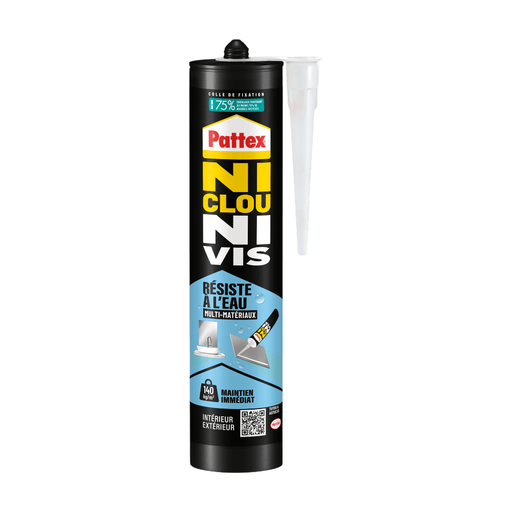
Why it's a good fit: For anyone who wants to mount skirting boards, shelves, or decorative elements without taking out the drill. Its indoor/outdoor versatility and water resistance make it a reliable solution for numerous renovation projects.
Its high initial grab means you don't have to support the object. Better yet, its Flextec formula remains repositionable for a few minutes, forgiving minor alignment errors.
Solvent-free Flextec technology. Resists water, UV, and temperatures (-30°C to +80°C). Can be painted after curing for a perfect finish.
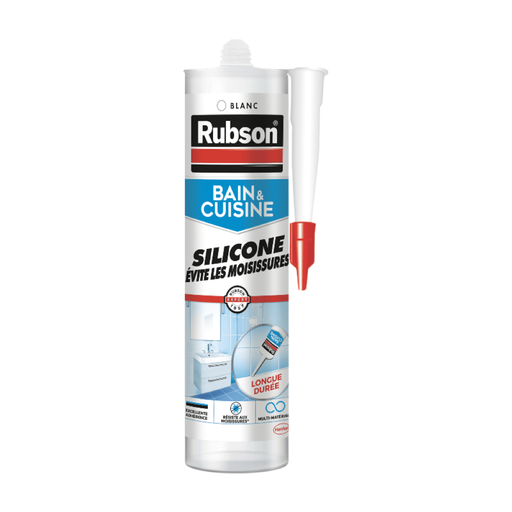
Why it's a good fit: For those who accept no compromises on the cleanliness and longevity of seals in wet environments. This is the peace-of-mind choice for showers, bathtubs, and sinks.
Unlike a generic "water-resistant" product, this one is specifically formulated with powerful fungicides for long-lasting protection against mould.
Reinforced anti-mould protection. Adheres to most sanitary materials. "No Cutter" system with a pre-cut nozzle for simpler, cleaner application.
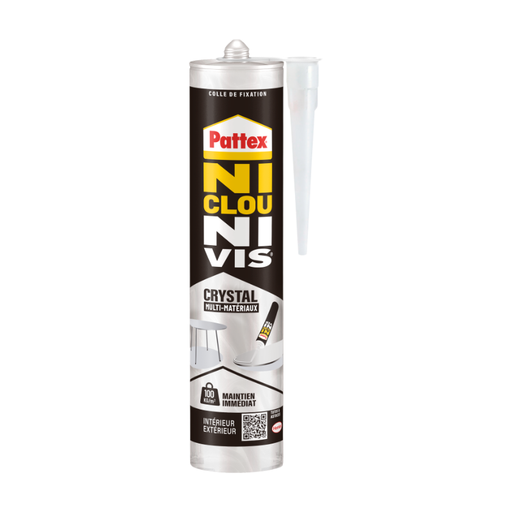
Why it's a good fit: Essential for projects where aesthetics are paramount. Use it to mount a glass backsplash, glue a mirror, or assemble transparent elements without any trace of adhesive.
Forget white or beige adhesives that can look messy. Its crystal-clear adhesive formula guarantees an invisible and flawless result, even on glass or clear surfaces.
Ultra-transparent finish. Flextec hybrid polymer formula for a high initial grab. Resistant to UV, moisture, and temperature for indoor/outdoor use.
We've gathered a complete selection of products that meet our selection criteria and current standards.
Curing time varies enormously from one product to another. It's important to distinguish between two concepts:
It all depends on the product's chemical composition.
Removing an extra-strong adhesive is a delicate operation, but not impossible. For polymer or acrylic-type adhesives, the most common method is to gently heat the adhesive with a hairdryer to soften it. Then, use fishing line or a thin spatula to carefully cut it between the object and the wall. Residue can often be scraped off or removed with a specific solvent. Be aware that there are also adhesives designed to be removed without a trace, like the Pattex "No More Nails Click & Fix" range, which can be simply sliced off with a spatula.