
Livraison le jour même ou le lendemain

Qualité garantie

Débloquez vos offres de bienvenue: Livraison GRATUITE | Jusqu'à -80 % | 30 jours d'essai gratuits à JoyPlus
Téléchargez l'application
A sealant cartridge may seem easy to choose… until the day the seal comes away, turns yellow or cracks just a few weeks after application. To avoid unpleasant surprises, you mainly need to consider the type of surface, its exposure to moisture and the finish you want.
Rubson sealant covers a wide range of uses, but each formula is designed for specific requirements. An acrylic sealant intended for a painted wall cannot replace a silicone sealant suitable for a shower. Similarly, a Pattex adhesive is designed for fixing items in place, not for creating a watertight seal.
Acrylic sealant is generally suitable for filling small cracks, joining construction materials or treating the gaps around windows and doors. Its main advantage : it can be painted once dry, in accordance with the manufacturer’s instructions.
Silicone sealant, on the other hand, remains flexible and is better suited to areas exposed to water, temperature changes or movement in the surfaces. It is commonly used in bathrooms and kitchens, around sinks and showers. However, please note : it is not always compatible with standard paint.
Finally, a fixing adhesive such as Pattex No Nails No Screws is designed to assemble or secure items. It can provide a transparent finish, but its main purpose is bonding, not creating a watertight seal.
This label does not replace checking the list of compatible surfaces. Some products do not adhere properly to polyethylene (PE), polypropylene (PP), PTFE, Plexiglas or certain flexible PVCs. Insufficient compatibility can result in poor adhesion or even gradual detachment.
Before placing your order, always compare the surface in question with the product’s technical data sheet : wood, plaster, cement, brick, glass, metal, PVC and ceramic tiles all have different requirements.
Even the right product can produce an uneven result if the surface is dusty, greasy or damp. The nozzle must also be cut to the correct width, and the seal smoothed before a skin forms on the surface.
For a 280 ml sealant cartridge, make sure you have a compatible sealant gun and a finishing tool. A Rubson smoothing tool makes it easier to achieve an even seal, particularly around a bath, window or skirting board.
To fill an interior crack or create a joint between a wall and a frame, choose a paintable acrylic sealant. In an area that is constantly damp, it is better to choose a mould-resistant sanitary sealant made from silicone.
For door, window and roof-window frames, a transparent silicone sealant can be a good choice when a discreet appearance is important. On a façade, an acrylic sealant with a textured render effect blends more easily into a rough surface.
Check the manufacturer’s recommendations carefully. Rubson Acrylic House Mastic Walls & Windows is advertised as compatible with wood, plaster, cement, aluminium, PVC and brick, but not with glass, Plexiglas, PE, PP or PTFE.
For a sanitary seal, the relevant surfaces are generally enamel, porcelain, glass, stoneware and ceramic tiles. Thoroughly removing soap residue and grease remains essential before application.
280 ml cartridges are suitable for most household projects. A pack of two cartridges can be useful for resealing several windows or treating an entire room. Colour is also worth considering : white provides a discreet finish and can be painted over, transparent minimises the visual impact, while black is suitable for decorative or technical joints.
Follow the stated drying time before painting the seal or exposing it to water. For the textured façade sealant shown below, the product information states that it can be painted after 48 hours of drying.
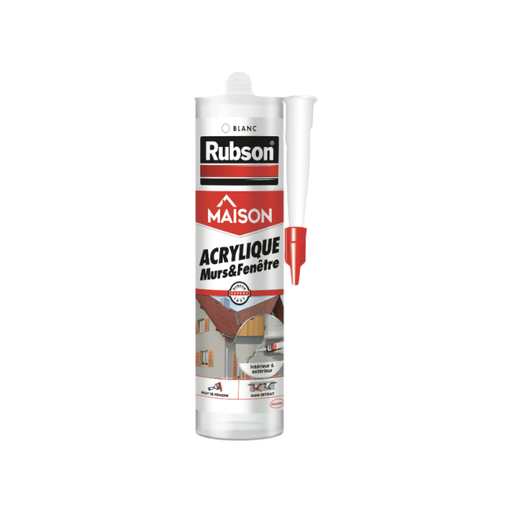
Why this choice suits this profile : This versatile sealant is suitable for small indoor and outdoor renovation jobs, particularly around doors, windows and ceiling cracks.
Its product information clearly lists compatible and unsuitable surfaces. This helps you avoid using a sanitary silicone sealant for a wall joint that is intended to be painted.
White acrylic formula for indoor and outdoor use, with advertised adhesion to wood, plaster, cement, aluminium, PVC and brick. The seal can be painted once dry.
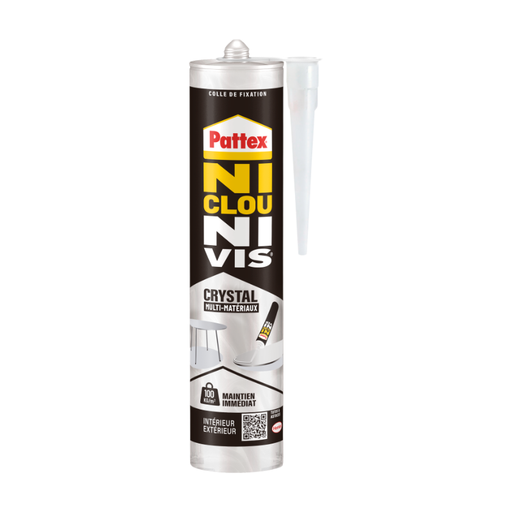
Why this choice suits this profile : Its ultra-transparent finish is ideal for decorative installations where the appearance of the bond matters just as much as the strength of the fixing.
This is a fixing adhesive, not a sealant for joints. Understanding the difference helps you avoid mistakes in areas that require genuine sanitary waterproofing.
Solvent-free, odourless hybrid polymer according to the product information, with advertised resistance to UV, moisture and temperatures from -30 °C to +80 °C. This product is not suitable for total immersion.
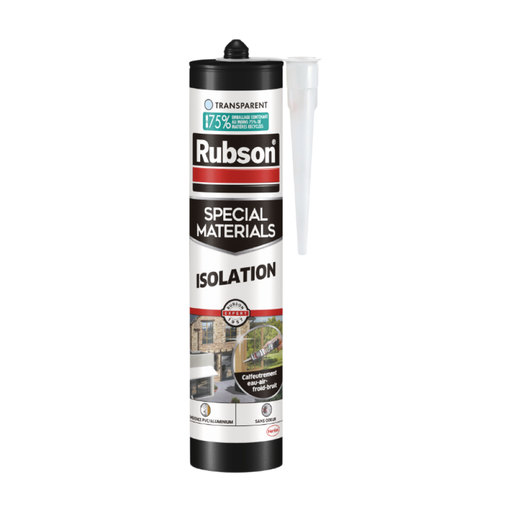
Why this choice suits this profile : It is intended for joints between the opening and fixed frames of windows, doors and roof windows, where airtightness and watertightness are the priority.
Its targeted use helps prevent you from using an acrylic sealant for work subject to movement in window and door frames and regular exposure to moisture.
Transparent acetic silicone, with flexibility suited to movement in window and door frames and advertised adhesion to glass, metal, concrete, brick, wood, PVC, aluminium and stone.
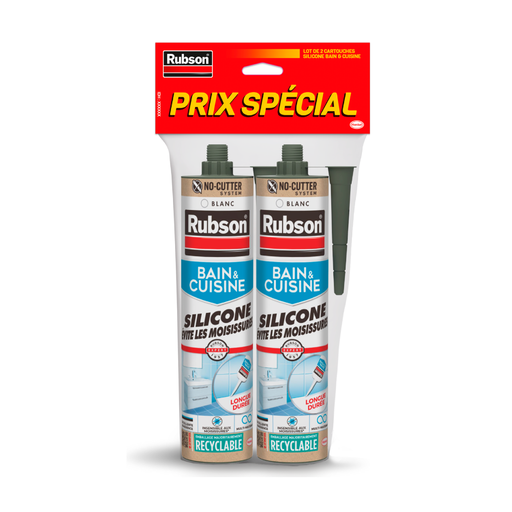
Why this choice suits this profile : The two-cartridge pack is ideal for renewing several seals around a washbasin, shower, sink or bath.
It is designed for sanitary areas, not for filling a façade crack or creating a wall joint intended to be painted.
Sanitary silicone enhanced with fungicidal agents according to the product information, with a pre-cut nozzle system and advertised compatibility with enamel, porcelain, glass, stoneware and ceramic tiles.
We have selected the products that best meet these criteria and the requirements of European safety regulations, with a list updated in real time.
If you are dealing with a large or expanding crack, or one accompanied by water ingress, sealant may not be enough. Before carrying out any repair, identify the cause of the movement or dampness.
A silicone-based mould-resistant sanitary sealant is generally intended for sealing around washbasins, showers, baths and sinks. The surface must be clean, dry and free from any soap residue.
Acrylic sealants are generally designed to be painted over once dry, in accordance with the manufacturer’s instructions. Silicones, particularly sanitary formulas, do not react with paint in the same way. Always check the technical data sheet before application.
Storage life depends on how well the nozzle is sealed, the type of formula and the manufacturer’s recommendations. Once opened, the nozzle may harden and make the next application more difficult. To minimise waste, clean the tip, seal it carefully and store the cartridge in a dry place away from heat and frost.