
Livraison le jour même ou le lendemain

Qualité garantie

Débloquez vos offres de bienvenue: Livraison GRATUITE | Jusqu'à -80 % | 30 jours d'essai gratuits à JoyPlus
Téléchargez l'application
Is your bathroom sealant turning black, cracking, or peeling away? Beyond its unsightly appearance, it's a gateway for moisture and mould. Yet, when you're standing in the DIY aisle, choosing the right bathroom silicone sealant can quickly become a headache. While the task may seem simple, not all products live up to their claims. To prevent a small repair from turning into a major hassle, let's review the most common pitfalls.
As a product expert at Joybuy, I'll break down the mistakes to avoid for a flawless, long-lasting result.
To ensure you make the right choice, here are the technical specifications that make all the difference. They will guide you to the ideal product, whether for a kitchen sealant or for your shower.
There are two main families of sanitary silicone sealants:
For a standard bathroom with an enamel tub and tile, a white, acetic-type sanitary silicone remains a reliable choice.
The product format is a matter of convenience.
For those seeking an immediate solution for a targeted repair, a ready-to-use product is often the most practical choice. It eliminates the need to buy extra tools and greatly simplifies the task.
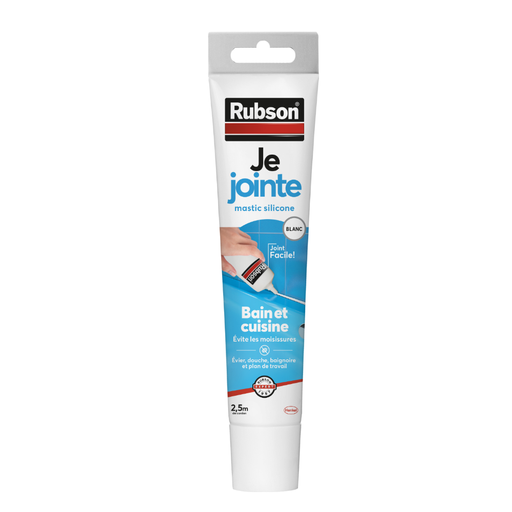
Why is it the right choice? This sealant is the dream solution for a clean, quick repair without the clutter of extra equipment. Its tube format is perfect for precisely resealing a sink, basin, or the perimeter of a bathtub.
No caulk gun needed, avoiding the complexity trap. Its formula, specially designed for sanitary materials (enamel, porcelain, ceramic), ensures powerful adhesion where a universal sealant would show its limits.
Ultra-easy application directly from the tube. Anti-mould formula for long-lasting protection in humid environments. Perfect adhesion on most bathroom surfaces.
If your project requires a larger quantity, a specific colour, or a solution for a particular material, explore our complete selection.
Good preparation is half the battle. To remove the old sealant, score it with a utility knife or a dedicated scraper tool. Then, apply a silicone remover to soften the last residues, which you can then scrape away. Before any new application, the surface must be impeccably clean, dry, and grease-free.
A quality bathroom silicone sealant, properly applied in a well-ventilated room, can last from 5 to 10 years. Its longevity depends on its exposure to water, the room's ventilation, and its maintenance (avoid abrasive cleaners or bleach, which attack the anti-mould agents).
As a general rule, no. Paint simply won't adhere to the flexible, smooth surface of silicone. If you're set on painting your sealant, you'll need to opt for a specific "paintable" or "acrylic" sealant. Otherwise, the easiest solution is to choose a sanitary silicone directly in the colour of your choice (white, clear, grey, etc.).