
Livraison le jour même ou le lendemain

Qualité garantie

Débloquez vos offres de bienvenue: Livraison GRATUITE | Jusqu'à -80 % | 30 jours d'essai gratuits à JoyPlus
Téléchargez l'application
A seal that peels, yellows or lets water through can quickly cause leaks and lead to costly repairs. Yet choosing a silicone sealant isn’t simply a matter of picking a colour or a price. The nature of the surface, exposure to moisture and the application format all play a decisive role in the quality of the result.
Certain mistakes are particularly common among DIY enthusiasts:
Here are the criteria to check before buying, along with a selection of products suited to different household uses.
A waterproof and flexible sealant must bond to the material in question while accommodating its movement. However, not all common surfaces offer the same quality of adhesion.
For a sanitary sealant for bathroom and kitchen, check its compatibility with:
The product sheets for Rubson Je Joint Transparent and Rubson Joint Blanc indicate adhesion to several sanitary materials, but specifically exclude synthetic surfaces, acrylic, PMMA, PE, PP and PTFE. This information should take priority over the product’s appearance or colour.
In a shower, around a sink or basin, choose an anti-mould silicone sealant designed for wet rooms. Formulations enriched with fungicidal agents are presented by manufacturers as being able to limit mould growth. However, they do not replace good ventilation, regular cleaning or a perfectly dry surface.
For windows and doors, opt for a window and door sealant that remains flexible despite temperature changes. Rubson Mastic Spécial Matériaux Isolation Transparent is recommended for window frames, doors and skylights. Its compatibility is stated for glass, wood, PVC, metal, brick and several other surfaces. However, it excludes bitumen, PE, PP and PTFE.
Automotive or marine work requires a specific formulation. A silicone sealant for cars and boats should be chosen based on its exposure to ultraviolet rays, salt water, road salt and temperature variations.
A 280 ml cartridge usually requires a sealant gun. It is suitable for several metres of joint, depending on the width and depth of the bead. For a one-off repair, a 50 ml ready-to-use tube avoids buying an extra tool and limits waste.
Before application:
To remove an old sealant, a silicone sealant remover gel can soften residues and make the job easier with a scraper. Always check its compatibility with the surface, especially when dealing with plastic coverings.
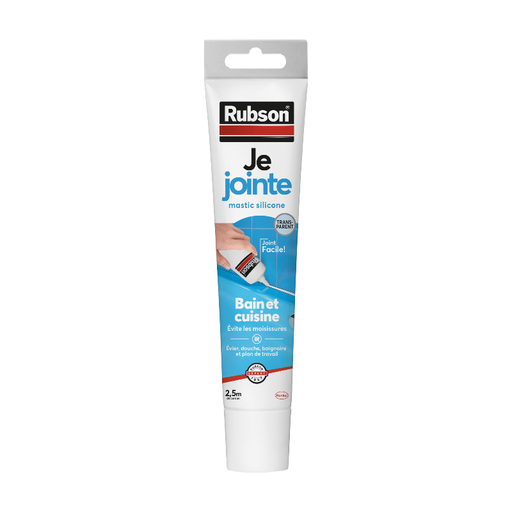
Why this choice suits this profile: The ready-to-use tube is ideal for small repairs around a basin, sink, bath or worktop, without needing a cartridge gun.
Its small volume limits waste for a one-off repair. The excluded surfaces are clearly stated on the product sheet.
50 ml tube, integrated nozzle, transparent finish and intended use on several sanitary materials.
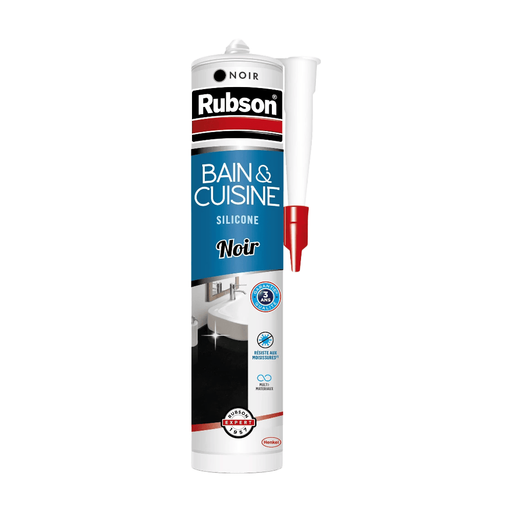
Why this choice suits this profile: Its black shade blends into a contemporary kitchen or bathroom, particularly around a sink, shower or basin.
This is a sanitary silicone designed for wet areas, not a multi-purpose product to be applied without checking on all plastics.
280 ml cartridge, flexible and waterproof acetic silicone after drying, pre-cut nozzle and black finish.
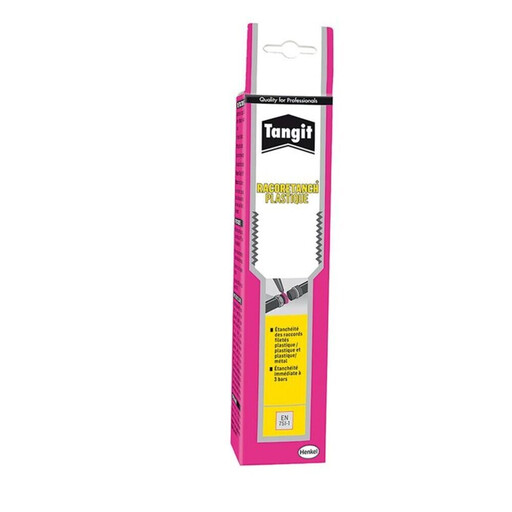
Why this choice suits this profile: This product is intended for threaded plastic and metal fittings used in irrigation systems, swimming pools, spa equipment and compressed air lines.
Its purpose is specific to threads: it should not be confused with a finishing silicone for baths or windows.
Low-viscosity formula, stated resistance to hot and cold water, oils and certain diluted chemicals.
For redoing a classic white seal, the Rubson Bath & Kitchen 280 ml cartridges are an interesting option when the surface is compatible and several metres of joint need to be replaced. For a quick renovation, Rubson Re-New White is designed to cover an existing silicone seal, provided it is clean, dry and free of all non-adherent parts.
Products intended for food storage also use silicone, but in a completely different context. An airtight food storage container or a stainless steel container with a glass lid may feature a silicone ring designed to prevent leaks. You should never use a construction sealant on a food container: only compliance explicitly stated for food contact should be considered. The PURECOOK 304 stainless steel set includes three containers of 1,000, 1,800 and 3,000 ml, with borosilicate glass lids and silicone seals presented as compliant with European standards. Usage precautions, particularly regarding microwaves and thermal shock, should still be observed.
We have compiled a comprehensive, real-time updated list of products that fully meet these strict selection criteria and European safety regulations.
The time depends on the formulation, the thickness of the bead, the temperature and the ambient humidity. Check the packaging and avoid any water splashes before the stated drying time has elapsed. A seal may feel dry on the surface while the inside is still soft.
A new layer generally adheres poorly to old silicone that is smooth, greasy or loose. Remove the degraded parts, use a silicone sealant remover gel if necessary, then clean and dry the surface thoroughly. Products designed to cover an existing seal belong to a separate category and must be used according to their instructions.
Clear silicone remains discreet on glass and certain light surfaces. White silicone matches sanitary fittings and traditional seals. Black silicone can accentuate a contemporary design, but it makes light limescale deposits more visible. Colour never replaces the need to check the technical compatibility of the sealant.