
Livraison le jour même ou le lendemain

Qualité garantie

Débloquez vos offres de bienvenue: Livraison GRATUITE | Jusqu'à -80 % | 30 jours d'essai gratuits à JoyPlus
Téléchargez l'application
Redoing the seals in your bathroom or kitchen is the finishing touch that can transform a room and give it a fresh, new look. However, choosing the right bathroom silicone sealant is often more complex than it seems. The wrong choice guarantees the return of mould, cracks, or premature peeling in just a few months. As the Head of Product Recommendations at Joybuy, my role is to demystify the market to help you find the most reliable and long-lasting solution.
The sealant aisle is filled with products making tempting claims. But be warned: some highlighted features often hide flaws that only become apparent with use. Here are the most common traps to sidestep.
To ensure a professional-grade result that stands the test of time, focus on these three technical points before making your choice.
The chemical base of your sealant is crucial for its adhesion and compatibility.
A good anti-mould sealant doesn't just create a waterproof barrier; it actively prevents the growth of microorganisms. Look for products with a formula explicitly "reinforced with fungicidal agents." Brands like Rubson integrate specific technologies to ensure long-lasting protection, a non-negotiable criterion for shower and bathtub seals.
The packaging should match the scope of your project.
Instead of an endless list, we've selected products for three typical user profiles. It's up to you to find the one that fits your needs.
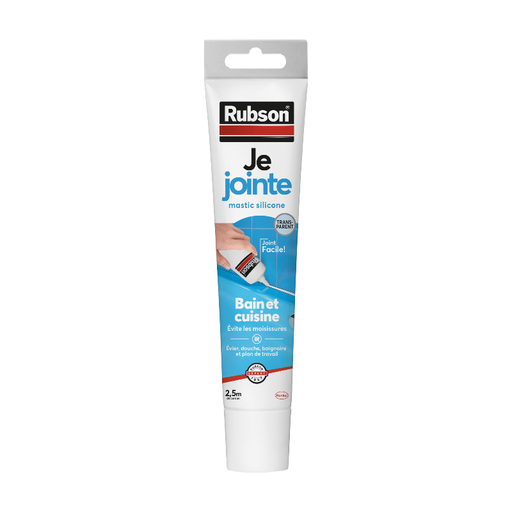
Why we chose it: Ideal for a quick, targeted repair, like resealing a sink or filling a small crack. Its ready-to-use tube format requires no tools and fits easily in a drawer.
This format prevents wasting a large cartridge on a small touch-up, while still providing an effective anti-mould sanitary formula.
Direct application without a gun; discreet transparent formula; adheres to most sanitary materials (enamel, porcelain, glass).
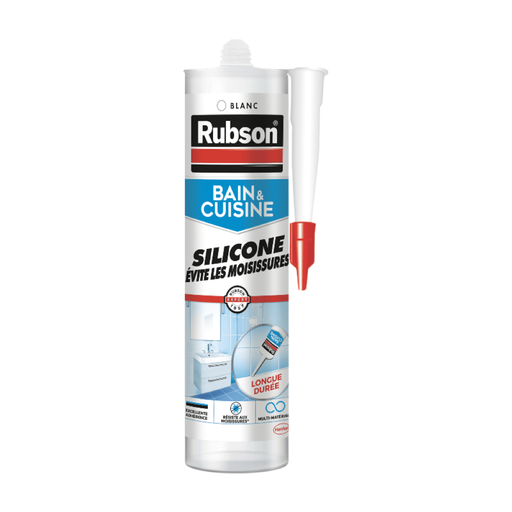
Why we chose it: This is the benchmark for a complete bathroom or kitchen renovation. Its formula is designed for long-lasting protection and a flawless result, perfect for those who don't want to redo their seals every couple of years.
Its formula, reinforced with fungicidal agents, sidesteps the trap of anti-mould protections that wear out too quickly.
Reinforced anti-mould protection; "No Cutter" system for quick and clean setup; excellent elasticity and waterproofing.
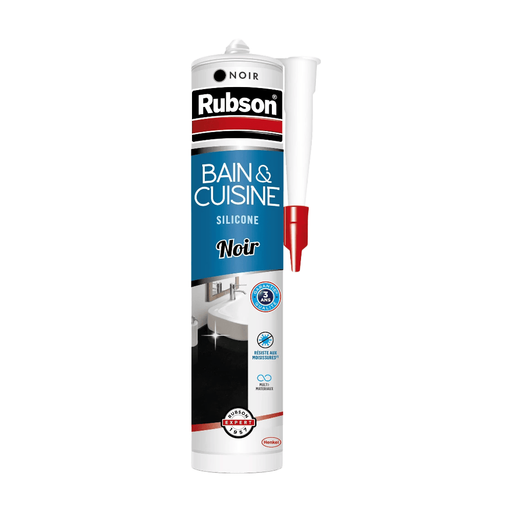
Why we chose it: For those who see the seal as a design element in its own right. Perfect for a modern bathroom with black fixtures or dark tiles, it provides a graphic, contemporary finish.
This product combines style with performance. It includes the same sanitary and anti-mould properties as the white version, thus avoiding the pitfall of a product that is purely aesthetic but not durable.
Intense black finish for a modern look; complete sanitary formula (waterproof, flexible, anti-mould); "No Cutter" system.
We have compiled a complete, up-to-date list of products that meet these strict selection criteria and relevant safety standards.
A quality seal, correctly applied to a clean and well-prepared surface, can last between 5 and 10 years. Its longevity depends on the quality of the sealant, the room's ventilation, and regular maintenance. The tell-tale signs of failure are the appearance of cracks, peeling, or ingrained mould that resists all cleaning efforts.
For a durable and perfectly waterproof result, applying new sealant over old is strongly discouraged. The old seal must be completely removed using a utility knife and a silicone remover. The surface must then be thoroughly cleaned and degreased to ensure optimal adhesion for the new sealant. While renovation products like Rubson RE-NEW exist to cover an existing seal, they are more of an aesthetic cover-up than a long-lasting repair.
Drying time varies by product, so it is essential to check the manufacturer's instructions. Generally, a seal will be touch-dry in 1 to 2 hours. However, the full cure, which is the only way to guarantee perfect waterproofing and durability, can take from 24 to 48 hours. Adhering to this timeframe is crucial to ensure the longevity of your waterproof shower seal.