
Livraison le jour même ou le lendemain

Qualité garantie

Débloquez vos offres de bienvenue: Livraison GRATUITE | Jusqu'à -80 % | 30 jours d'essai gratuits à JoyPlus
Téléchargez l'application
A fresh coat of paint can transform an entire room. Yet, one seemingly minor detail can ruin hours of work: the choice of masking tape. Bleeding paint lines, sticky residue that’s impossible to clean, or worse, a strip of paint peeling off upon removal... you've likely experienced these frustrations. Far from being inevitable, these setbacks are often the result of bad advice or a misunderstanding of the technical aspects.
As the Head of Product Recommendations at Joybuy, my mission is to guide you beyond the marketing hype. Let's forget the vague promises and focus on what really matters. Here are the pitfalls to avoid and the essential criteria for choosing the perfect adhesive tape for your project.
Before you even head to the aisle, keep these common mistakes that lead straight to disappointment in mind.
For an impeccable result and a stress-free project, three technical characteristics should guide your decision.
This is the tape's bonding strength. It's generally classified into three levels:
Indicated on the packaging, this duration is critical. It tells you how long the tape can remain in place before it must be removed to ensure it leaves no trace.
The type of paper has a direct impact on the sharpness of the line and the tape's durability.
To illustrate these criteria in practice, here are our recommendations for three typical user profiles.
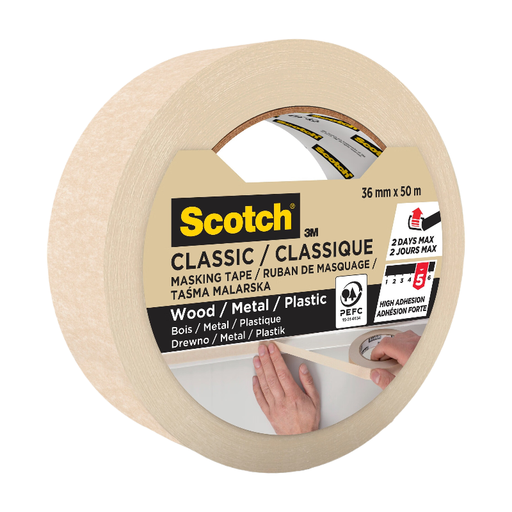
Why we chose it: Ideal for small indoor painting tasks, like refreshing a wall or protecting baseboards on surfaces in good condition. It's the smart, budget-friendly choice for weekend projects.
Its purpose is clear: quick jobs. With a recommended removal time of under 2 days, it prevents you from forgetting it on the wall, thus avoiding the nightmare of sticky residue.
Designed for straight lines on smooth surfaces. Its reliable short-term adhesive makes it a practical, no-frills ally.
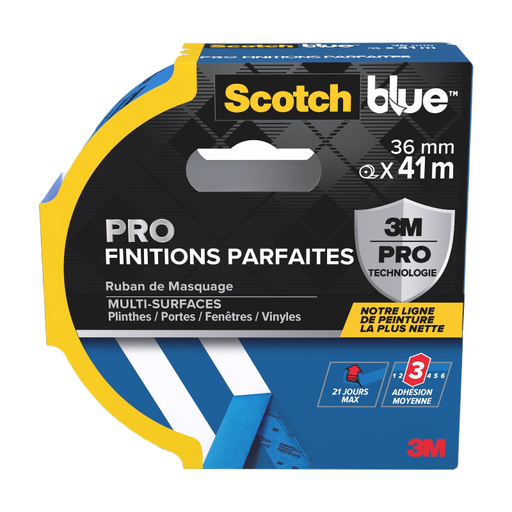
Why we chose it: The Swiss Army knife for those tackling large-scale renovations and aiming for a professional result. Its versatility (wood, metal, glass, walls) and UV resistance make it the go-to for complex projects, both indoors and out.
It thwarts the risk of paint bleed with its advanced technology, and the risk of residue with its extended 21-day removal time, even outdoors. A true investment in your peace of mind.
According to 3M, its PRO Edge-Lock+ technology guarantees superiorly sharp lines. Its advanced acrylic adhesive ensures clean, effortless removal, even after several weeks.
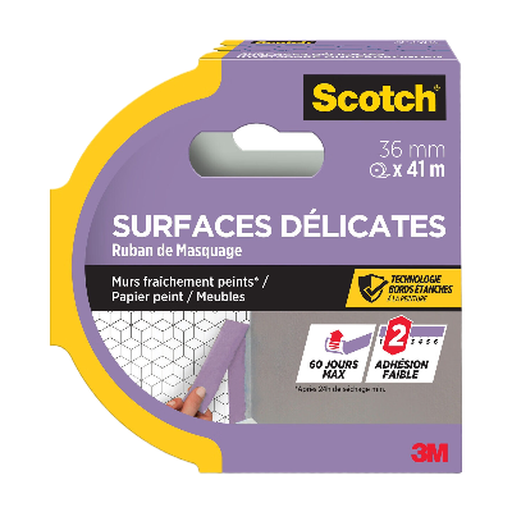
Why we chose it: The ultimate safeguard for surfaces that forgive no mistakes: finished hardwood floors, lacquered furniture, wallpaper, or walls painted just 24 hours prior. Its purple colour makes it instantly identifiable on the job site.
It directly tackles the most feared risk: damaging the surface. Its low-adhesion formula is specifically designed to peel away gently, without leaving a trace or causing damage.
A record-breaking removal time (up to 60 days) combined with low adhesion. The perfect combination for maximum protection and total flexibility on the most meticulous decorating projects.
We have analysed and compiled a complete selection of products that meet these quality criteria and current standards.
1. How do I prevent paint from bleeding under the tape? To get sharp lines, make sure the surface is clean and dry. Apply the tape, then firmly press down its edge with a clean cloth or a small plastic putty knife to ensure it adheres perfectly. When painting, start by brushing from the tape towards the surface to be painted, not the other way around. This prevents paint from being pushed under the adhesive.
2. How long can you leave masking tape on a wall? It all depends on the model. A classic beige tape should be removed within 24 to 48 hours. A blue multi-surface tape can last up to 14 days, while some delicate surface tapes (purple) can last up to 60 days. The golden rule: always check the manufacturer's instructions on the packaging.
3. Is blue masking tape really different from beige? Absolutely. The colour isn't just for aesthetics; it's a performance code. Beige tape is typically a basic crepe paper adhesive for short-term jobs. Blue tape (like the famous ScotchBlue) indicates more controlled adhesion, better UV resistance, and a much longer removal time. This makes it more versatile and reliable for larger projects.