
Livraison le jour même ou le lendemain

Qualité garantie

Débloquez vos offres de bienvenue: Livraison GRATUITE | Jusqu'à -80 % | 30 jours d'essai gratuits à JoyPlus
Téléchargez l'application
The success of a painting project often comes down to one detail: preparation. You have the right colour, the walls are prepped... but a simple roll of tape can be the difference between a professional result and a nightmare of touch-ups. That unsung hero is masking tape. A tape that bleeds, pulls off paint when removed, or leaves behind a sticky residue can ruin hours of work.
This guide is here to help you choose the right masking adhesive. We'll review the essential criteria and present our selection of the best products, whether you're a weekend DIYer or a demanding pro.
Choosing a painter's tape is anything but trivial. Three key criteria will help you find the perfect model for your project, guaranteeing sharp lines and flawless protection.
A different tape for every surface: that's the golden rule.
How long the tape stays on is a decisive factor. Each product displays a recommended removal time (7, 14, or even 60 days). Exceeding this timeframe risks turning a residue-free adhesive into a nightmare to peel off. The glue can literally bake in the sun or fuse with the surface. For projects that span several days or are outdoors, a tape with UV protection is therefore essential.
To define an area with precision, a simple tape will suffice. However, to protect large surfaces (floors, furniture, windows), a drop cloth or masking film is necessary. There are even 2-in-1 solutions that combine adhesive tape and plastic film, offering a significant time-saver during application.
To help you see more clearly, we've selected products that have proven their worth, from small decorative projects to large-scale renovations.
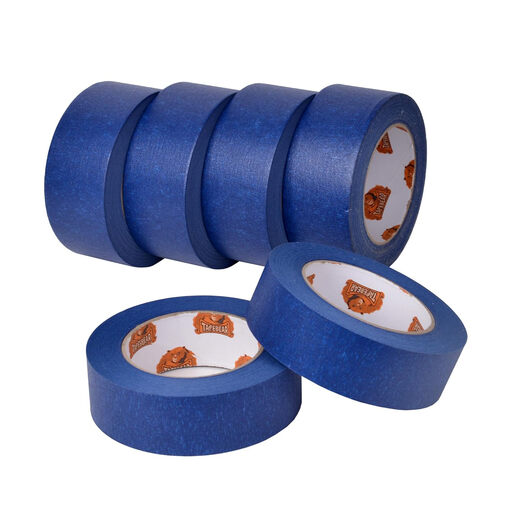
Why we love it: It's the Swiss Army knife of masking: a versatile and reliable tape for the majority of painting jobs. Its special formula adheres to numerous surfaces and guarantees clean removal for up to 14 days, even after sun exposure.
Key features:
Best for?: DIYers and pros alike who need a high-performance, do-it-all tape for multi-day projects (walls, woodwork, exteriors).
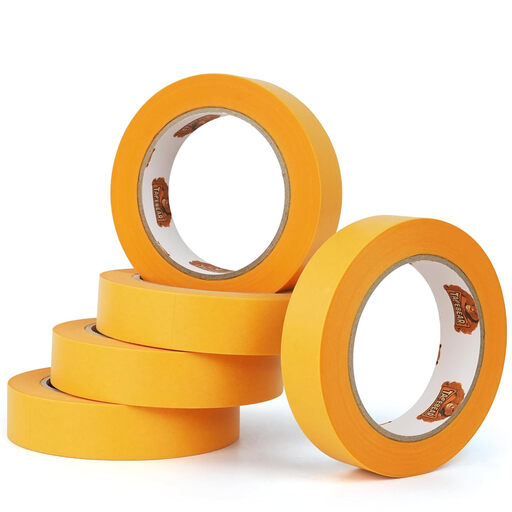
Why we love it: Made from Japanese washi paper, this is the secret weapon for high-precision finishes on delicate surfaces. Its gentle adhesive respects the most fragile materials, and its extreme thinness guarantees razor-sharp lines.
Key features:
Best for?: A must-have for decorative painters, craft enthusiasts, and anyone aiming for perfection on fragile surfaces or for complex geometric designs.
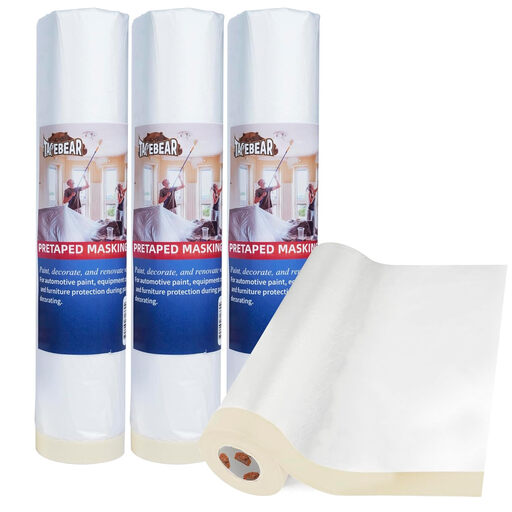
Why we love it: This clever 2-in-1 combines a masking film and its adhesive tape to quickly protect large areas. Bonus: its heat resistance makes it a prime choice for specialized applications like automotive masking.
Key features:
Best for?: A must-have for major renovations, protecting furniture, and of course, for auto body specialists or spray paint users.
Every job is different, and finding the right equipment is the key to success. If your project requires a special solution, don't hesitate to explore other options.
Explore our full range of masking adhesive tapes to find the perfect partner for your work.
The secret to sharp lines? First, an impeccable surface: clean, dry, and dust-free. Then, once the tape is applied, press its edge down firmly with a cloth or a small putty knife (this is called "burnishing") to ensure it adheres perfectly. Finally, remove it when the paint is dry to the touch, but not completely cured. Pull gently at a 45-degree angle away from the wall.
Absolutely not! That's a very bad idea. A standard tape will not withstand UV rays or moisture. Its adhesive is likely to "bake" in the sun, making removal nearly impossible and leaving permanent marks. For outdoor use, you must choose a painter's tape explicitly rated for UV resistance.
It's all in the paper! Standard tape is made of thicker crepe paper with a fairly strong adhesive. Washi tape, on the other hand, comes from Japanese plant fibers. It is therefore much thinner, denser, and stronger. Its secret is a gentler adhesive, perfect for fragile surfaces, and a structure that blocks paint for surgically precise lines, without the slightest bleed.