
Livraison le jour même ou le lendemain

Qualité garantie

Débloquez vos offres de bienvenue: Livraison GRATUITE | Jusqu'à -80 % | 30 jours d'essai gratuits à JoyPlus
Téléchargez l'application
In painting, success often hinges on the details. The difference between a wall with impeccable lines and a botched finish often comes down to one thing: the choice of masking tape. But when faced with shelves overloaded with marketing promises, it's easy to make the wrong choice and ruin hours of effort.
A tape that sticks too hard, pulls off fresh paint, or lets colour bleed underneath??It's every painter's nightmare, from amateur to professional. This guide breaks down the essential criteria for choosing the right adhesive, cutting through the marketing jargon.
The market is flooded with options, but not all are created equal. Here are the two classic mistakes that can turn your painting project into a total disaster.
For a professional result, you need to understand what separates a simple adhesive tape from a professional masking tape. Two parameters are fundamental.
The tape's backing material is crucial for achieving perfectly sharp lines.
The adhesive is designed for a temporary hold. Its quality is measured by its ability to be removed cleanly, without leaving a trace.
Every project has its own requirements. Here is our selection, curated for specific needs and based on performance and reliability criteria.
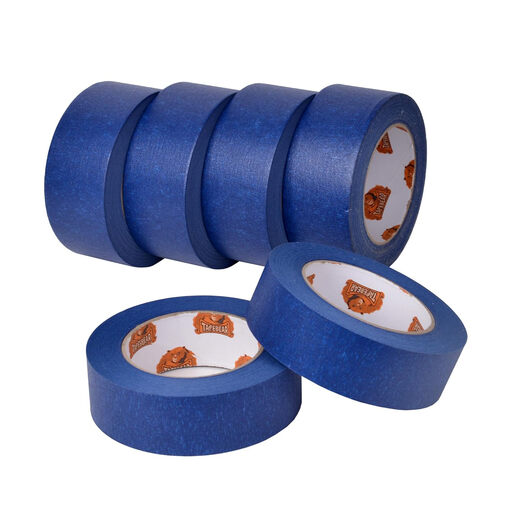
Why you need this tape: The Swiss Army knife for DIYers who tackle multiple paint jobs, both indoors and out. Its versatility makes it a go-to ally for walls, skirting boards, and window frames.
It avoids the stubborn residue trap with a formula that guarantees clean removal for up to 14 days. Its UV resistance prevents the adhesive from "baking" in the sun.
Excellent adhesion on numerous surfaces and good weather resistance. Its 48 mm width ensures broad protection and quick application.
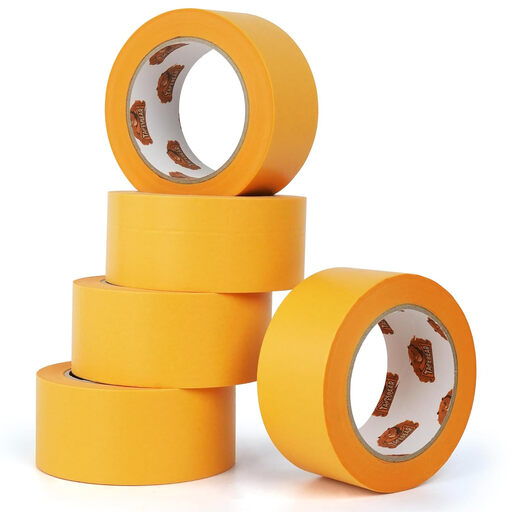
Why you need this tape: The tool for professionals and perfectionists. Perfect for accent walls, complex decorative projects, and protecting the most fragile surfaces (glass, fine woodwork...).
Its secret? Ultra-thin, dense washi paper, which forms a perfect barrier against bleeding. Its low-tack adhesive is designed to protect the most delicate substrates.
Surgically sharp lines. It resists UV rays for up to 7 days, ensuring flawless removal even from a sun-drenched window.
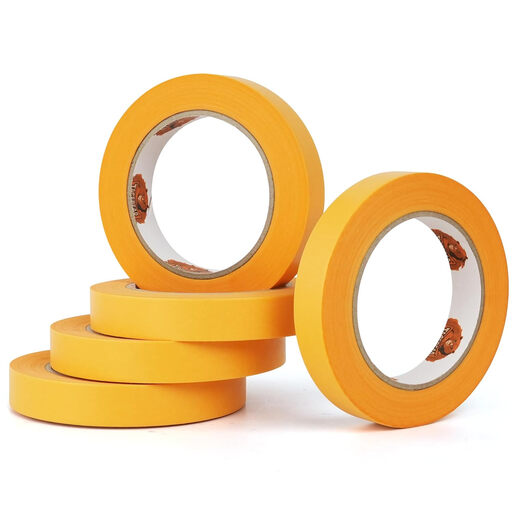
Why you need this tape: Its narrow width (19 mm) makes it the expert for detailed work: door frames, geometric patterns, protecting mouldings, or refinishing furniture.
Its thinness and flexibility allow it to get into corners and conform to curves, where wider tapes fail and let paint seep through.
It combines the sharpness of washi paper with an optimised width for maximum control in hard-to-reach areas.
Discover our full selection of products that meet our demanding selection criteria and current standards.
It all depends on the product. Your first step:?check the manufacturer's specifications. A standard tape should generally be removed within 24 to 48 hours. More technical, UV-resistant options can stay in place for 7 to 14 days, or even longer, without leaving residue. The right time for removal??When the paint is dry to the touch but not yet fully cured.
This is often due to two factors:?an unsuitable tape quality or poor application. For a perfect seal, after applying the tape, burnish the edge with a smooth tool (a plastic putty knife, credit card, etc.) to press out any air bubbles and ensure perfect adhesion. Using a washi masking tape significantly reduces this risk.
Absolutely not!?Packaging tapes or cloth tape (duct tape) use permanent, aggressive adhesives. Using them for painting will undoubtedly result in damage to your wall (peeled paint, damaged plaster...) and a very difficult-to-remove residue. A proper masking tape, on the other hand, is designed with a temporary adhesive that removes cleanly.