
Livraison le jour même ou le lendemain

Qualité garantie

Débloquez vos offres de bienvenue: Livraison GRATUITE | Jusqu'à -80 % | 30 jours d'essai gratuits à JoyPlus
Téléchargez l'application
A well-organised kitchen isn't just about aesthetics: it's the key to a simpler, more serene daily life. Yet, the quest for the perfect storage solution often turns into a headache, leading to disappointing and costly purchases. The gap between a brand's lofty promises and the on-the-ground reality can be immense. Before you pull out your credit card, it's best to know the classic traps that turn a good idea into instant regret.
To avoid making a mistake, the first step is to identify these deceptive solutions. Here are the three most common errors people make when buying kitchen organisers:
To invest in storage solutions that will stand the test of time, ignore the marketing speak and focus on concrete criteria.
The term "stainless steel" is a bit of a catch-all. For kitchen storage that's built to last, it's essential to check the exact grade of the steel.
For a product to truly earn the rust-proof stainless steel label, it must be made from one of these two grades. It's the only real guarantee of longevity.
A good kitchen organiser is one you can forget is even there. Its effectiveness lies in its ability to simplify everyday tasks.
Any space optimisation starts with a tape measure. Before you fall for a cupboard organiser or an under-sink system, precisely measure the available width, depth, and height, not forgetting obstacles like plumbing. Extendable solutions offer great flexibility to adjust to your specific constraints.
Rather than a random list, we've matched specific products to user profiles to meet concrete needs.
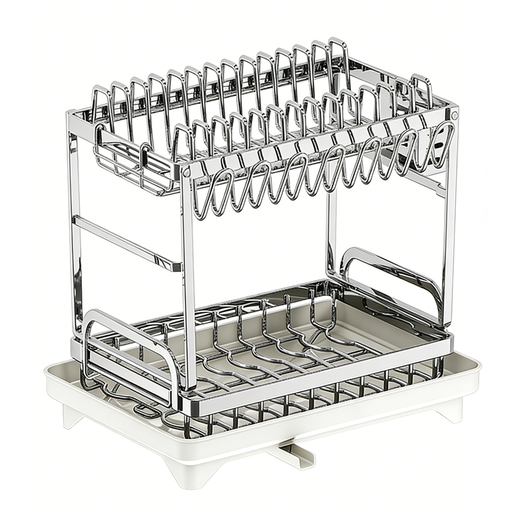
Why it's for you: Ideal for small kitchens or already-crowded worktops. This solution uses vertical space to double the drying capacity without taking up more counter space—a real asset for kitchen space-saving.
It bypasses the counter-productive design trap with its removable collection tray and integrated drainage pipe, which prevent water from stagnating on the worktop.
Two-tier structure for high capacity. Moisture-resistant materials (stainless steel and PP). Dedicated compartments for meticulous organisation.
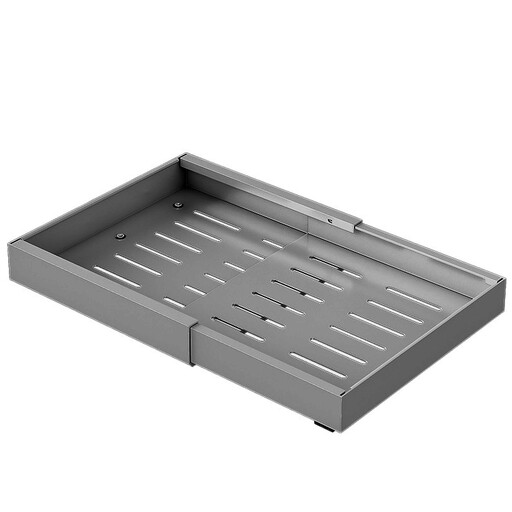
Why it's for you: Designed for those who want to tame the chaos under the sink or in a deep cupboard. The sliding system makes cleaning products and other items instantly accessible.
Its extendable design (adjustable from 42 to 68 cm) eliminates the risk of incompatibility. The drill-free installation preserves the integrity of your cabinets—a significant plus for renters.
Structure adaptable to most standard cupboards. Easy access thanks to sliding rails. Carbon steel material with a coating for good rust durability.

Why it's for you: For meal prep fans or anyone looking for a healthy, durable alternative to plastic. This set meets the need for hygienic, long-term storage.
It stands out by using 316 stainless steel, a superior grade that sidesteps the corrosion trap and guarantees total chemical inertness with food, unlike lower-quality metals.
Superior food-grade material (316 steel). Set of three sizes (600, 1100, 2200 ml) for maximum versatility. Freezer and dishwasher safe.
We've curated a full range of products that meet our strict selection criteria.
Even high-quality stainless steel requires minimal maintenance. Clean it regularly with a soft sponge and a neutral detergent. Above all, steer clear of abrasive sponges or steel wool, which can scratch the surface and compromise its protective layer. The key step: dry it thoroughly after each cleaning to prevent limescale deposits and water spots, which are often mistaken for rust.
Yes, provided you follow the assembly instructions to the letter. These systems are designed to be perfectly stable once installed on a clean, flat surface, and as long as the maximum supported weight is not exceeded. The VIVREAL model, for example, supports up to 15 kg, which is more than enough for domestic use (cleaning products, tins, etc.). Stability therefore depends on proper assembly and respecting the stated load capacity.
304 stainless steel is the basic standard for most kitchen utensils and offers very good protection against rust. 316 stainless steel, however, takes it up a notch by incorporating molybdenum. This addition gives it far superior resistance to corrosion from chlorides (found in salt) and acids. In short: for long-term storage of saucy dishes, vinaigrettes, or very salty foods, 316 offers unparalleled peace of mind and food safety.