
Livraison le jour même ou le lendemain

Qualité garantie

Débloquez vos offres de bienvenue: Livraison GRATUITE | Jusqu'à -80 % | 30 jours d'essai gratuits à JoyPlus
Téléchargez l'application
For many of us, washing dishes by hand is a daily chore. But the drying stage can quickly turn a tidy countertop into a damp, cluttered battlefield. A well-chosen stainless steel dish rack isn't just another accessory?: it's the key to maintaining order, hygiene, and style in your kitchen.
With the overwhelming number of models available, it's hard to know where to start. This guide is here to help you navigate the options, understand the essential criteria, and find the perfect dish organizer that will fit seamlessly into your kitchen and daily routine.
Before you make a decision, a few key points will make all the difference in your day-to-day use.
The first question to ask yourself concerns the space you have available and the volume of dishes you typically wash.
A good dish rack must drain water effectively to prevent stagnation and limescale buildup. Most models come equipped with a dish rack with a drip tray. The most ingenious systems include a spout or a pivoting water outlet that directs excess water straight into the sink, keeping your countertop perfectly dry.
The stainless steel dish dryer is prized for its durability and rust resistance—major advantages in a humid environment like the kitchen. Some models offer small extras that make all the difference:
Here are a few options that stand out for their design and functionality, suited for different needs.

Why it stands out?: This model is all about practicality with its one-piece design. Ready to use right out of the box, it requires no assembly. Its standout feature?? A rotating drainage system that lets you direct water straight into the sink.
Advantages?:
Who is it for?? Ideal for individuals, couples, or anyone with limited space looking for a simple, functional, and easy-to-maintain countertop dish rack.
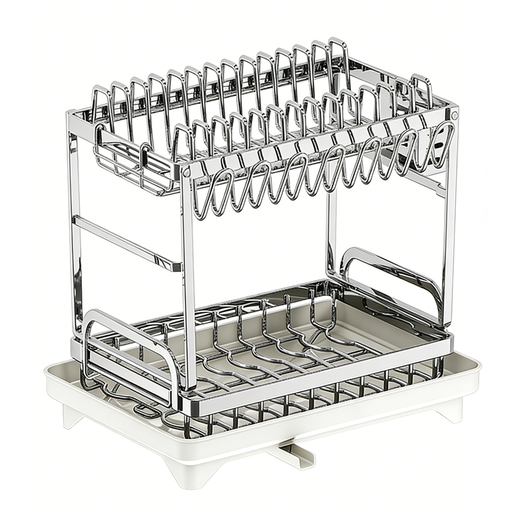
Why it stands out?: Designed for families or large meals, this 2-tier dish rack leverages vertical space to hold an impressive amount of dishes. Its sturdy stainless steel and PP frame is built to handle a heavy load without ever buckling.
Advantages?:
Who is it for?? Perfect for families or anyone who regularly washes large quantities of dishes and needs a high-performance kitchen dish organizer built to last.
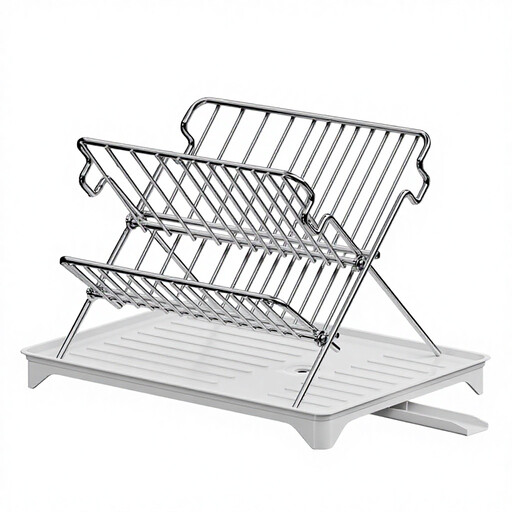
Why it stands out?: This model combines the best of both worlds?: the large capacity of a two-tier rack and the convenience of a foldable dish rack. It offers ample drying space when you need it and becomes compact to free up your countertop once the dishes are done.
Advantages?:
Who is it for?? The perfect option for small kitchens where every square inch counts, or for those who love having a completely clear countertop after doing the dishes.
The models in our selection specifically address the problem of drying dishes. If you're looking to rethink your entire kitchen organization and optimize your prep space, other options are available.
To explore a wider range of solutions, take a look at our category dedicated to work tables with storage.
It couldn't be simpler. For regular cleaning, a soft sponge with a little dish soap and a rinse with clean water will suffice. To remove limescale marks, a cloth soaked in white vinegar is incredibly effective. Dry thoroughly after cleaning to maintain the stainless steel's shine and prevent water spots. Avoid abrasive sponges, which could scratch the surface.
Absolutely, as long as you follow a few common-sense rules. Make sure to place it on a flat, stable surface. Distribute the weight evenly, placing heavier items (like pots and pans) on the bottom tier. Quality models are designed with robust materials and a solid base to ensure their stability.