
Same-day & Next-day Delivery

Quality Guaranteed

Unlock Your Welcome Offers: FREE Delivery | Up to 80% OFF | Free 30-day JoyPlus trial
Download the APP
Switching to a stainless steel food container is a smart choice for anyone seeking a healthy, durable, and eco-friendly solution for their meals. Say goodbye to plastic that stains, warps, and raises doubts about its composition. However, the market is flooded with options, and not all stainless steel containers are created equal. Before you take the plunge, it's crucial to know the common pitfalls that can turn a sound investment into a real disappointment.
As a Product Expert at Joybuy, my mission is to help you navigate the choices. Let's review the key points to check to guide you toward a container that's perfectly suited to your daily life.
Stainless steel has it all, but certain technical details make all the difference between a reliable product and a gadget you'll throw away after a few months.
To avoid these pitfalls, focus on these three criteria that signify the quality and practicality of a good food container.
The grade of the steel is the primary hallmark of quality. For food-grade use, two standards dominate:
A perfect seal relies on the combination of two elements:
Finally, the format should match your habits:
Here are a few models that meet different needs, all validated against the quality and practicality criteria we've just discussed.
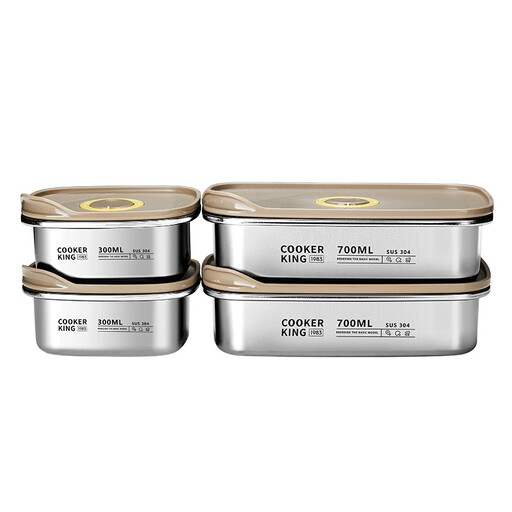
The Verdict: Perfect for getting fully equipped with multiple sizes at once. Ideal for meal prep, storing leftovers, or packing snacks—all without breaking the bank.
With its simple and proven design (food-grade stainless steel body, lids without complex mechanisms), this set limits the risk of breakage, especially when it comes to fragile clips.
The versatility of a set of 4 different sizes. These stackable containers optimise space in both the fridge and cupboards.
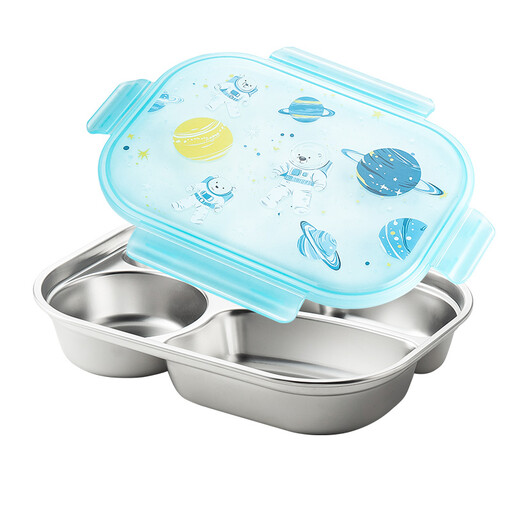
The Verdict: The perfect solution for those who like everything to stay in its place. Main course, side, dessert: everything is separated for a meal that looks as good as it tastes, with no mixing of flavours.
Its compartments are truly leak-proof between each other, which prevents sauces and flavours from mixing—the #1 flaw of poorly designed divided containers.
The quality of the stainless steel 316—the best of the best—and 4 true compartments for a varied meal. The little extra? The patterned lid is perfect for motivating kids to finish their food.

The Verdict: For those who make no compromises on quality and durability. This is the ultimate long-term investment, perfect for acidic or salty foods, with impeccable hygiene.
By relying entirely on stainless steel 316, it eliminates the risk of low-quality steel from the outset. The result: maximum resistance to corrosion and complete neutrality with food.
316 stainless steel guarantees an unmatched lifespan and hygiene. The set of three sizes (600 ml, 1100 ml, 2200 ml) adapts to all scenarios, from a small snack to a family-sized dish.
We have put together a complete selection of products that meet our quality criteria and current standards.
Can a stainless steel container go in the microwave? Absolutely not. You should never place a metal object, including a stainless steel container, in a microwave oven. The metal reflects the microwaves, which can cause sparks (arcing) and damage your appliance, sometimes irreparably. To reheat your meal, simply transfer the contents to a microwave-safe plate or bowl.
How do I properly clean my stainless steel container so it remains odour-free? This is one of the superpowers of stainless steel: it doesn't retain odours or stains. Most containers are dishwasher-safe. For hand washing, hot water and dish soap are sufficient. If a stubborn odour persists (garlic, curry, etc.), let the open container soak with a mixture of hot water and baking soda for a few hours before rinsing.
304 vs. 316 stainless steel: what's the real difference for food use? For everyday use, 304 stainless steel is perfectly safe and suitable. The key difference is the addition of molybdenum in 316 stainless steel, which makes it even more resistant to corrosion caused by salt and acids. Opting for 316 is therefore a wise choice if you regularly store very salty foods, vinaigrettes, or citrus fruits, or if you are simply looking for the best possible quality for a very long-term investment.