
Livraison le jour même ou le lendemain

Qualité garantie

Débloquez vos offres de bienvenue: Livraison GRATUITE | Jusqu'à -80 % | 30 jours d'essai gratuits à JoyPlus
Téléchargez l'application
A kitchen bin should hold everyday waste without obstructing movement, minimise odours and remain easy to empty. Yet product listings often focus on design or a particular feature without explaining the details that genuinely make a difference in daily use.
Before choosing, start by assessing your habits: the amount of waste you produce, collection frequency, whether you need to sort recyclables, the available width and whether you have children or pets. This will help you avoid ending up with a bin that is too small, difficult to clean or poorly suited to the way you organise your home.
A 30-litre bin or 40-litre bin may seem ideal for a family, but the shape of the container has a significant impact on how much it can actually hold. A narrow model makes better use of height, while a wider bin may accommodate standard shop-bought bin bags more easily.
Always check the external dimensions, not just the capacity in litres. A large bin positioned in front of a drawer or cupboard door can quickly become inconvenient in everyday use.
A pedal bin means you do not need to touch the lid, but the pedal and hinges require regular cleaning. An automatic lid adds electronic components and often runs on batteries. A bin with a manual lid is generally easier to maintain, but requires you to use your hands.
The best choice is one that suits your habits, rather than simply opting for a feature presented as more modern.
A recycling bin makes it easier to separate paper, plastic, glass and packaging. However, two compartments inevitably reduce the space available for each category. Examine the capacity of each compartment individually and check whether the inner buckets can be removed.
Recycling guidelines can vary from one local authority to another, so consult your local collection service before assigning a compartment to a specific type of waste.
For one person or a small household, a 20- to 30-litre bin helps keep the footprint under control. A 30-litre bin is particularly suitable for recycling or for household waste accumulated over several days. Families may want to consider a 40-litre bin, provided they have a sufficiently wide space available.
Never overload the bin. Some product listings specify a maximum load separately from the capacity in litres. This figure refers to the weight the bin can support, not the amount of waste it can hold.
A slim bin is designed to fit into a narrow space, such as the gap between a unit and a wall. Measure the available width, depth and height, allowing enough clearance to open the lid fully and remove the bag.
In a small kitchen, a tall bin can free up valuable floor space. In a utility room, garage or office, an open bin or recycling container may be more practical than a model intended for food waste.
Plastic can generally be cleaned with warm soapy water and a soft sponge. Steel provides a more understated finish but does not respond well to abrasive products. Metal mechanisms should also be protected from excessive moisture.
Choose a model with a removable inner bin or handles that make it easier to remove the contents. In a home with young children, check that the model is stable and avoid placing heavy objects on the lid. No household bin should be used as a seat, step stool or container for hazardous, flammable or sharp waste.
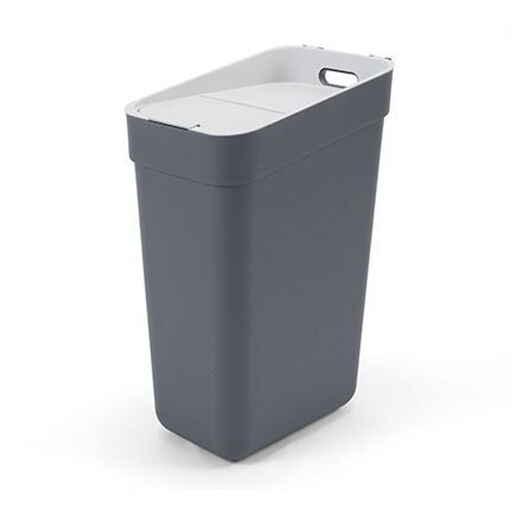
Why this model suits this profile: its 30-litre capacity is suitable for sorting paper, plastic, glass or metal in a kitchen, utility room or garage.
The capacity and dimensions are clearly stated: 36.7 × 24.6 × 55.1 cm. No wall installation is required.
The listing specifies that it is made from 70% recycled materials and can be washed with soapy water. Stated maximum load: 15 kg, evenly distributed.
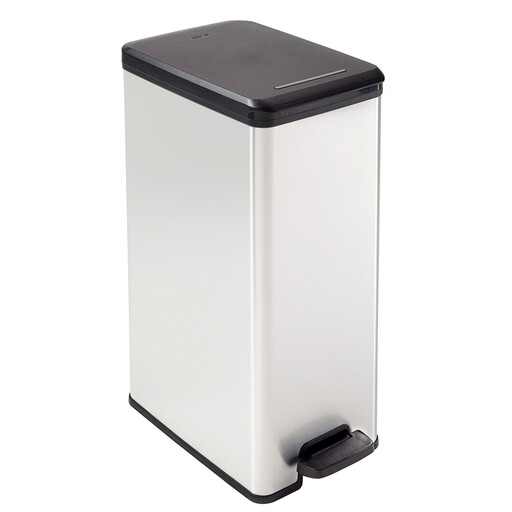
Why this model suits this profile: its slim design makes efficient use of height, while its 40-litre capacity suits family kitchens or rooms where floor width is limited.
The listing combines the stated capacity with a narrow silhouette. However, check the available space carefully before placing your order.
The pedal opens the lid without using your hands, while the removable inner bucket makes emptying and cleaning easier.
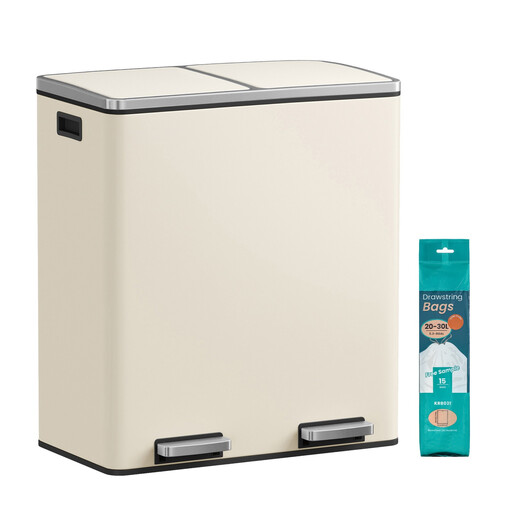
Why this model suits this profile: its two inner buckets allow you to separate general waste and recyclable packaging directly in the kitchen.
The compartments are removable and fitted with handles. You can monitor how full each one is separately and clean them more easily.
Stated dimensions: 59 × 32.5 × 65.2 cm. The soft-close lid and pedal operation allow for hands-free use.
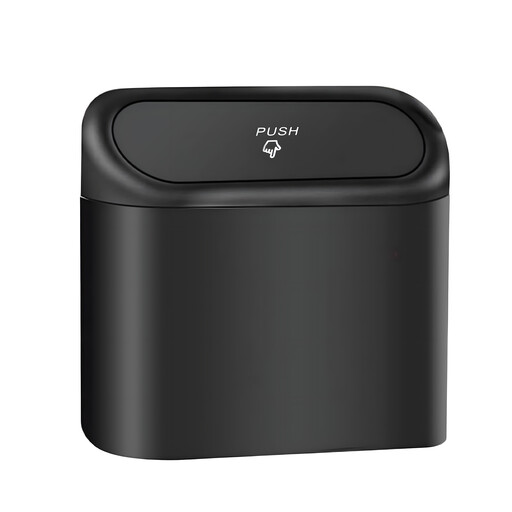
Why this model suits this profile: this compact container holds tissues, wrappers and other waste generated during journeys without taking up much space.
Its 1.4-litre capacity is clearly stated, so it cannot be mistaken for a kitchen bin. It is not designed to hold large quantities of liquid.
Its 15.5 × 13.5 × 6.5 cm format and removable hook allow it to be attached to a seat-back pocket or placed in a suitable storage area.
We have brought together an up-to-date selection of bins for kitchens, recycling, narrow spaces and on-the-go use, helping you compare your options more easily.
A capacity of 30 to 40 litres may suit a family, but the right size also depends on collection frequency and the space available. For recycling, focus on the capacity of each compartment rather than the total stated volume.
An automatic bin may require batteries or a specific power supply, depending on the model. Check the stated battery life, the battery type and the availability of replacement parts or consumables. A pedal bin generally does not involve this type of ongoing expense, but its mechanism must be kept clean and stable.
Use a suitably sized bag, do not exceed the stated load and clean the bin regularly with soapy water. Do not use steel wool or abrasive products on painted surfaces. For a recycling bin, rinse containers that have held soiled packaging, then dry them before fitting a new bag.