
Livraison le jour même ou le lendemain

Qualité garantie

Débloquez vos offres de bienvenue: Livraison GRATUITE | Jusqu'à -80 % | 30 jours d'essai gratuits à JoyPlus
Téléchargez l'application
Peelings, coffee grounds, apple cores, leftover fruit and veg… Sorting food waste is gradually becoming a habit in British households. But you need the right caddy. Choose poorly, and it can quickly become bulky, tricky to clean, or encourage unpleasant smells.
Before you place an order, there are three pitfalls to avoid:
An indoor compost bin isn't designed to keep waste for weeks. It's a temporary storage solution, before you transfer it to a garden composter, a shared compost bin, a municipal collection point, or a home food-waste recycling system.
A 5-litre compost caddy fits easily on a worktop or in a base cabinet. It's suitable for one person, a couple, or households that can empty their bin several times a week.
An 8-litre compost caddy offers a good balance: it lets you store several days' worth of food waste without taking up as much space as a larger model. This size is ideal for households that cook regularly and have an outdoor composter or a collection point nearby.
A 10-litre compost caddy is better suited to families and those who want to cut down on trips to the outdoor bin. However, it needs a stable spot and regular checks on how full it is, to prevent waste from fermenting for too long.
A metal compost bin appeals for its sturdiness and smarter look. With a painted finish, it can easily fit into a classic kitchen or a contemporary interior. Do check the manufacturer's instructions, though: some lids with filters shouldn't be submerged.
A removable inner bucket or a perforated basket makes rinsing much easier. After each wash, dry all the parts thoroughly before putting them back. This will help limit persistent moisture and the build-up of residue in the seals or at the bottom of the bin.
The term compostable bin with odour filter usually refers to a caddy for compostable waste, with a filter built into the lid. This helps to reduce smells, but its effectiveness depends on its condition, the type of waste, and how often you empty it. So you need to check it regularly and replace it when it reaches the end of its life.
A sturdy handle makes it easier to carry to the garden composter or collection point. It's almost essential on larger models. Also make sure the lid closes properly, without making daily opening a chore.
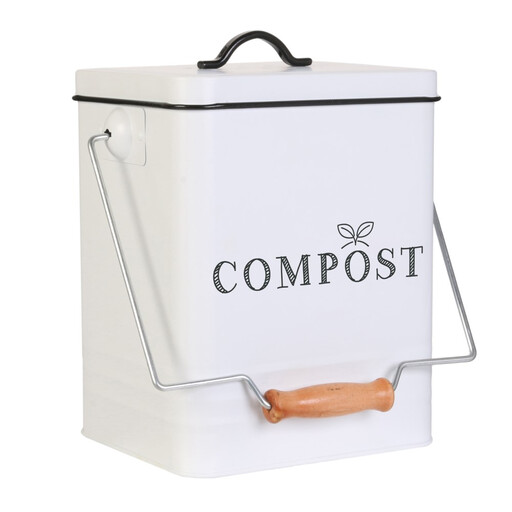
Why this suits this profile: Its 5-litre capacity works well for small spaces, people just starting out, and households that transfer their food waste frequently.
Its small size stops waste from building up for too long. The bin is easy to wash, and the supplied filter helps to keep smells at bay.
Painted metal, 5-litre capacity, filter included, and hand-wash with water and mild soap.
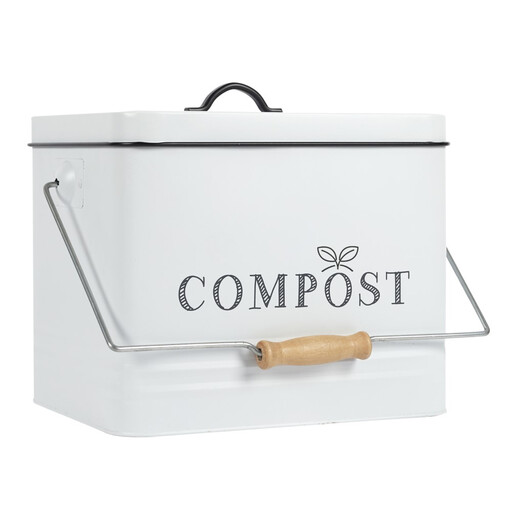
Why this suits this profile: Its vintage look and 10-litre capacity fit well in a kitchen where the bin stays on show and the volume of food waste is larger.
The filtered lid helps contain odours, while the handle makes emptying easier despite the larger capacity.
Painted metal, filtered lid, carry handle, and 10-litre capacity.
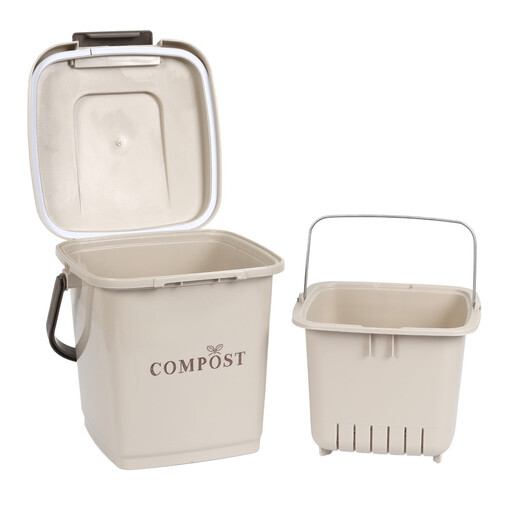
Why this suits this profile: Its perforated inner basket is ideal for people who regularly handle wet waste and want to separate liquids from solids.
The removable basket makes rinsing the bottom easy and reduces prolonged contact between liquids and waste.
8-litre capacity, perforated basket, flip lid, and carry handle.
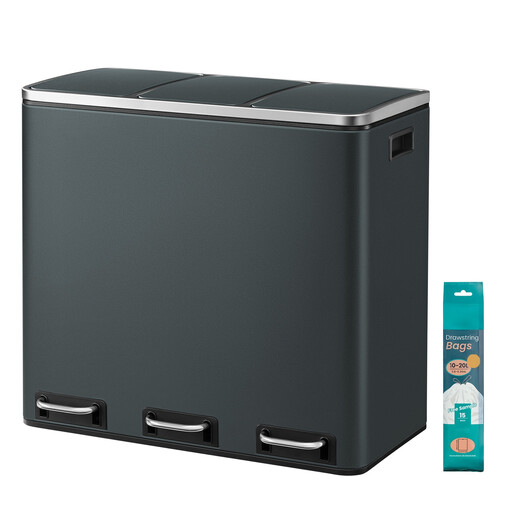
Why this suits this profile: Its three compartments bring together recycling for packaging, general household waste, and food waste in a single unit.
The removable inner bins make emptying easy and prevent different waste streams from mixing in the kitchen.
Three 18-litre compartments, pedals, soft-close lid, steel frame, and 15 bags included.
We've put together a comprehensive, real-time selection of products that meet these exacting criteria and European safety standards.
Even with a filtered lid, a few good habits can make all the difference:
A volume of 8 to 10 litres can work if the bin is emptied every two or three days. The right choice mainly depends on how many meals you cook at home, the space you have, and the distance to your composter or collection point.
It depends on local rules and the collection system. A bag labelled as compostable isn't necessarily accepted everywhere. Check your council's guidance before using one, and don't confuse it with a standard plastic bag.
It's best to transfer it regularly, especially when it's wet or contains leftovers. A closed lid and a filter can help to reduce smells, but they don't replace the need to empty and clean the bin.