
Livraison le jour même ou le lendemain

Qualité garantie

Débloquez vos offres de bienvenue: Livraison GRATUITE | Jusqu'à -80 % | 30 jours d'essai gratuits à JoyPlus
Téléchargez l'application
A kitchen bin needs to fit your space, keep up with your waste output, and work with your recycling routine. Yet some models quickly become cumbersome, difficult to clean or impractical for daily use. Before you place an order, it's worth looking at the actual usable capacity, the type of opening, the shape and how easy it is to maintain – rather than being swayed by looks alone.
A large 65 L bin can work well for a big family or a shared space. However, it will take up more room and can become heavy to handle when full. On the other hand, a 15 L bin will easily fit in a small kitchen, office or bathroom, but you'll need to empty it more often.
The right volume depends on how many people use it, how frequently your waste is collected and the type of rubbish you produce. For general use, 30 to 40 L sizes usually offer the best balance.
A bin that's described as compact can still turn out to be too wide for the spot you had in mind. Measure the width, depth and height available under a worktop before you order. A slim model can slot between a cabinet and a wall, while a rectangular bin will make better use of a corner.
Don't forget to allow enough space for the lid to open. A pedal bin needs to open fully without hitting an overhead cupboard or a wall-mounted fixture.
A black, white or stainless steel finish doesn't guarantee easy cleaning. The features that really matter are a removable inner bucket, access to the lid and surfaces that can handle a damp cloth and a mild detergent.
The pedal lets you open the bin without touching the lid with your hands. It's handy near the sink or while you're preparing meals, as long as the mechanism stays stable and doesn't get in the way when you change the bag.
For recycling, two separate bins can be simpler to use than a single compartmentalised container. However, do check your local council's rules: the types of waste accepted vary from one collection service to another.
Plastic is generally easy to clean and light to move. A stainless steel bin gives a sleek finish and good durability, but abrasive products can leave marks. Stick to a soft cloth and a non-aggressive detergent.
To keep smells at bay, avoid letting liquids build up at the bottom of the bag. A removable inner bucket makes cleaning easier and lets you change the bag without moving the whole bin.
Place the bin on a flat, stable floor. A pedal model should stay firmly in place when you press down. Don't put sharp, dangerous or flammable waste in it, unless the manufacturer explicitly allows it.
For plastic recycling bins, check the maximum load stated. The Curver Ready to Collect 30 L model, for example, has a maximum load of 15 kg evenly distributed.
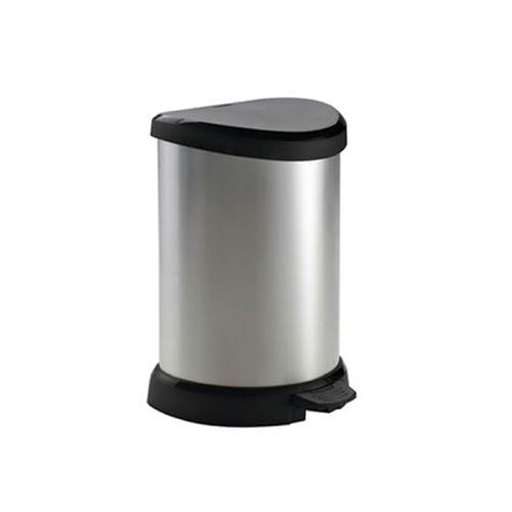
Why this suits this profile: With its 15 litres, it's ideal for small kitchens, offices, utility rooms and bathrooms where every centimetre counts.
Its D-shape sits flush against a wall, while the removable inner bucket means you don't have to move the whole bin when emptying it.
A wide pedal, a removable bucket and a size suited to moderate daily use.
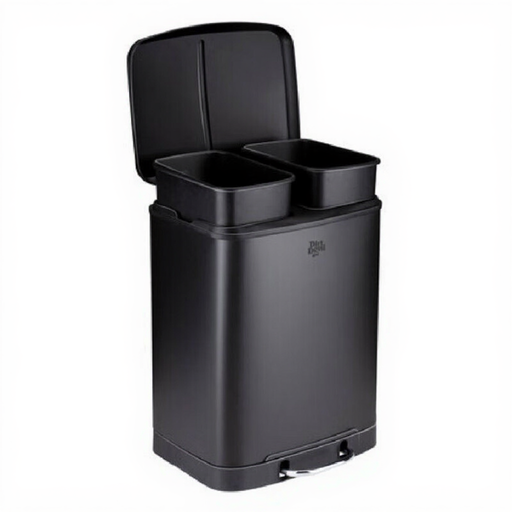
Why this suits this profile: Its two 12 litre compartments let you separate general waste from recyclable packaging in a single bin.
Recycling is done at source, which avoids having multiple bags and taking up extra floor space.
Stainless steel, two 12 litre bins and a soft-close mechanism.
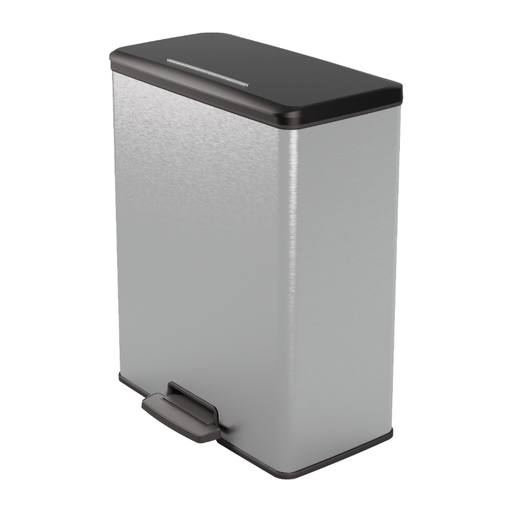
Why this suits this profile: Its 65 litres meet the needs of larger families, offices, professional kitchens and shared spaces.
Its rectangular shape sits against a wall and the removable inner bucket makes handling easier despite the large capacity.
65 litres, a pedal for hands-free opening and a removable bucket that makes emptying easier.
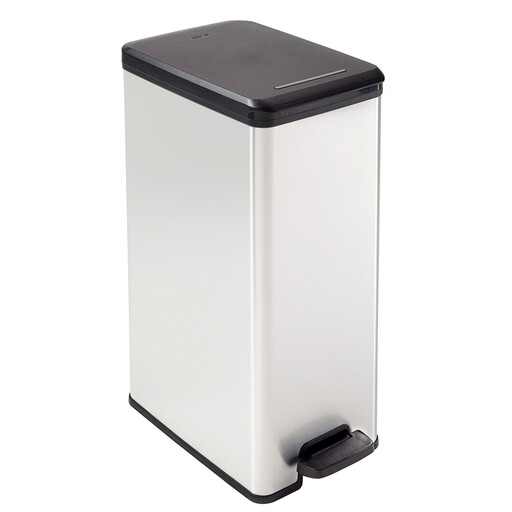
Why this suits this profile: Its slim profile still holds 40 litres, making it ideal for a kitchen, utility room or office where width is limited.
The Slim design solves the problem of a bin being too wide without sacrificing too much usable capacity.
40 litres, a slim design, a pedal and a removable inner bucket.
We've put together a full selection, updated in real time, of products that meet these criteria as well as European safety standards.
To make your kitchen bin last, place it on a stable surface away from heat sources. Clean the inner bucket regularly with warm water and a mild product, then dry it before putting in a new bag.
If it's a kitchen compost caddy, empty it frequently and rinse the perforated basket if there is one. Don't use it for non-organic, sharp or hazardous waste. In all cases, follow your local council's collection guidelines.
A 30 to 40 L model works well for many households, depending on how often your waste is collected and how much space you have. If you split your rubbish across several containers, a smaller volume for each type may be perfectly adequate.
It stops you from touching the lid with your hands and makes it easier to drop waste in while you're preparing meals. However, do check its stability, the width of the pedal and the space needed for it to open.
Choose a suitable bin bag, avoid putting liquids in it and empty food waste promptly. A separate compost caddy can also help keep organic waste away from your general rubbish.