
Livraison le jour même ou le lendemain

Qualité garantie

Débloquez vos offres de bienvenue: Livraison GRATUITE | Jusqu'à -80 % | 30 jours d'essai gratuits à JoyPlus
Téléchargez l'application
A hydraulic car jack can make changing a wheel, inspecting the chassis or carrying out certain maintenance tasks much easier. But a stated capacity in tonnes is not enough to guarantee a safe choice. The minimum height, stability on the ground and compatibility with the vehicle’s lifting points are just as important.
Whether you are a private owner, the owner of an SUV or motorhome, or equipping a workshop, here are the criteria to check before buying, along with a selection of models suited to different uses.
A 3-tonne car jack is not necessarily suitable for every vehicle. You need to consider the vehicle’s total weight, how it is distributed between the axles and the position of the lifting point. Also consult the vehicle’s manual and never exceed the maximum load stated by the jack manufacturer.
A model designed for a city car will not necessarily meet the needs of an SUV, 4x4, van or motorhome. For these vehicles, it is better to choose a sufficient capacity and an appropriate lifting height.
An ultra-low-profile jack may be essential for a sports car or lowered vehicle. Conversely, a jack with too short a maximum travel may not lift an SUV or van wheel clear of the ground properly.
Before placing your order, compare:
A hydraulic jack is designed to lift a vehicle, not to support it in the air for extended periods. To work underneath the car or carry out a prolonged inspection, install suitable car axle stands on a stable surface and at the recommended points.
The ground must be hard, level and clear. Avoid soft surfaces, slopes and makeshift supports. Apply the handbrake, place wheel chocks and remove any unnecessary load from the vehicle to improve the stability of the setup.
Low-profile trolley jacks are practical in a garage thanks to their wheels and long handle. They are often suitable for cars, SUVs and MPVs. A steel hydraulic trolley jack generally focuses on durability, while a model combining aluminium and steel may be easier to move.
The 6-tonne bottle jack takes up less space and is suitable for heavy vehicles, but its vertical base requires very precise positioning. It should not be confused with a trolley jack, which offers greater mobility.
On some models, a dual pump speeds up lifting. On a bottle jack, an adjustment screw allows more precise positioning. For an occasional wheel change, ease of use and storage may be the priorities. For a professional garage jack, stability, structural strength and the availability of parts or accessories deserve closer attention.
The scissor jack remains a compact solution to keep in the boot for emergency repairs. However, it requires more effort and is less convenient than a hydraulic trolley model.
Some products claim compliance with EN 1494 and carry the CE marking. Check these details on the product page, in the manual and on the labelling. The CE marking indicates that the manufacturer declares the product to comply with the applicable European requirements; it does not remove the need to check the capacity, stability and usage instructions.
Before buying, also check that clear instructions are provided, along with the actual dimensions, rated load and any restrictions relating to the type of vehicle.
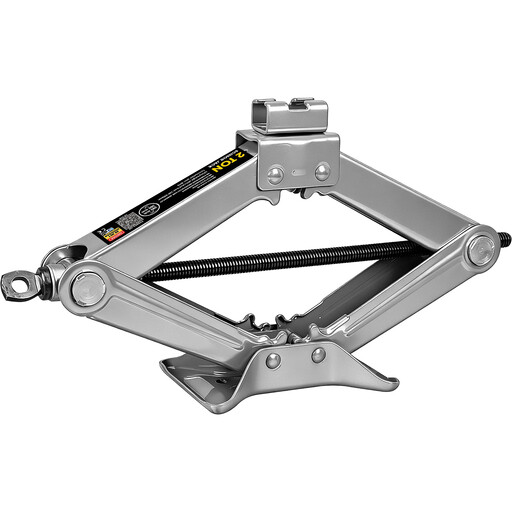
Why this choice suits this profile : Its foldable design stores easily in the boot and is suitable for changing a wheel or carrying out occasional checks.
With a stated folded height of 88 mm, it reduces the risk of choosing a jack that is too bulky for the boot or too tall for a low car.
Forged alloy steel construction, a widened non-slip base and a stated lifting range of 88 to 380 mm.
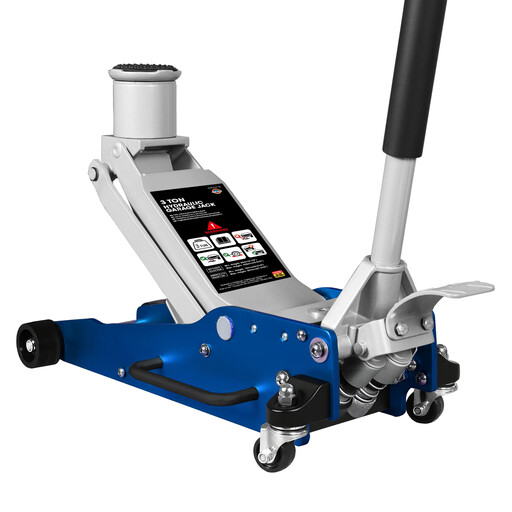
Why this choice suits this profile : It combines a horizontal design, a low entry height and two lifting modes. An appealing combination for owners of sports cars, SUVs, MPVs or vans.
With a stated entry height of 85 mm, it is suitable for low chassis. The height extension broadens its range of use.
Stated 3-tonne capacity, lifting range from 85 to 465 mm, extension up to 541 mm, dual pump, and EN 1494 and CE details shown on the product page.
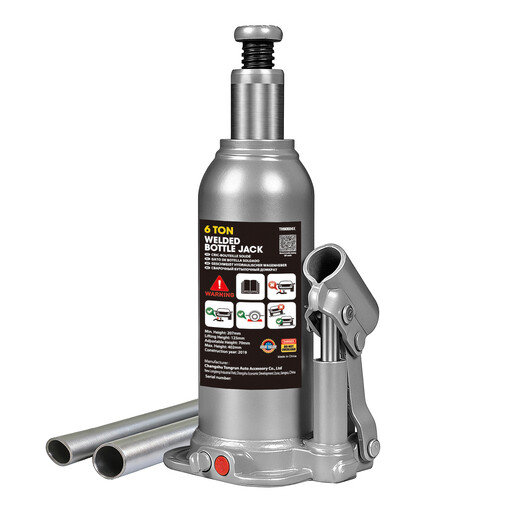
Why this choice suits this profile : Its vertical design is suitable for SUVs, pick-ups, light commercial vehicles and motorhomes that require a higher capacity than a standard jack.
Its 207 to 402 mm range and forged base meet the demands of heavy vehicles, provided you check the lifting point precisely.
Stated 6-tonne capacity, chrome-plated piston, safety valve to prevent overloads and height adjustment screw.
We have brought together a complete, real-time updated selection of products that meet these strict criteria and European safety requirements.
Start by checking the vehicle’s weight in its documentation, then choose a jack with a capacity corresponding to the load actually supported at the lifting point. A 2.5- or 3-tonne model may be suitable for many cars and some SUVs. A van or motorhome, however, may require a 6-tonne bottle jack. In all cases, the jack’s capacity never replaces the need to use suitable axle stands.
No. A jack is designed for temporary lifting operations. To keep the vehicle raised during a repair, place it on suitable car axle stands on level ground, after checking that the entire setup is stable. Always follow the instructions in the jack and vehicle manuals.
It depends on how often it is used, storage conditions and maintenance. Keep the jack dry, clean exposed parts and regularly check the wheels, saddle and welds, as well as ensuring there are no leaks. A loss of pressure, uneven lowering or deformation are all signs that should prompt you to stop using the jack and consult the manual or after-sales service.