
Livraison le jour même ou le lendemain

Qualité garantie

Débloquez vos offres de bienvenue: Livraison GRATUITE | Jusqu'à -80 % | 30 jours d'essai gratuits à JoyPlus
Téléchargez l'application
A hydraulic car jack makes changing a wheel, routine maintenance and certain home repairs much easier. But the rated capacity in tonnes alone isn’t enough to guarantee a safe choice. The minimum height, your vehicle’s lifting points and the overall stability are just as important.
Before you buy, here are the main pitfalls to avoid and the criteria to examine when comparing models – without being guided solely by price or marketing promises.
A 3-tonne car jack isn’t automatically suitable for every vehicle. The maximum load is the capacity stated by the manufacturer, but your car may have a ground clearance that’s too low, a lifting point that’s hard to reach, or a significant weight to support.
Check the maximum authorised mass shown on your vehicle registration document (V5C) and the owner’s manual. The jack must be positioned only on the lifting points specified by the manufacturer.
A trolley jack that’s too tall may not fit under a low saloon, a sports car or a vehicle with deflated tyres. Conversely, an ultra-low profile model may lack the lifting range for an SUV or a light commercial vehicle.
The minimum and maximum heights should therefore be compared to your vehicle’s actual ground clearance, rather than a general category like “family car” or “4x4”.
A jack is for lifting, not for supporting a car for long periods. To work underneath the chassis, always use axle stands that are rated for the load, placed on a hard, level and stable surface. Never get under a vehicle supported only by a hydraulic device.
For everyday use, a 2 to 3-tonne jack can suit many cars, as well as some SUVs and MPVs – provided you check the vehicle’s weight. Owners of 4x4s, vans or light trucks should look at higher capacities.
The lifting range must cover your needs:
An ultra-low profile jack is particularly handy in a garage equipped for low cars. A hydraulic bottle jack often offers a high capacity in a vertical format, but its base and minimum height must be checked before purchase.
Welded steel suits regular workshop use, while a model with aluminium components will generally be easier to move. Swivel castors make positioning a professional trolley jack easier, but they don’t compensate for an uneven floor.
Also check for a sufficiently wide saddle, a comfortable handle and, depending on the product listing, a safety or overload valve. These features help you control the raising and lowering, but they don’t allow you to exceed the stated load.
Some listings mention EN 1494, a European standard for mobile or movable lifting equipment. Others show a CE mark. This information should come with a clear instruction manual that states the usage limits and safety instructions.
For axle stands, check the capacity of the full set as well as the adjustment range. A pair of certified axle stands, according to the product listing, may suit an SUV or a 4x4, but only if their capacity matches the vehicle and the lifting method used.
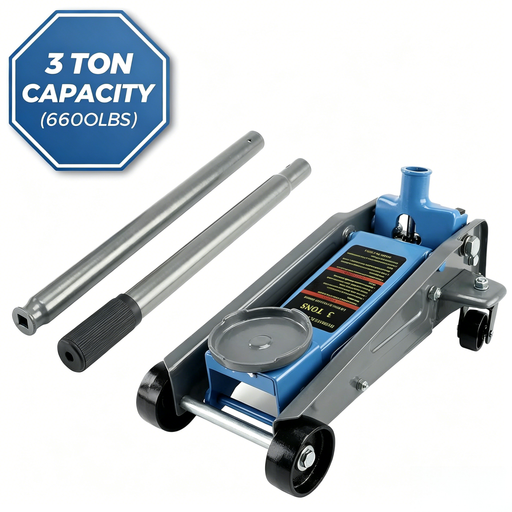
Why this choice suits this profile: Its versatile lifting range works with many family cars and SUVs. The 360° swivel castors make it easy to move around a home garage.
The minimum and maximum heights are clearly stated. You can check compatibility before buying, rather than relying only on the “3 tonnes” label.
Steel construction, stated capacity of 3 tonnes, height from 135 to 460 mm and manoeuvring wheels.
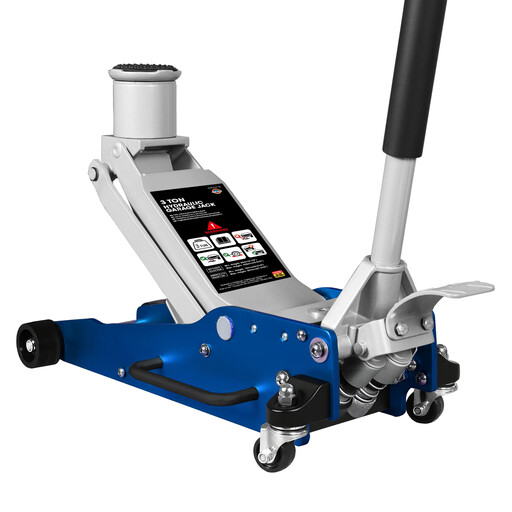
Why this choice suits this profile: This model combines an aluminium chassis, a low entry height and two lifting modes for users who want both mobility and versatility.
Its entry height of 85 mm reduces the risk of incompatibility with low vehicles. The full range is also stated, with or without the riser.
Stated capacity of 3 tonnes, height from 85 to 465 mm, dual pump and EN 1494 and CE certifications listed on the product page.
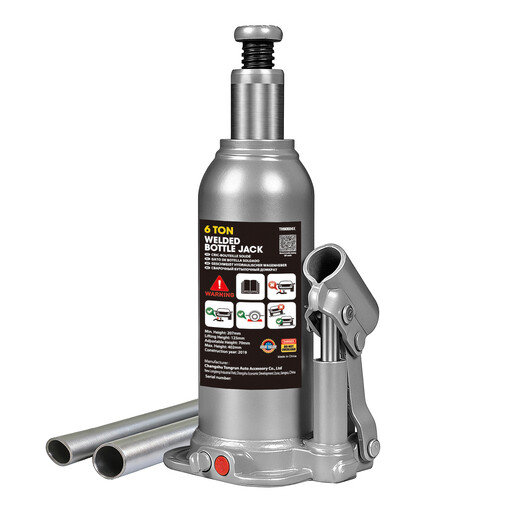
Why this choice suits this profile: Its vertical format is designed for SUVs, pick-ups and light commercial vehicles that need a higher capacity than a standard jack.
The 6-tonne capacity and the 207 to 402 mm range are stated separately. You can check both the load rating and the required height.
Forged steel base, chrome-plated piston, non-slip saddle and adjustable safety valve, according to the product description.
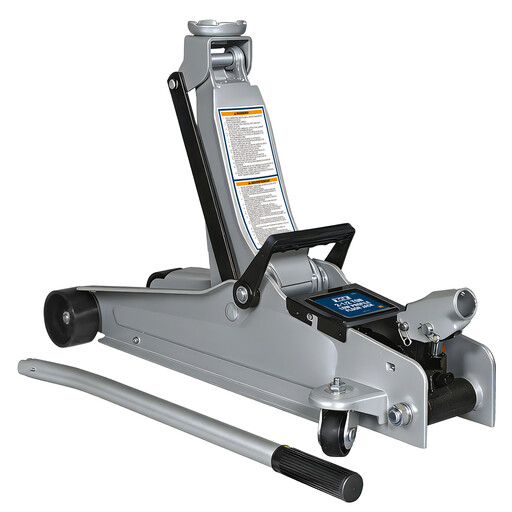
Why this choice suits this profile: With a stated minimum height of 85 mm, it meets the needs of low cars, saloons and some SUVs.
The entry height is stated precisely, which reduces the risk of buying a jack that’s too tall for a vehicle with low ground clearance.
Stated capacity of 2.5 tonnes, lifting range from 85 to 380 mm, steel construction and EN 1494 and CE references listed on the product page.
We’ve put together a comprehensive, real-time updated list of products that meet these demanding selection criteria and European safety regulations.
To change a tyre or carry out a one-off job, place the jack on a hard, level surface, apply the handbrake, then engage a gear or activate the mode specified by the manufacturer. Position the jack at the indicated lifting point.
After use, wipe the device clean, check for any oil leaks and store it away from moisture. An uneven descent, a leak or a deformed structure means you should stop using it immediately. An air-operated car jack also requires a compatible air supply and regular checks of its flexible components. For a heavy-duty hydraulic jack, workshop procedures and chocking accessories must be suitable for the loads involved.
For occasional use, a hydraulic jack or a scissor jack can work if its capacity, minimum height and support points match the vehicle. A hydraulic jack is generally quicker to operate, while a scissor model is easier to store in the boot.
Its lifespan depends on how often it’s used, storage conditions, the load applied and maintenance. Avoid overloading, uneven floors and prolonged exposure to moisture. Regularly check the wheels, saddle, handle and for any leaks.
Yes, as soon as anyone needs to work under the vehicle. The jack is for the initial lift; the axle stands provide support during the work. Their capacity and height must be compatible with the vehicle and the working position.