
Livraison le jour même ou le lendemain

Qualité garantie

Débloquez vos offres de bienvenue: Livraison GRATUITE | Jusqu'à -80 % | 30 jours d'essai gratuits à JoyPlus
Téléchargez l'application
Facing a delicate repair? Whether it's reattaching the handle of a porcelain cup, saving a piece of costume jewellery, or assembling a scale model, the right glue makes all the difference. The wrong choice can turn a five-minute job into a real headache: white residue, poor adhesion, or worse, a bottle that's useless after a single use. Our mission is to guide you through the jungle of high-strength adhesives to find the one that will deliver, far from marketing promises and nasty surprises.
The adhesives aisle can quickly become a labyrinth. Many products promise the world, but the reality of DIY is often more nuanced. Here are the most common pitfalls that will cost you time and money.
To avoid making a mistake, focus on a few objective technical characteristics. These are the true guarantees of a precision super glue's performance.
The vast majority of consumer-grade instant glues are cyanoacrylate adhesives. They are perfect for quick bonds on smooth, well-fitting surfaces. They set almost instantly and dry to a thin, transparent film.
Epoxy glues, on the other hand, often come as two components that need to be mixed. They are better suited for filling gaps, rebuilding a broken part, or for assemblies requiring high structural strength. Their setting time is longer, but their filling power is unparalleled.
A true precision tip makes all the difference. Opt for models with a long, thin, ideally metal, nozzle. This type of applicator allows you to apply a micro-drop of glue with surgical precision, a must-have for jewellery repair or model making. Squeezable bottles or those equipped with side-press buttons also offer much better flow control.
A good initial bond isn't enough. For everyday objects, like a ceramic glue intended for dinnerware, resistance to water and temperature changes is a non-negotiable criterion. Read the specifications carefully to ensure the glue will withstand the wear and tear of the repaired object's daily life (dishwasher cycles, exposure to humidity, etc.).
Rather than searching for a one-size-fits-all miracle solution, it's smarter to choose a glue tailored to a specific use case.
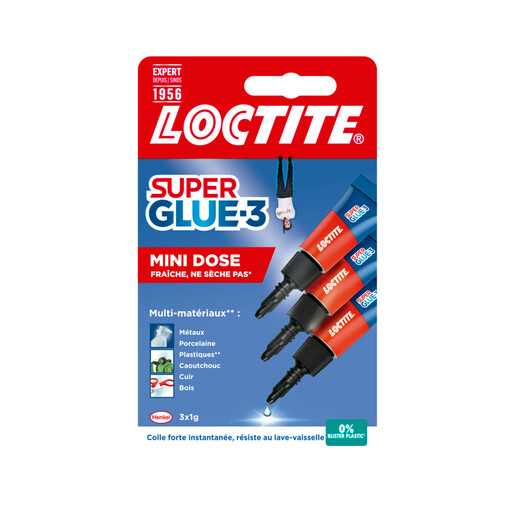
Perfect for those who only use super glue a few times a year. This single-dose format puts an end to waste and guarantees fresh glue is always on hand for last-minute repairs.
The single-dose format completely eliminates the risk of the bottle drying out. Each tube is sealed and is only opened when needed.
Proven formula : the reliability of a liquid, transparent, and fast-setting cyanoacrylate glue. Smart format : zero waste, as you only open the dose you need.
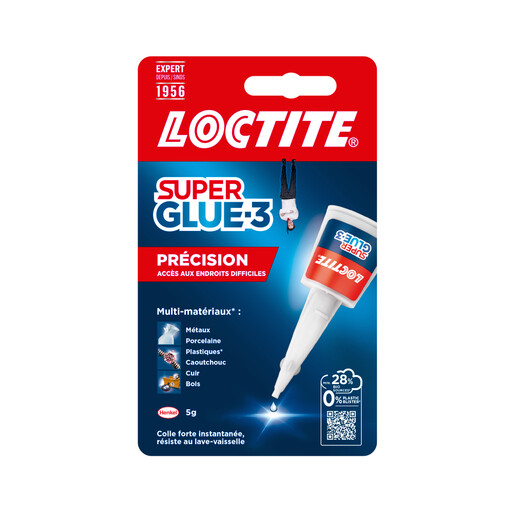
A must-have for DIYers, model makers, and crafters who regularly perform fine bonding work. The control it offers is ideal for jobs requiring great meticulousness.
Its long applicator nozzle allows for highly controlled, drop-by-drop dispensing, preventing the overflows and messes typical of standard tips.
Controlled application : the extra-fine tip is designed for hard-to-reach areas. Versatility : effective on many materials (ceramic, metal, wood, leather, etc.) and water-resistant.
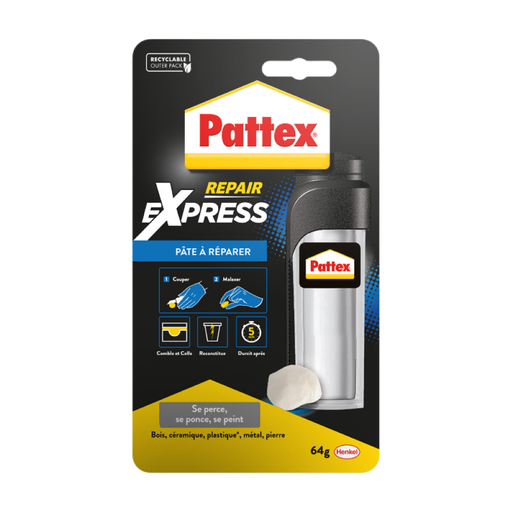
For cases where material is missing: a chip in a piece of furniture, a hole to fill, a part to reconstruct. Where a liquid glue is powerless, an epoxy putty excels.
This putty doesn't just bond two surfaces. It fills voids and can be moulded, solving the problem of parts that no longer fit together perfectly.
Fills and rebuilds : its malleable texture allows you to recreate missing parts. Perfect finish : once dry, the putty can be sanded and painted for an invisible repair.
We have curated a complete selection of products that meet our demanding selection criteria and current safety standards.
The sworn enemy of cyanoacrylate glue is air humidity, which triggers its polymerisation (hardening). To extend its shelf life, tightly seal the cap immediately after use. Store the bottle upright in a cool, dry place. A tip from some DIYers: keep the bottle in the refrigerator inside a sealed bag with a small silica gel packet to absorb any moisture.
Yes, but with limits. Most quality super glues are water-resistant once fully cured (usually after 24 hours), which allows for occasional dishwasher use. However, prolonged exposure to hot water can weaken the bond. Similarly, their heat resistance is generally limited to around 80-100°C. For applications subject to high temperatures, an epoxy glue or a specific formula will be more suitable.
The bond is often described as "instant," meaning the parts hold together within seconds. However, this is just an initial bond, sufficient for handling the object without it falling apart. The final, chemical strength, especially against water, is typically not achieved until after 12 to 24 hours. It's best not to put the repaired object under stress before this period has passed.