
Livraison le jour même ou le lendemain

Qualité garantie

Débloquez vos offres de bienvenue: Livraison GRATUITE | Jusqu'à -80 % | 30 jours d'essai gratuits à JoyPlus
Téléchargez l'application
Switching to glass food storage containers promises better-preserved food, less plastic, and a tidier kitchen. It sounds like a great idea. In reality, however, the market is so vast that it's easy to make the wrong choice and regret your purchase. Before you toss your old plastic containers, let's review the pitfalls to avoid so you can invest in a set that's truly practical and durable.
As a product expert at Joybuy, my role is to guide you through this world. Let's break down the crucial points and the criteria that truly make a difference.
The appeal of glass is undeniable: it's healthy, doesn't alter taste, and is easy to clean. Yet, certain details can turn a good investment into a disappointment.
To avoid these disappointments, three technical criteria should guide your choice. These are what will make all the difference in your daily routine.
The crucial point is the difference between standard glass and borosilicate glass. The latter is a high-performance material designed to withstand extreme temperature swings (typically from -40°C to +300°C).
The lid is just as important as the container itself. For a glass lunch box that you plan to transport, a leak-proof seal is non-negotiable.
Think about the primary use for your future containers.
To move from theory to practice, here are a few models that perfectly illustrate these criteria, each suited for a specific use.

The Verdict: The perfect format for preparing and taking meals on the go. At 630 ml, it's the ideal size for a single portion. Its rectangular shape is a bonus for optimising space in a bag or in the fridge.
Its borosilicate glass body withstands thermal shock, while the clip-on lid ensures a flawless seal. Goodbye to leaks and warped gaskets.
Total versatility: Goes from the freezer to the microwave and dishwasher without a problem. Perfectly leak-proof: 4-clip lid with a silicone seal.
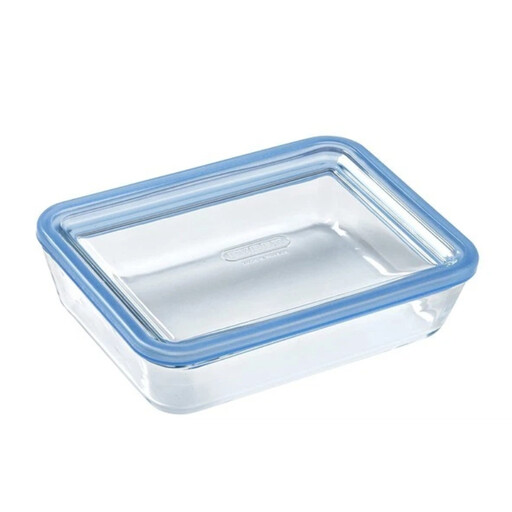
The Verdict: The perfect partner for those who cook in large batches. Ideal for a gratin or lasagne, it lets you bake, serve, and store leftovers all in the same dish. A true 2-in-1.
Its borosilicate glass is built for the oven, eliminating the risk associated with standard glass. This versatility is what makes it a smart investment.
Extreme thermal resistance: Designed for the oven, it also handles the freezer, microwave, and dishwasher. Backed by a major brand: Pyrex is the historic benchmark in culinary glassware.
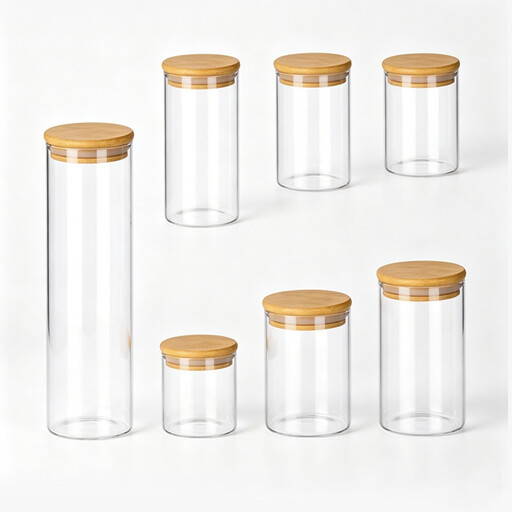
The Verdict: The ideal solution for organising your dry goods (cereals, legumes, pasta, etc.) with style and efficiency.
With its 7 different sizes, this set sidesteps the "mismatched set" pitfall. You always have the right size on hand, from a small spice jar to a large flour canister.
Complete assortment: 7 sizes for customised organisation. Elegant design: The wood-look lids add a warm, decorative touch to the kitchen.
Discover our full selection of products that meet our quality criteria and current safety standards.
That's a very bad idea, even with a borosilicate glass container. Although it's more resistant, the risk of thermal shock still exists. The best practice? Take your dish out of the fridge and let it sit at room temperature for 15 to 20 minutes before putting it in the oven. And never, ever put a dish directly from the freezer into a hot oven.
Trust the locking system. Lids with 4 clips and a thick, removable silicone seal are generally a reliable sign. The moment of truth? Fill the container with water, close it, and shake it vigorously over the sink. If not a single drop escapes, you can trust it with your lunch.
It all depends on your use case. For simply storing dry goods or keeping leftovers in the fridge (without ever reheating them in the container), quality soda-lime glass will do the job. However, as soon as temperature changes come into play (freezing, oven, microwave), borosilicate glass is no longer an option—it's a necessity for your safety and the product's lifespan.