
Livraison le jour même ou le lendemain

Qualité garantie

Débloquez vos offres de bienvenue: Livraison GRATUITE | Jusqu'à -80 % | 30 jours d'essai gratuits à JoyPlus
Téléchargez l'application
Switching to glass for your meal storage is a smart move for your health and the planet. But there's often a world of difference between marketing promises and reality. A glass food storage container that cracks coming out of the freezer, a lid that's no longer airtight after a few washes... These all-too-common frustrations are enough to make anyone give up. Our editorial mission: to help you decode the labels and identify the criteria that truly make a difference for a smart, long-lasting purchase.
Before you even start comparing models, let's review the classic mistakes that can be costly. Being well-informed is the best way to avoid disappointment and unnecessary expenses.
To ensure you make the right choice, there are two technical features to examine closely. They determine the durability and versatility of your glass food container.
This is THE non-negotiable criterion if you're a meal prep enthusiast or simply want to reheat your dishes without a second thought.
The effectiveness of your glass lunch box or leftover container depends entirely on its seal.
Because everyone's needs are different, here are some tried-and-tested solutions selected for their quality and practicality.

Why we chose it: Perfect for preparing your weekly meals and taking them to the office. Its 630 ml size is ideal for a single serving, and its rectangular shape fits easily into a bag or fridge. The ultimate meal prep container.
Its robust clip-locking system and silicone gasket guarantee a foolproof seal. No more leaky lids after just a few washes!
Its ultra-durable borosilicate glass makes it safe for the freezer, microwave (without the lid), and dishwasher. The removable gasket is a real plus for impeccable hygiene.

Why we chose it: For those who love to cook, serve, and store leftovers all in the same dish. This glass dish with a lid effortlessly goes from the oven to the table, and then to the fridge.
Pyrex is the undisputed master of borosilicate glass. This dish eliminates any risk of thermal shock—the number one pitfall of low-end "oven-safe" containers.
Maximum versatility: it's compatible with the oven (without the lid), microwave, freezer, and dishwasher. Its non-porous glass is a guarantee against stains and odours.
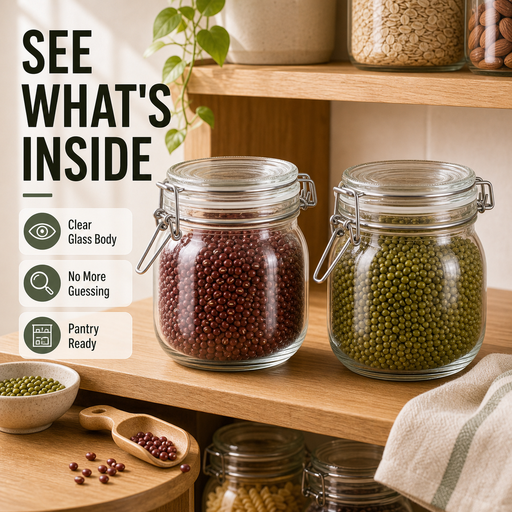
Why we chose it: Ideal for storing your dry goods (rice, pasta, legumes, flour) and bringing order to your cupboards. Thanks to its transparency, a single glance is all it takes to check your stock levels.
Its mechanical-locking lid (stainless steel clips and silicone gasket) creates an airtight barrier against air and moisture. Your dry goods stay crisp and safe from pests.
The non-porous borosilicate glass retains no odours, which is perfect for spices or coffee beans. The gasket is removable for a flawless clean.
Explore our full selection of products, vetted by our experts for quality and compliance with safety standards.
Even with borosilicate glass, this is a very bad idea. The thermal shock, while better absorbed, still weakens the glass. The right way: let your dish cool to room temperature for about twenty minutes before putting it in the fridge. Both your dish and your fridge will thank you.
The glass itself doesn't retain odours; the culprit is usually the silicone gasket. The solution: always wash the gasket separately from the lid and container (by hand or in the dishwasher). If a curry smell lingers, soak the gasket in a mixture of water and white vinegar for an hour. Guaranteed to work!
As a general rule: no. Check the instructions, but most plastic lids (especially those with clips) warp under heat, which ruins their seal. The safest bet is to remove the lid. To prevent splatters, you can rest it on top of the container, but never clip it shut.