
Livraison le jour même ou le lendemain

Qualité garantie

Débloquez vos offres de bienvenue: Livraison GRATUITE | Jusqu'à -80 % | 30 jours d'essai gratuits à JoyPlus
Téléchargez l'application
A good food storage container can be a game-changer in your kitchen: it preserves freshness, simplifies organisation, and encourages healthier eating. The problem is, the market is flooded with marketing promises that often end in disappointment. A lid that leaks in your bag, plastic that warps after the first trip to the microwave, clips that break after a few months… these scenarios are all too familiar.
To avoid falling into these traps, here are the pitfalls to watch out for.
Rather than trusting slogans, it's better to examine a few technical criteria that are a true indicator of the quality and longevity of an airtight container.
Whether you're looking for a lunch box for the office or a set of food storage containers for the whole family, three points deserve your full attention.
The choice of material directly impacts the use, durability, and maintenance of your containers.
A truly airtight container relies on two elements: a removable silicone seal and a robust locking system. The seal ensures it is airtight and leak-proof, while the clips (usually 4 of them) apply uniform pressure to keep the lid from shifting. Check that the seal can be easily removed for thorough cleaning, which is essential to prevent mould growth.
Think about your daily use. Do you need to freeze meals, reheat them in the microwave, or cook them directly in an oven-safe container? Always read the manufacturer's instructions: very often, only the glass container is oven-safe, and never its plastic lid.
For on-the-go lunches, a bento-style format with multiple compartments is ideal for separating different parts of the meal. To organise your kitchen, a stackable set of food storage containers in various sizes is the most practical solution.
Rather than a laundry list, here are our targeted suggestions for different profiles.

Why we chose it: This set of food storage containers is perfect for weekly meal prep. Its different sizes (5 x 1040 ml and 5 x 370 ml) allow you to store everything from full meals to individual portions or sauces. The borosilicate glass offers maximum versatility: freezer, microwave, and oven (without the lid).
The borosilicate glass resists heat and doesn't stain, which solves the "false versatility" problem of low-quality plastics. Its clip-lock system and seal guarantee a foolproof airtight closure.
A complete and versatile set that lets you cook, store, freeze, and reheat in the same container.
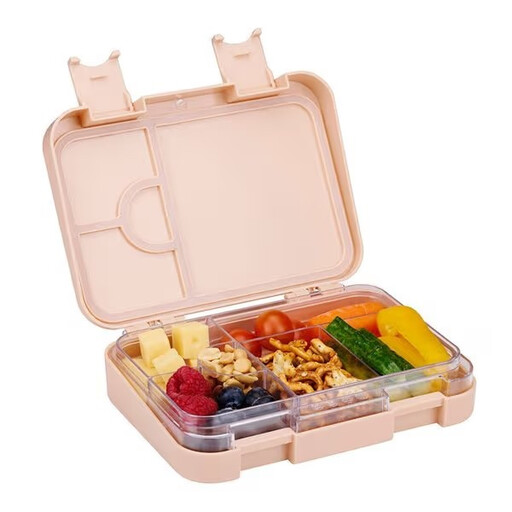
Why we chose it: This bento-stylelunch box is designed for those who like to pack varied and well-portioned meals. Its six compartments let you separate the main course, side dish, fruit, and snacks without everything getting mixed up. Its compact format is designed to slip easily into a bag.
It meets a specific need that classic containers ignore: food separation. No more soggy sandwiches from your salad. Its design is focused on organising the meal itself, not just on storage.
The ability to create a complete and balanced meal in a single container, while preserving the texture of each food item. Dishwasher-safe for easy cleaning.
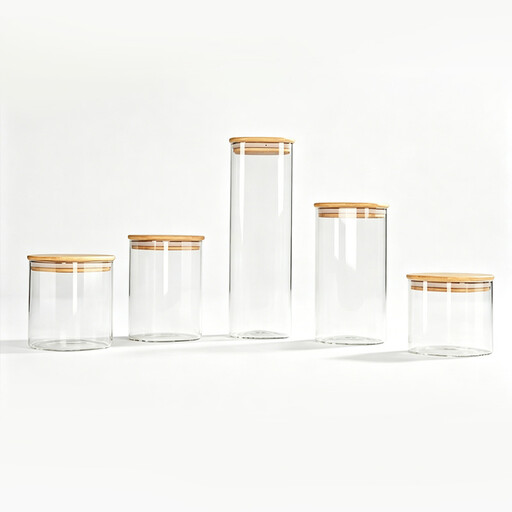
Why we chose it: For storing dry goods (pasta, rice, flour, cereal), these jars are much more suitable than a classic food storage container. Their transparent glass body lets you see the contents and remaining level at a glance, while the airtight lid protects from moisture and pests.
It's a specialised product. Unlike multi-purpose containers, its vertical design and seal are optimised for long-term storage of dry goods. Say goodbye to waste and messy cupboards!
A set of different sizes (from 750 ml to 2300 ml) for a storage solution that is both cohesive and aesthetically pleasing in the pantry, with its wood-effect finish.
We have curated a full range of products that meet our strict selection criteria and current safety standards.
The water test is foolproof. Fill the container halfway, close it, then shake it and turn it upside down over the sink. If not a single drop escapes, the seal is perfect. A visual inspection of the silicone seal (it should be flexible and flawless) and the locking system (which should apply firm, even pressure) is also a good indicator.
As a general rule, no. Most plastic lids, including those on glass containers, are not made to withstand the high temperatures of an oven, or even a microwave. The heat could warp them, damage the seal, or release chemical compounds. To reheat a dish, remove the lid or simply rest it on top of the container without clipping it shut, allowing steam to escape. In any case, refer to the manufacturer's instructions.
A few simple steps are all it takes to maximise the life of your containers. Wash the silicone seal separately and by hand to prevent it from warping in the dishwasher. For plastic containers, avoid reheating very greasy or saucy foods (like bolognese) at full power, as this can permanently stain the material. Finally, let every component dry completely before reassembling and storing your containers to prevent bad odours.