
Livraison le jour même ou le lendemain

Qualité garantie

Débloquez vos offres de bienvenue: Livraison GRATUITE | Jusqu'à -80 % | 30 jours d'essai gratuits à JoyPlus
Téléchargez l'application
A well-organised kitchen starts with reliable storage containers. However, choosing the right food storage container can quickly become a headache. Caught between marketing promises and the reality of daily use, it's easy to end up with cupboards full of unsuitable containers that leak or warp. As a product expert at Joybuy, I'm here to guide you through the jungle of options and help you make the right choice—one that truly fits your needs.
Before you pull out your credit card, it's best to know the common flaws that turn a good deal into a purchase you regret. By focusing on the right criteria, you'll avoid throwing your money (and storage space) down the drain.
To optimise your kitchen storage and keep your food fresh and healthy, three technical criteria deserve your full attention.
The choice of material depends entirely on how you'll use it.
A worthy airtight container must have two key elements:
Always check the pictograms or manufacturer's instructions regarding compatibility:
The shape (square or rectangular) and a flat lid design are also assets for stable stacking and space optimisation.
Rather than an endless list, here are a few well-targeted products that meet specific needs while avoiding the pitfalls we've discussed.

Why it's perfect for them: Ideal for those who prepare their meals for the week in advance. Its large 2-litre capacity can store family-sized portions or several individual meals. The borosilicate glass allows you to cook directly in the dish, store it, and then reheat it without ever changing containers.
The borosilicate glass body doesn't stain or absorb any odours, unlike plastics that age poorly. Its removable silicone gasket ensures a reliable seal and hygienic cleaning.
Highly versatile: freezer, microwave (without lid), and dishwasher safe. Its resistance to thermal shock (up to 200°C according to the manufacturer) makes it a true oven-safe glass dish.
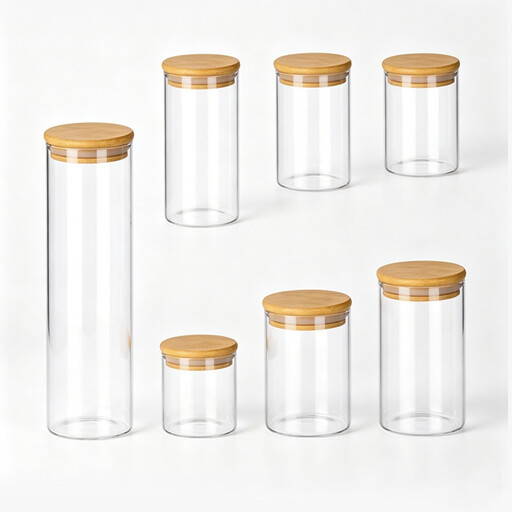
Why this set is perfect for them: For those who dream of magazine-worthy kitchen shelves. This set of glass jars is ideal for storing dry goods (pasta, rice, cereal, legumes) in a way that is both beautiful and visible, while protecting them from moisture.
Unlike plastic containers that can stain, glass remains pristine. The uniform design and different sizes allow for a modularity that prevents the clutter of mismatched containers.
The set of 7 different sizes offers a complete solution for organising the entire pantry. The wood-look lid adds a decorative and warm touch to your kitchen storage.
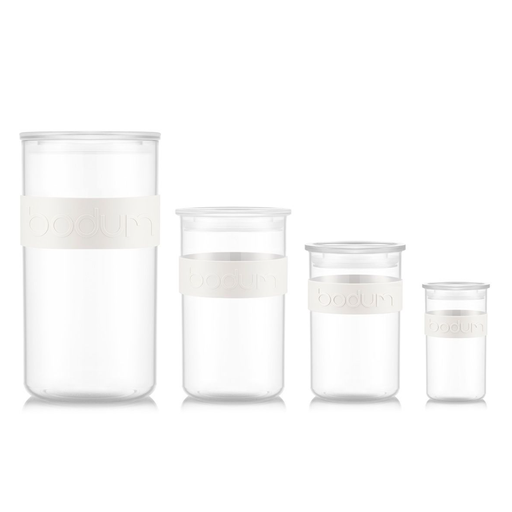
Why this set is perfect for them: This set of storage containers is a complete and economical solution for families. With 12 containers in 4 different sizes, it covers all needs: dinner leftovers, school snacks, storing small quantities, and more.
The design is engineered for stable stacking, optimising space in the fridge or cupboards. The plastic is BPA-free, a safe option for storing food for the whole family.
A very comprehensive set that offers excellent value. The lightweight plastic makes them easy to handle and transport, a real plus for intensive daily use.
Explore our full selection of products that meet our strictest quality and safety standards.
Absolutely not, and this is a crucial point of caution. Only borosilicate glass is specifically designed to withstand high thermal shock, allowing it to be used in a conventional oven (always without the lid). Standard soda-lime glass, often used for drinking glasses or simple jars, can crack or shatter when subjected to rapid temperature changes. Always check for an "oven safe" label or the manufacturer's specifications.
The first thing to check for is the "BPA-Free" label. Next, look for the recycling symbol: polypropylene (PP), identified by the number 5 in a triangle, is widely recognised as a stable and safe plastic for food contact, including for hot foods. Avoid microwaving plastics that are not explicitly intended for this use.
Proper maintenance extends the life of your containers and ensures they remain hygienic.