
Livraison le jour même ou le lendemain

Qualité garantie

Débloquez vos offres de bienvenue: Livraison GRATUITE | Jusqu'à -80 % | 30 jours d'essai gratuits à JoyPlus
Téléchargez l'application
Switching from plastic to glass for food storage is an excellent choice for both your health and the environment. But be careful—in a market saturated with all kinds of promises, it's easy to make a mistake and invest in a glass food storage container that will just end up at the back of the cupboard. To avoid a disappointing purchase, here are the key points to watch out for before you decide.
One of the most common pitfalls is believing that any glass container is oven-safe. Another is trusting a supposedly "?airtight?" lid that starts to leak or warp after a few washes. These often-overlooked details are what separate a daily kitchen ally from a useless gadget.
To guide you, we've identified the two essential criteria that make all the difference in the quality and versatility of a glass container.
Not all glass is created equal when it comes to thermal shock. The main distinction is between standard soda-lime glass and the renowned borosilicate glass.
glass meal prep who are constantly moving containers between cold and hot environments.The lid is just as crucial as the container itself. A good glass dish with a lid must be perfectly leak-proof to preserve freshness, prevent disasters in your backpack, and contain odours (like that of strong cheese!).
The critical detail: the presence of a removable silicone seal. This is what ensures a truly airtight closure. The fact that it's removable is a real bonus for deep cleaning, which prevents mould from forming. Also, prioritise four-sided locking clip systems, which are far more reliable and durable than simple press-on lids.
The right container for every need. Whether you're a meal prep pro, looking to store leftovers from dinner, or wanting to organise your pantry, here is our curated selection for specific needs.

Why this model? Ideal for taking individual portions on the go. Its rectangular shape optimises space in the fridge or a bag, and its 630 ml capacity is perfect for a portable glass lunch box.
Made from borosilicate glass, it handles the transition from freezer to microwave (without its lid) effortlessly, eliminating any risk of cracking due to thermal shock.
Its clip-on lid, complete with a silicone seal, guarantees a 100% reliable closure. Zero risk of leaks during transport.

Why this model? With its generous 2-litre capacity, this dish is perfect for storing family-sized leftovers, marinating meat, or preparing a bake. A true kitchen multi-tasker.
Its four-clip locking system and removable silicone seal protect you from the classic problem of a lid that warps and loses its airtightness after a few uses.
Its heat-resistant borosilicate glass makes it oven-safe (without the lid), offering an all-in-one solution for baking, storing, and reheating.
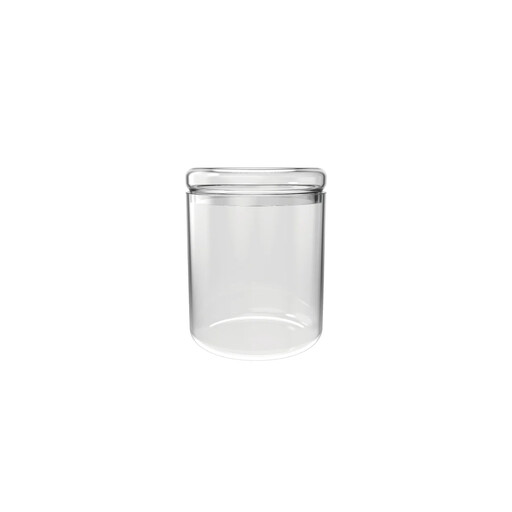
Why this model? It's the ideal solution for storing your dry goods (pasta, seeds, coffee, sugar...). Its clean, transparent design not only lets you identify the contents at a glance but also adds a decorative touch to your shelves.
Its airtight lid perfectly seals food from moisture and air, unlike many purely decorative jars with ineffective closures.
The non-porous borosilicate glass doesn't retain odours or stains. This guarantees healthy and neutral storage, even after years of use.
Explore our full selection of products that meet our demanding quality standards.
Even with borosilicate glass, this is a very bad idea. Such an extreme thermal shock (going from -18?°C to 200?°C) is still risky. The best practice? Let the dish thaw for a few minutes at room temperature, or place it in a cold oven and let it heat up with the oven. And of course, always remove the lid before putting it in the oven!
To preserve the seal's elasticity and cleanliness, it's best to remove it after each use and wash it separately (by hand or in the dishwasher, if compatible). Wait until the seal and the groove in the lid are completely dry before putting it back. This is the secret to preventing warping and bacteria growth.
Absolutely. Glass is considered the safest material for food contact. It is completely inert: it does not release any chemicals into food, even when heated. While "BPA-free" plastics have simply eliminated one problematic compound, glass offers total peace of mind because it is naturally free of plasticisers or other additives. Its non-porous surface is another major advantage: it doesn't absorb odours, stains, or bacteria.