
Livraison le jour même ou le lendemain

Qualité garantie

Débloquez vos offres de bienvenue: Livraison GRATUITE | Jusqu'à -80 % | 30 jours d'essai gratuits à JoyPlus
Téléchargez l'application
A glass food container? It seems like a simple purchase at first glance. Yet, between marketing promises and the reality of daily use, we quickly find our cupboards filled with containers that leak, crack, or are simply unfit for purpose. As the Head of Product Selection at Joybuy, my role is to help you navigate the options. Let's break down the common pitfalls to avoid and the criteria that truly matter.
The market is flooded with products making tempting claims. Here are three red flags to watch for to ensure you don't regret your purchase a few weeks down the line.
To ensure you're investing in a durable and versatile product, focus on these three non-negotiable features.
Not all glass containers are equal when it comes to heat. The main distinction is between standard soda-lime glass and borosilicate glass.
A container's seal depends on two key elements: the locking mechanism and the gasket. For a reliable airtight food container, opt for a system with sturdy 4-sided locking clips. This mechanism ensures uniform pressure around the entire rim. It should be paired with a removable silicone seal. Silicone offers excellent flexibility and durability, while its removability is essential for deep cleaning to prevent the buildup of residue and mould.
A good food container should simplify your life. Check its compatibility with all your appliances:
It's this versatility that transforms a simple container into a true ally for meal prep and the fight against food waste. A set of food containers in different sizes is often the most cost-effective solution to meet all your needs.
Rather than an endless catalogue, here are a few models that check all the boxes, designed for specific uses and validated by our team.

Why we chose it: Its large 2-litre volume is perfect for preparing meals for the week or storing large portions. It's the ideal glass dish with a lid for lasagnas, casseroles, or large mixed salads.
The borosilicate glass body withstands thermal shock and is oven-safe (up to 400°C without the lid), while the 4-clip locking system with a silicone seal ensures a foolproof seal for transport.
Extreme versatility: freezer, oven, microwave, and dishwasher safe. A single container to cook, store, transport, and reheat.

Why we chose it: PYREX is a benchmark brand for the quality of its glass. This 0.8L size is perfect for individual portions, yesterday's leftovers, or taking your lunch to the office.
Made from high-quality borosilicate glass, it guarantees excellent heat resistance and won't absorb stains or odours. Its simple, proven design makes it a reliable choice for storing your food safely.
A safe and inert material. Its total transparency allows you to identify the contents in the fridge at a glance.
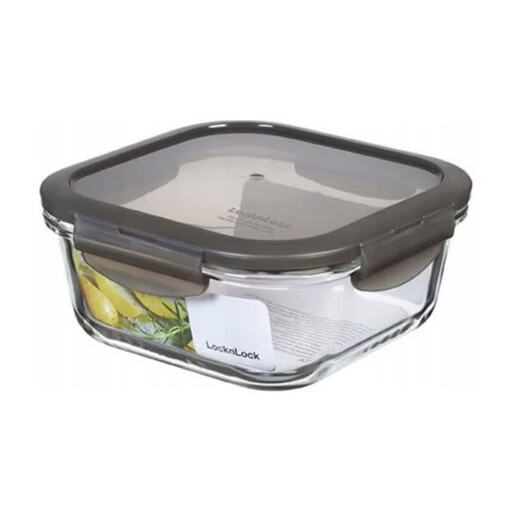
Why we chose it: Its square shape is ideal for optimising space in the oven or fridge. The 750ml capacity is perfect for baking an individual dish (like a casserole or crumble) and then storing it without needing to transfer containers.
It combines a borosilicate glass body (oven-safe) with the clip-lock and silicone seal system: the perfect combination for even cooking and airtight storage of leftovers.
The square design is stackable and optimises storage. The BPA-free lid and removable seal guarantee easy, hygienic maintenance.
Find our complete selection of products that meet our quality charter and European safety standards.
1. Can you put a plastic lid in the oven or microwave? No, never put the plastic lid in a conventional oven. The microwave is different: check the manufacturer's instructions. Most recommend either removing it or placing it on top of the dish without locking it, to allow steam to escape. The intense heat of an oven would end up warping or even melting the plastic.
2. How do you maintain the silicone seal to prevent odours and mould? The best practice: remove the silicone seal from the lid after each use. Wash it by hand with hot, soapy water or place it on the top rack of the dishwasher. Crucially, make sure the seal and its groove are completely dry before putting it back in place.
3. Can a glass container go directly from the freezer to the oven? Even with borosilicate glass, this is a very bad idea. Such an extreme thermal shock (going from -18°C to 200°C) always presents a risk. The safest method: let the dish thaw for a few hours in the fridge or at room temperature before placing it in a preheated oven.