
Livraison le jour même ou le lendemain

Qualité garantie

Débloquez vos offres de bienvenue: Livraison GRATUITE | Jusqu'à -80 % | 30 jours d'essai gratuits à JoyPlus
Téléchargez l'application
Switching to glass for food storage is an excellent move for both your health and the planet. But be warned: not all glass containers are created equal. It's easy to fall for marketing claims and end up with a product that cracks at the slightest provocation, a lid that won't seal properly, or a container that's far less versatile than you hoped. Before you invest, it's best to know the common pitfalls to make a smart choice.
Here are the key points to check to ensure you won't regret your purchase:
To ensure you select a durable, safe, and practical glass storage container, here are the three points to scrutinise.
This is the starting point. For maximum versatility, always opt for borosilicate glass.
The effectiveness of a storage container depends entirely on its lid. For a truly airtight seal, the most reliable systems are:
Glass is inert, but the lid is often plastic. You must verify that it is certified BPA-free (bisphenol A) and, if possible, phthalate-free. This information should be clearly visible on the packaging or product description. A safe lid ensures that your efforts to eat healthier aren't undermined by the container itself.
To put these criteria into practice, here are a few models we recommend, each suited for a specific use.

Why we chose it: Perfect for preparing and carrying individual meals. Its 630 ml capacity is ideal for a lunch-sized portion, and its rectangular shape slips easily into a bag or stacks efficiently in the fridge.
Its borosilicate glass is microwave-safe, and the locking lid guarantees a 100% airtight seal for leak-proof transport. The lid is, of course, certified BPA-free.
Everyday versatility and reliability: freezer, refrigerator, microwave, and dishwasher safe.
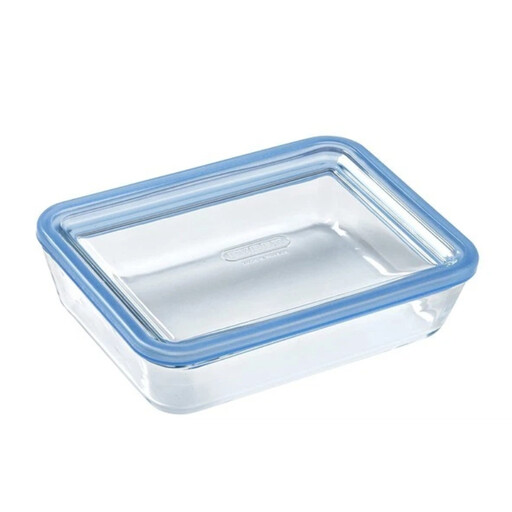
Why we chose it: Perfect for baking casseroles, lasagnas, or roasts and storing leftovers in the same dish. Pyrex is the go-to brand for oven-safe bakeware.
Its borosilicate glass is designed to withstand high oven temperatures, eliminating the risk of cracking from thermal shock (when used with standard precautions).
One dish to bake, serve, store, and reheat. Less washing up and simplified leftover management.
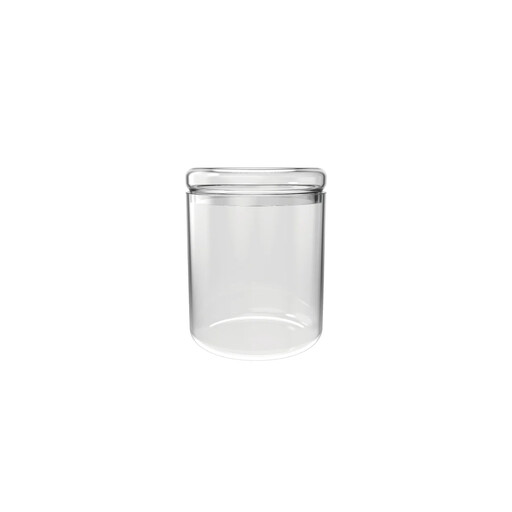
Why we chose it: Ideal for storing dry goods like coffee, sugar, nuts, seeds, and legumes. Its clean, transparent design lets you identify contents at a glance and creates a streamlined look in your pantry or on your shelves.
Thanks to its airtight lid, it effectively protects dry goods from air and moisture. Say goodbye to the trap of non-sealing lids!
Its lid preserves the freshness and aroma of dry foods for much longer. The added bonus: the brand's commitment to sustainable products.
We have curated a full range of products that meet our quality criteria and safety standards.
No, this is strongly discouraged, even with borosilicate glass. Thermal shock—the rapid transition from a very hot to a very cold temperature (or vice versa)—remains the main risk of breakage for glass. To prevent any accidents, always let your hot dish cool to room temperature for at least 15 to 20 minutes before placing it in the refrigerator or freezer.
The "BPA-Free" label or a logo showing a baby bottle with a line through it should be clearly visible on the product packaging or engraved directly on the lid. When in doubt, assume the plastic contains it and choose a different product. Manufacturers who are serious about product safety always communicate this information transparently.
Yes, glass is inherently heavier than plastic. For a meal prep container of the same volume, the glass version will weigh more in your bag. However, this drawback is largely offset by the benefits: glass doesn't stain, doesn't retain odours (goodbye to that lingering tomato sauce smell!), won't warp with heat, and offers a much better eating experience. It's a trade-off between weight and quality of preservation.