
Livraison le jour même ou le lendemain

Qualité garantie

Débloquez vos offres de bienvenue: Livraison GRATUITE | Jusqu'à -80 % | 30 jours d'essai gratuits à JoyPlus
Téléchargez l'application
Switching to glass food containers is a smart move for anyone looking for a healthy, durable, and practical meal solution. Say goodbye to plastic containers that stain, warp, and retain odours. The problem? The market is flooded with options making tempting promises, but disappointment is often just around the corner. A lid that leaks in your bag, a dish that cracks straight from the freezer... Fortunately, these mishaps are entirely avoidable.
As a Product Expert at Joybuy, I'm here to help you navigate the choices. Together, let's break down the common pitfalls to avoid and the criteria that truly matter for choosing a glass food container that meets your expectations—with no unpleasant surprises.
To avoid these traps, simply focus on three key points. These technical details are your ticket to a confident and long-lasting purchase.
The difference lies entirely in the glass composition. For versatile use, from the freezer to the oven, borosilicate glass is a must. Its secret? Very low thermal expansion.
In simple terms, it can handle extreme temperature changes (typically from -20°C to 400°C) without the risk of shattering. This is what allows you to confidently use an oven-safe glass container to bake a dish prepared the day before and stored in the fridge. Make sure this is clearly stated in the product's technical specifications.
A lid's effectiveness depends on two elements: the locking system and the quality of the gasket.
A good glass meal prep container should simplify your life, not complicate it. Before buying, consider its full range of uses:
Note this almost universal rule: plastic lids NEVER go in a conventional oven.
Because everyone's needs are different, here is a selection of products designed for specific uses, all approved according to our quality criteria.
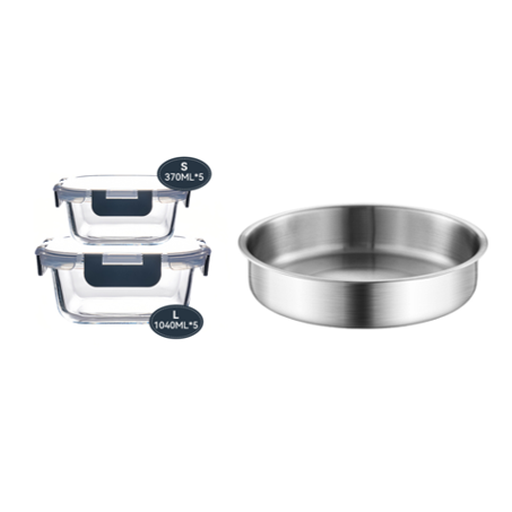
Why we recommend it: This set of glass food containers is designed for those who prep their meals for the week. With 10 pieces in two different sizes (1040 ml and 370 ml), it covers all your needs, from main courses to sides and snacks.
The borosilicate glass withstands repeated trips from the fridge to the microwave. The locking lids ensure a reliable seal, which is essential for transporting daily meals.
A complete and cohesive set to start meal prepping without any guesswork. The set even includes a stainless steel plate for durable serving.

Why we recommend it: With its large 2.3-litre capacity, this dish is perfect for storing leftovers from a family meal, preparing a casserole, or marinating large cuts of meat. It transitions seamlessly from the oven to the table, and then to the fridge.
It solves the problem of microwave-incompatible lids. Its integrated steam vent allows you to reheat food with the lid on, preventing splatters while ensuring even heating.
The large capacity (2.3 L) and the lid with a steam vent for controlled, mess-free reheating in the microwave.

Why we recommend it: Its 630 ml capacity is ideal for an individual lunch. Its rectangular shape slips easily into a bag. It's a reliable container for transporting and reheating your meal at the office.
Made from borosilicate glass, it eliminates the risk of cracking from thermal shock between the office fridge and the microwave. The 4-clip locking system guarantees a leak-proof seal.
The combination of highly resistant glass and a reliable locking system makes it a trustworthy companion for daily, on-the-go use.
We have curated a complete selection of products that meet our strictest selection criteria and current safety standards.
The short answer? No. As a general rule, it is strongly advised not to put a standard plastic lid in the microwave. The heat can warp it or release unwanted chemicals. However, some models are specifically designed for this purpose and feature a steam vent, which must be opened before reheating. Always check the manufacturer's instructions. When in doubt, err on the side of caution: remove the lid and use a microwave cover instead.
The main culprit is thermal shock. To avoid it, the golden rule is to never move a glass dish directly from the freezer to a preheated oven. Let it thaw or come to room temperature first. Before each use, inspect your dish for any cracks or chips. An already weakened dish is a ticking time bomb: it will almost certainly shatter under the heat.
To ensure its longevity and perfect hygiene, make a habit of removing the gasket from the lid before each cleaning. Wash it by hand with warm water and a little dish soap. Rinse it well and, most importantly, make sure it is completely dry before putting it back. This is the secret to preventing mould and bad odours, while also helping the gasket maintain its original shape and elasticity.