
Livraison le jour même ou le lendemain

Qualité garantie

Débloquez vos offres de bienvenue: Livraison GRATUITE | Jusqu'à -80 % | 30 jours d'essai gratuits à JoyPlus
Téléchargez l'application
Whether you're a professional artist, an art student, or a crafting enthusiast, your choice of paper is just as crucial as your pencils or brushes. The wrong surface can turn a promising idea into a disappointing piece: paper that buckles, ink that bleeds, colours that lose their vibrancy... The market is flooded with mixed media drawing pads, but not all are created equal.
As a product expert at Joybuy, my mission is to help you navigate the options. Let's cut through the marketing jargon and focus on the facts. Here are the most common pitfalls to avoid and the objective criteria for selecting the paper that will elevate your creations.
The "mixed media" label is often a selling point, but it can hide very different realities. Watch out for these two common issues:
The secret to a good choice doesn't lie in marketing promises, but in understanding a few key technical characteristics.
To find the right sketchbook or pad, you need to look beyond the label. Here are the three parameters that truly matter.
Paper weight, expressed in grams per square metre (g/m?), is the most reliable indicator of a paper's thickness and durability. It's the number one criterion for a mixed media paper.
The grain of the paper refers to its surface texture. Far from being a minor detail, it directly influences the final look of your work.
While extra-white paper is a classic, exploring other options can enrich your artistic practice. Black drawing paper, for example, provides a dramatic background for light media, metallic inks, or white pastels, creating a striking contrast. Most fine art papers are 100% cellulose, which offers excellent stability and long-term preservation (if they are acid-free).
To help you bring your projects to life, we've identified a few options that cater to distinct artist profiles, based on objective criteria.
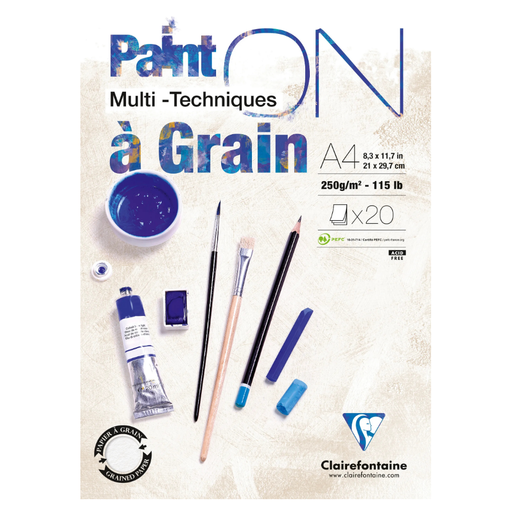
Why we chose it: For artists who move from pencil sketches to inking and then to colouring with gouache, this Clairefontaine drawing paper provides a reliable and consistent surface without needing to switch papers.
Its high weight of 250g prevents the buckling found in thinner papers falsely labelled as "mixed media". It absorbs moisture in a controlled way and allows for corrections (lifting).
Dual-sided surface: one side with a pronounced grain for textural effects, the other with a light grain for precision. Maximum flexibility on a single sheet.
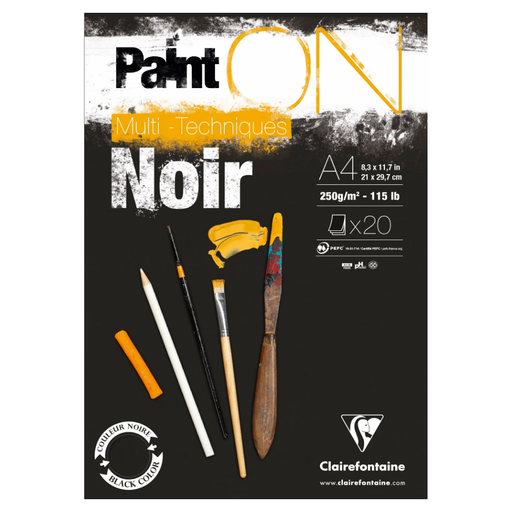
Why we chose it: Ideal for illustrators who want to make light colours, metallic inks, or white pastels pop with dramatic intensity.
This black drawing paper is designed with a deep dye and a weight of 250g, ensuring total opacity and excellent hold for light pigments, preventing them from looking dull.
Offers striking contrast and immediate visual depth, perfect for work that stands out.
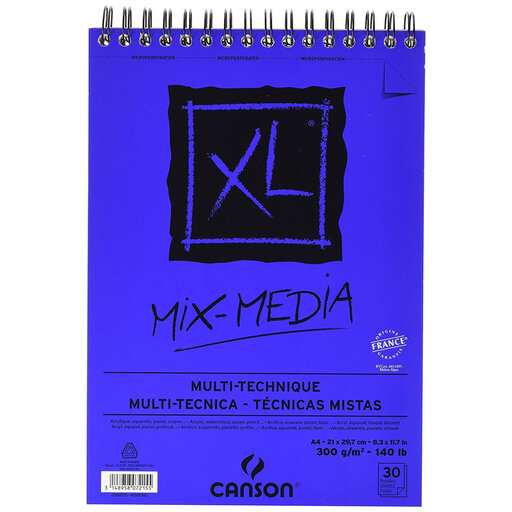
Why we chose it: Perfect for art students or hobbyists who experiment with everything from pencil to light acrylics, without wanting to invest in multiple specialised pads.
It offers a suitable weight (160g or 300g) that hits a sweet spot. It's forgiving of mistakes and supports light wet media, preventing the frustration of paper tearing at the first brushstroke.
Excellent value for a mixed media paper that allows you to explore a wide range of mediums without breaking the bank.
We have curated a full range of products that meet these demanding criteria.
A glued pad (often on one or four sides) holds the sheets together and helps prevent buckling while you work with wet media. Once the artwork is dry, the sheet can be detached cleanly. A spiral-bound pad allows you to fold the sketchbook back on itself to save space and easily tear out sheets thanks to micro-perforations, which is practical for working flat or scanning your creations. The choice comes down to your personal preference.
For studies, light washes, or mixed media techniques that include watercolour, a 250 gsm paper is perfectly suitable. It will offer good absorption and decent resistance to warping. However, for pure watercolour techniques involving large amounts of water (wet-on-wet work), a dedicated watercolour paper of 300 g/m? or more is recommended for optimal results.
Even with a heavy-weight paper, applying water can cause slight warping. To minimise this, you can tape the edges of your sheet to your work surface (a drawing board or cardboard) with artist's tape. Leave the tape in place until your artwork is completely dry. The paper will tighten as it dries, returning to a flat surface. Pads that are glued on all four sides are also designed to limit this effect.