
Livraison le jour même ou le lendemain

Qualité garantie

Débloquez vos offres de bienvenue: Livraison GRATUITE | Jusqu'à -80 % | 30 jours d'essai gratuits à JoyPlus
Téléchargez l'application
Whether you're a budding artist, a fine arts student, or a seasoned illustrator, choosing the right sketchbook is a crucial step. The paper is an extension of your hand and your tools?; an unsuitable surface can quickly ruin a piece and stifle your creativity. Faced with a maze of formats, weights, and bindings, it's easy to feel lost.
This guide is here to provide clear, practical guidance to help you find the ideal sketchbook for your techniques and projects. We'll break down the key technical criteria before presenting our top picks for 2026.
Before diving into our selection, let's review the three features that define a good sketchbook?: paper weight, format, and binding type.
Paper weight, expressed in grams per square metre (g/m?), determines the paper's thickness and durability. It's a decisive factor that depends on the media you use.
The sketchbook's size and binding are two elements that will directly impact your ease of use.
Now that the basics are covered, here are three sketchbooks that caught our eye, each catering to distinct artistic needs and practices.
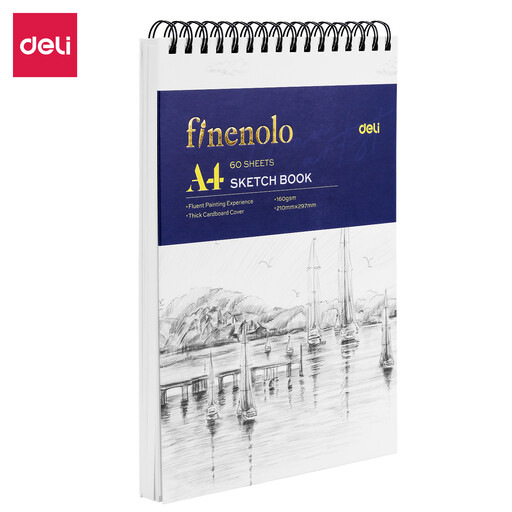
Why it stands out?: This sketchbook gets straight to the point?: functionality. Its A4 format and top-wire binding make it an ultra-practical tool, whether you're working at a desk, on an easel, or freehand.
Advantages?:
Who is it for???: Students, hobbyists, and artists looking for a simple, budget-friendly, and functional sketchbook for their daily practice and visual notes.
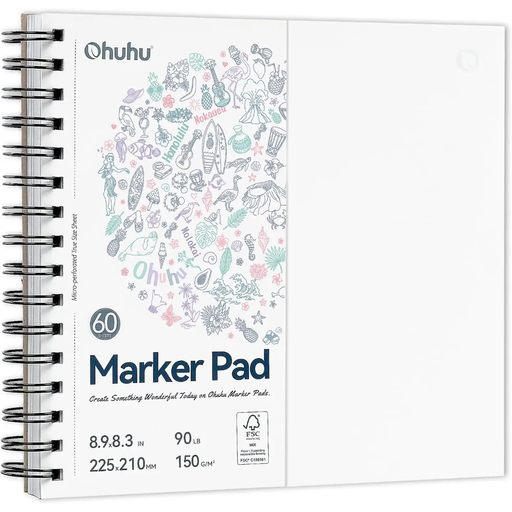
Why it stands out?: The Ohuhu sketchbook stands out from the crowd with its original square format and 150?g/m? paper designed for markers. The manufacturer promises "bleedproof" paper.
Advantages?:
Who is it for???: Illustrators, manga and comic artists, and anyone who works primarily with pens and markers.
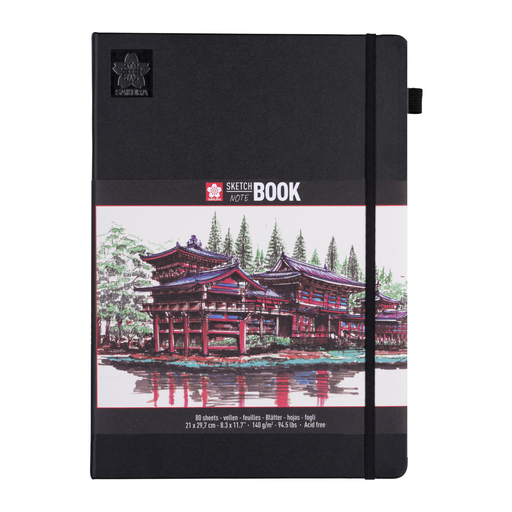
Why it stands out?: This SAKURA notebook was designed to be a true mobile studio. Its hardcover, quality paper, and thoughtful details make it an ideal choice for professional use.
Advantages?:
Who is it for???: Professional artists, designers, and illustrators looking for a durable and smart professional sketchbook to preserve their projects or present their portfolio.
Choosing a sketchbook is a highly personal decision that depends on your affinity for the paper. If our selection doesn't meet all your needs or if you want to explore a wider variety of formats, brands, and weights, feel free to browse our complete category.
Discover our collection of sketchbooks
It all depends on your technique. For pencil sketching, 90-110?g/m? is sufficient. For ink and markers, aim for 120-160?g/m? to minimise bleed-through. For wet media like watercolour, paper of 200?g/m? or more is essential to prevent the page from buckling.
Alcohol markers are notorious for bleeding through most standard papers. To counter this, choose a sketchbook with paper specifically designed for this purpose (often called "bleedproof" or "marker paper"), with a weight of at least 150?g/m?. Another solution is to place a protective sheet (like a blotter page) underneath the page you are drawing on.
A spiral-bound sketchbook offers several practical advantages. It allows for a 180° opening (completely flat), which is ideal for drawing across the full width of a two-page spread. It can also be folded back on itself (360°), which frees up desk space and makes it easier to draw while standing. Finally, its pages are often micro-perforated, making them easier to tear out cleanly.